• The Nyle Essay

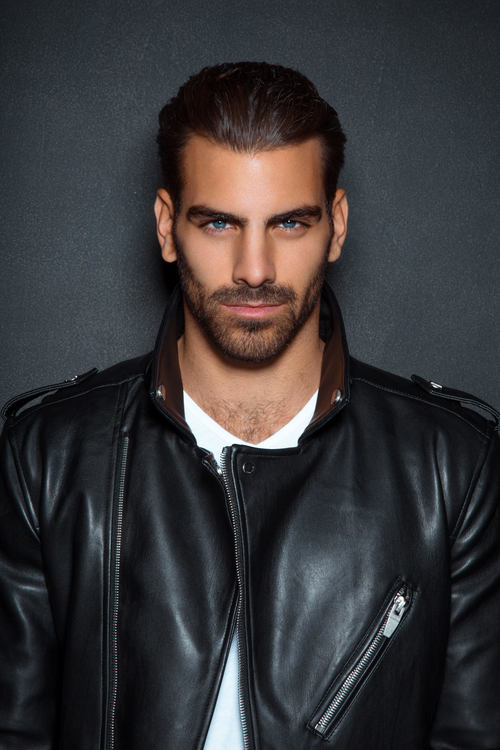
    NyleA really positive thing happened last week. Nyle won the American version of Dancing with the Stars. Fresh from winning America’s Top Model he went one further and won the Mirror Ball. He doesn’t even have a last name any more. He is just Nyle. “You know Nyle?” You can ask anyone and they’ll say, “Oh yeah that deaf guy.” Even the Gay Lesbian Bi Transgender Intersex community laid claim to Nyle as the first of their community to win the Mirror Ball. They did note that he was also the first Deaf winner too. The man can do no wrong.

    We should celebrate shouldn’t we? I mean what an achievement for a deaf person to win a dance competition. It is said that Nyle and his partner developed a series of taps so that he knew when to do  his moves and to help with his timing. It’s an enormous achievement that shows Deaf people can do virtually anything. We should all party and remember this. But no. There has to be a fight. A fight about what? Well that hearing is better than deaf and visa versa. AGGHHHHHHHHHHHHH!!!!!

    You see Nyle is a political animal. He is using his profile to promote the Deaf community and sign language at every turn. Good on him for that. He has a view that every child who is deaf should sign. He does not care whether they have implants or not. He thinks that they should sign. He wants the law changed, similar to what happens in some Scandinavian countries, so that every child diagnosed as deaf, implanted or not, be given access to sign language. He uses strong terms like language deprivation to put his point across. That is his right. He comes from a family that has 25  members who are Deaf. It is something that he is passionate about.

    I am not as strong as Nyle about forcing kids to sign. It should be a parent choice. That’s just my view but I certainly can understand where Nyle is coming from. I certainly agree that sign language is enormously beneficial for deaf kids. I’ve worked in this area for nearly 30 years and I have witnessed and supported deaf adults who have been language deprived. It happens less now because the cochlear implant is leading to many kids developing great spoken English and English literacy. But it still happens.

    Even so, these kids with implants can still benefit from sign language. But for me the key is language. There is nothing worse than a language deprived deaf adult. The great Oliver Sacks said of deafness and language deprivation, “A human being is not mindless or mentally deficient without language, but he is severely restricted in the range of his thoughts, confined, in effect, to an immediate, small world.”  

    All too often I have witnessed this and it is for this reason I prefer all deaf kids to learn spoken language and sign language together. I believe that this helps to ensure that they develop the strongest language possible. But still it is the parents choice. One can only hope that professionals will advise parents of the benefits of bilingualism so that they may make their own informed choices.

    But this stuff is old hat and has been discussed at The Rebuttal many times. In Nyle we have a wonderful human being. And yeah, as my wife and her besotted girlfriends will tell you, “He is hawt!!” We should be in awe and celebrating what he has done for people who are Deaf, people who are different and people who have disabilities. He is changing attitudes and the world. But no! We can’t do that because apparently Nyle’s form of activism is dangerous for the Deaf community. Say what????

    Lisa A Goldstein said as much in her article, Nyle Dimarcos Activism is Dangerous for the Deaf Community. Goldstein is also deaf and believes that Nyle is misleading people. She asks the question, “Would your reaction change if you knew that Nyle could have heard the music if he had wanted to?” Well actually, no. Because he chose not to hear and he still won anyway, that’s amazing. Goldstein claims that Nyle chooses not to hear. She implies that if he had worn hearing aids, or if he had perhaps had an implant, that he could have heard the music if he wanted to.

    Now Goldstein is implying that Nyle is misleading us. Hello Black it’s Pot calling.  She is implying that if you stick some hearing aids in Nyle’s ears or give him an implant he will somehow miraculously hear well enough to be able to dance in the same way as hearing people. Perhaps by hearing the music with his aids he would have danced even better. I am sorry Goldstein, but if you are going to imply that Nyle is misleading people don’t mislead people yourself.

    We all know that what people hear with hearing aids or cochlear implants varies. We all know it depends on frequency losses, degree of loss, age of onset and a host  of other variables. What we also know is that people with cochlear implants get various degrees of enjoyment from music with their implants. Kate Gfeller acknowledges this in her essay, Music Enjoyment and Cochlear Implant Recipients.

    She states that cochlear implants  can impact on the understanding of melody, harmony and tones in music. She acknowledges that other factors associated with hearing loss can have a negative impact on the enjoyment of music. Despite this she also states that many with cochlear implants get great enjoyment from music. But clearly that enjoyment varies. To imply that Nyle would hear just like every one else if we stick a couple of aids in him is misleading to the extreme. Bottom line, he won without sound anyway. Celebrate that. Nit picking is not needed.

    Goldstein claims that Nyle is making inflammatory and misleading statements. I laughed at the irony of that. But lets look at what he is supposed to have done. Apparently Nyle has an extreme view of deafness. This extreme view of deafness is that he has chosen to be Culturally Deaf. Coming from a Deaf family he has had instant access to communication, family get togethers, conversations and just everyday things. He has wanted for nothing. He correctly points out that if he had been the one person in a hearing family he might have been isolated. It happens, it’s a fact. It certainly is not an extreme view. But Goldstein thinks it is because, cop this, she functioned well in a hearing family and therefore everyone else can too.

    Well I am glad she did well, obtained language, is literate and functional. You would not want the opposite wished on her or anyone. But again she fails to acknowledge the diversity of experience and success of deaf kids in hearing families. Sure it is true, as she says, that kids with cochlear implants are learning spoken language brilliantly. She even cites research on the topic  showing that kids with implants who use auditory methods perform better than bilingual kids. Cool, well I’ll give you another. Lets look at relatively recent research by Lyness, Woll, Campbell and Cardin – 2013

    Lyness etal acknowledge that cochlear implants have led to greater speech perception, far greater than for people who are deaf who do not have cochlear implants. This is well and great but they also acknowledge,

    “Despite prevailing assumptions, there is no evidence to link the use of a visual language to poorer CI outcome. Crossmodal reorganisation of auditory cortex occurs regardless of compensatory strategies, such as sign language, used by the deaf person.”

    More revealing they say,

    “Imaging studies show that visual activation during speech reception over time following CI becomes more specific, suggesting that in the CI brain, auditory and visual information mutually reinforce one another.”

    I am no expert in academic mumbo jumbo but this appears to suggest that learning speech and sign language together actually assists the child’s language development, certainly does not hurt it. This is just one item of research that I know of that refutes suggestions that kids who have cochlear implants, and who access sign language too, perform worse than kids who are exposed only to auditory verbal methods. Who knows which is right but if the esteemed Goldstein wants to cite particular research she needs to balance this up with research that suggests the opposite. To not do so is to exhibit the bias she accuses others of.

    Either way academics make my head hurt. Know this – Kerridge, right now, anecdotally will tell you that kids who sign or kids who speak do brilliantly in equal proportion. Variations occur depending on the child’s access to a language model and other socio-economic factors including access to support and so on.

    Let’s stop crapping on about one being better than the other, its rubbish. Each child will be successful depending on any number of factors and will have their own story to tell. What harm will learning sign language do to them? Well none – The harm is done when a child’s language development is hindered through lack of access to proper language models. So there – Kerridge told you.

    Now thus far I have been quite civil to Goldstein. I am finding it hard to be so based on some of what she has said. I will remain so because I understand she has been trolled and abused for stating her view. This should never happen and those that abused her should hang their heads in shame. But there is one statement that she made that really riled me. She said this – “I am fully integrated into society. Someone who only uses ASL, like Nyle, can’t interact with society without help from others.” Let me say this to Goldstein, that’s offensive and absolute rubbish.

    Firstly Nyle is already part of society. I am betting he goes to his local shop and orders a coffee without an ASL interpreter at his side. I am betting that he uses technology like emails and SMS to get what he needs, order pizza, get a taxi, book his own flights and so on. Probably not now, I would say he is doing pretty well and probably pays a manager or PA  to do those mundane things. But point is, Nyle is a fully functioning human being. He contributes and adds value to society. To suggest that he only does so with “help from hearing people.” suggests that Goldstein may have a very large chip on her shoulder.

    Now when Nyle meets a hearing person, the hearing person wants something that he has. At the moment it is his enormous charm, good looks and talent. So he gets on TV and they pay him for it. Unfortunately these hearing people don’t know sign language and so to communicate with Nyle they have to book an ASL interpreter. Looked at in a different way, the interpreter is helping the hearing people. Dang pesky things these hearing people are.

    But yeah Nyle has been getting the producers of various  TV shows enormous profits  BECAUSE HE IS GOOD! He is adding value and they need him. He could be a scientist who is deaf, a lawyer or computer programmer – Whatever – he brings value – equal to what any hearing people do. He doesn’t need help, he is the one with the power. The hearing people need the help.

    And you know we deafies have so much power. Cochlear couldn’t be rich withouts us. Hearing aid companies make massive profits because of us. Captioning companies make massive profits and sign language interpreters are getting fed tonight on the backs of deaf people. There is a whole economy out there that relies on deaf people. Take them away and the world is poorer for it, not just for diversity but for dollars too. All I can say is that the relationship between a Nyle that uses sign language and any services or technology he uses to assimilate with society is a reciprocal and even relationship. Nyle doesn’t need help but by golly they need Nyle – Savvy!

    One thing I do agree with Goldstein on is that it should be a parents choice. But parents should be aware of the choices. Likewise deaf people make their own choices. Goldstein prefers her oral club – both deaf and hearing it seems. Nyle prefers his community and wants to see more deaf kids learning sign so they can choose to be part of that community. That’s his choice too. These choices exists and and they are all viable choices.

    Let’s also be clear that there are very few deaf members of the Deaf community who choose not to hear in total. Most like hearing but what they do know is that the Deaf community offers them more than a hearing community alone can. OK, Goldstein has not made that choice, good for her, but that is no reason for her to talk absolute rubbish and suggest that Nyle is misleading the people.

    He is not. He is just talking about a viable alternative, an alternative that is of great value to many deaf people. And he is right, language deprivation can and still does happen, although thankfully it is much less now. Bottom line for me is that sign language will do no deaf kid any harm, whatsoever. In most cases they will get enormous benefit.

    It all comes down to the strength of the language models that they are exposed to. If that model, be it spoken or signed, is not strong then language deprivation can ensue. Goldstein is wrong to deny that. For her to suggest that sign language might contribute to poor language development in a deaf kid is bordering on a lie.

    Poor form Goldstein. That said I am sorry for all the abuse that you copped. People should play the ball not the person.


  • audismWhat a week it has been. It started when I innocently decided to critique Edan Chapman’s article, We Are the Deaf. I thought it was a fairly measured critique but apparently not. Out came my mate Paul who said that by critiquing the article as I did I was the equivalent of the Alexendar Graham Bell Association, that bastion of oralism. On the other side of the coin some aggrieved parents labelled poor Edan mentally deranged and called me an anti-oralist. And then there was Jane who had this to say,

    “An old classmate of mine saw you at the Deafness summit. He commented that you were possibly the only level headed speaker there and really appreciated what you had to say.”

    From the Antichrist to a hero in 60 seconds. It was totally bizarre.

    But anyway, as I do, I decided to write about it, particularly of the response of some parents at the Aussie Deaf Parent’s page. ( Not its real name, but they got upset when I used the real name.) Basically in this article I outed the abusive parents who attack anyone that expresses a view contrary to their own. Indeed my own wife, for venturing a balanced view, got asked in no uncertain terms to leave the group. This is in part what she said.

    “.. As they grow older they develop more conscious, they become aware of the little incidents that may or may not deliberately exclude them. As you get older you get told no more. More barriers get thrown up. It’s exhausting. It’s exhausting and even the best hearing amplification and language skills are not always enough. Its not always easy being human, let alone a deaf human.”

    So for this bit of personal insight she basically got told to fuck off. There is no kinder way to put it. In disgust she quit the group.

    My article basically condemned the pack mentality. I asked that the “PACK” back off and not bully those whose views they found confronting. I then praised those who were more open minded and accepting of different viewpoints who are part of the group. The latter, I believe, are firmly in the majority.

    It was then my intention to not write for a while. You see the response was just overwhelming. I did not know what hit me. And then they kicked me out of the group. The administrator  contacted me and said I had maligned the group and upset the parents, therefore I had to go. But the bullying and victimisation of people posting alternate views was left unaddressed. The whole thing is a fascinating study of Audism.

    Audism is often seen as a dirty word. But what is it? Alex Jones in his Vlog for AI Media defined Audism simply as the world viewing deafness as bad. Jones describes other aspects of Audism where sign language is seen as inferior and speech superior. He describes how deaf people  have been oppressed over the years and made to speak, even banned from signing. This view of hearing as superior and deafness as an inferior and bad thing is what Audism is all about.

    Audism is a very controversial term and one that really ruffles feathers. Indeed even our deaf organisations exhibit Audism. For example Deafness Forum currently have a very clever Hearing Health campaign happening. They want to see deafness listed as a health priority.

    This campaign is not just about preventing deafness or fixing it but it is also about deaf people accessing the health system. This can be done by providing appropriate communication support and response to people who are deaf. As such it is a very broad campaign.

    But even Deafness Forum pander to the masses. They know that to convince hearing decision makers to part with their money they must target what these decision makers know. Of course, by and large, decision makers are Audist. They see deafness as a bad thing. Hence Deafness Forum unashamedly use hearing and sympathetic/emotional imagery of kids hearing for the first time. Indeed the slogan ‘Breaking the Sound Barrier’ smacks of Audism.

    For me this is almost like selling your soul to the devil. All it does is reinforce the stereotypes that we try so hard to breakdown. But  Audism takes no prisoners. It demands that deafness and all people deaf be eradicated.  If this is not possible then the unfortunately afflicted must fit in with the hearing norm. There can be no value in deafness for the Audist.

    That  is how our society works. Everything is designed for hearing people with little thought to the needs of deaf, or any disabled people for that matter. A deaf person goes to hospital they are expected to hear and lipread. If they cannot often they get looks of pity or exasperation. Watch the nurses roll their eyes knowing that their time is going to be taken up with communicating with a deaf person. Watch doctors continue to talk even after you ask them to write. Watch the excuses about cost start to roll out once you ask for interpreters or captioning.  This is the attitude of an Audist society

    This exists everywhere in all services and in education. Deaf have to fit in with hearing. Rarely is thought given to design of services so that all needs are met. Nearly every time it is about responding rather than being proactive. Not all the time – BUT JUST ABOUT EVERY TIME!

    Understandably this small group of parents on the almost fictional Aussie Deaf Parents page, who all have deaf kids, are Audists too. I say understandably because for many their deaf kid will be the first time, ever, that they have experienced deafness. Understandably they want their deaf kids to be like them. They want them to experience all the things that they value. When they see their kids learning to speak and doing well they see their decisions being vindicated. I get that but deafness is such a broad experience. When the child leaves that protective environment of the family and the school, real life starts. It is not always pretty.

    We deaf people know this and we want to help parents navigate this  minefield. We want them to understand what may happen in the future so that they may help their kids develop the life skills and resilience to deal. “BUT”, say these parents, ”IT’S DIFFERENT NOW. My kids school captain, my kids in the music group, my kids in the Footy team, my kid had hearing  friends for a sleep over last week… IT’S DIFFERENT. My kid thinks he isn’t deaf because deaf kids can’t speak and HE CAN!”

    All these things happened in the past too. In the past and now there were and are successful deaf people. Tradesmen, teachers, lawyers, doctors, architects, social workers and even nurses. Deaf people have been successful since forever. BUT, by and large, they had one thing in common, they worked doubly hard to get where they are. They had barriers, attitudes, discrimination and prejudice to deal with. Everyday they deal with this almost everywhere that they go.

    That does not mean they are all basket cases, though for sure many become that way because they struggle to deal with this crap on a daily bases. It means that they know how to deal with the crap and there is so much parents and deaf kids can learn from deaf people that have walked the talk.

    To cut them off because one finds their experiences as too confronting is just denial, and that is not the name of a river in Egypt. But that’s Audism for you. To those parents I say, again, open yourselves to the experiences of deaf adults both good and bad. It may well be the best thing you ever do for your deaf kids.

  • tolerance

    It’s been an interesting week. It started when I decided to critique Edan Chapman’s article, We Are the Deaf. My intent was simply to show that for every Edan that there are moderates. Even though Edan had been writing figuratively I feared that there would be many who would take him literally, over generalise and take offence at his strong imagery. I felt that needed to be challenged.

    Oh dear! Very rarely have I copped so much flack from both Deaf and hearing people alike. The Deaf feeling I was too pro-hearing while the hearing seemed to feel I was shoving deaf propaganda down their throats. For a writer, the response was fascinating.

    In my wisdom, or lack of it, I shared my post at the Aussie Deaf Kids Facebook page. I thought it relevant. I thought it would be topical for people to read how angry some deaf people are.  I thought I could try to reassure them that not all deaf people feel as Edan does, even if he was writing figuratively. Mostly I wanted parents to know that it was not OK to attack the choices that they have to make for their deaf children, specifically to give their child an implant.

    What I didn’t predict was the savagery of the response. Chapman got vilified by a few people. He was labelled sick, in need  of medication and people urged him to see a good counsellour.  All he did was express his feelings and darkest thoughts. For whatever reason this seems to have given people a licence to attack Chapman in the most vile way. This is not OK.

    Then the attacks began on me. I was labelled a shit stirrer by certain members at the Aussie Deaf Kids page. I was accused of throwing bombs and waiting in glee for the reaction. I am not denying that I can and have done this in the past but this was not my intent here.

    Some people tried to give the group some perspective. They too were vilified. One was told to, “Go away and go back to the group you set up with xxxxx… ” Another was told not to like comments if she could not agree with what was being said. Some of the reaction was so emotive it was bordering on animalistic. And all this because I wanted parents to know that many of us are on their side.

    As the war raged at the Aussie Deaf Kids page I tried to pacify the angry people. I am a deaf person with a lived experience of deafness. I tried to explain that kids with cochlear implants seem to be doing a lot better with language and literacy development than deaf kids of the past. I was quite honest and explained that many of these kids find their way to the Deaf community later because interacting with hearing world on a full-time bases was difficult for many. I tried to explain the diversity in the success of implants and how for many sound was never going to be the full answer. I got labelled as an anti-oralist who attacked oralism at every opportunity. It was a battle I could not win. I quietly withdrew.

    But among all the extremist there were also some very rationale parents. These parents thanked me and other posters for providing them with another perspective. They said it allowed them understand some of the challenges that their kids might confront in the future. Some went as far as saying that unless people stopped trying to paint deafness as if it was all fluff they would leave the group. Sadly some of them actually did. One messaged me privately and said – ” I get tired of arguing with stupid people at the best of times who refuse to consider reality.”

    It worries me that people like myself who have lived with deafness, been educated with deafness and been employed with deafness are so easily dismissed and shut down. I am in a unique situation where I have actually worked in the disability sector, including with young deaf kids and their families, for the last 30 years. You would think someone with that level of experience would be respected and listened to. Instead I somehow get labelled as anti-oralist and as someone who wants to shove sign language down peoples throats. It is a bit sad.

    I don’t want to scare parents of deaf kids but I do want them to be aware that its not always a bed of roses living in this life as a deaf person. One of the first articles on the topic of deaf kids that I wrote was Carrie. Although it was a fictional story it told of my own experience living in a hearing family and also provided anecdotes of deaf kids that I had supported throughout my career. This is what I had to say,

    ” She gazes around at her family members who are all in conversation. Mum is in an animated discussion with her sister. Dad is typically silent, fork in mouth, while he watches Sally do her job as principal on Home and Away. Her two brothers, Aden and Finlay, are discussing something loudly and obviously not agreeing. She looks at her brothers and uses the universal sign for “What’s up?” Palms facing upwards, elbows bent and a shrug of the shoulders. Finlay, with over-exaggerated lip movements, replies, “Tell you later,” while clumsily signing, “Tell you over”.

    Carrie sighs and toys with the idea of trying to find out what the others are talking about. In the end she decides not to. She knows that the response from other family members will be the same as Finlay’s, “…tell you later.” She looks back down at her Brussels sprout. It suddenly becomes more appealing.

    Carrie’s mother, Katie, watches her out of the corner of her eye. Like most mothers she can sense when something is not quite right with her children. She knows that Carrie is often isolated within the family at times like this when they are all chatting avidly. She is at loss as to what to do.”

    These are the stories that I want  parents to read and discuss. I just want parents to be aware of some of the family dynamics that can and do occur. Dinner time conversations are so valuable to deaf kids. If parents can share stories about strategies that they use to improve inclusion for their deaf kids it can only be a good thing. It is not about being signing or oral, its just about making sure the deaf kid is fully considered in the family dynamic. Sure it’s a bit scary but this is the reality.

    I constantly  hear that so and so’s deaf kid is doing marvelously. I am pleased to hear this. BUT I can tell you that as the deaf kid grows older they will start to question who they are. Some will do OK, others will withdraw and some will become plain angry. Young kids hate to be different. As deaf kids begin to explore who they are and what their deafness means to them they will respond in different ways. It is not always positive.

    I’ve written about this too in the article David.  I wrote,

    “On the bus going home from school David sat by himself. He liked to sit at the very back of the bus so he could see everyone in front of him. If he could not get a seat at the back he found himself anxiously looking around. He feared that someone would be talking to him and he would not know. He wondered if they were staring at him, talking about him or making fun of him. Being a teenager he felt a strong desire to fit in. His deafness set him apart from his school mates and he hated it. This fear of interaction and unwanted attention was his constant companion.”

    Although I give my stories a character like David or Carrie these stories are often me recounting my own personal experiences. These are some of the many challenges that I had to confront as a young deaf person. It was not all negative but it was not all positive either.

    I really believe these stories can help parents understand some of the psychological and developmental issues that deaf kids face. In this way they can support and guide their kids. Sometimes it just cannot be sugar-coated.

    The reality is best illustrated by this brilliant poem by Ant Lill – It is printed here with permission. Take us out Ant!

    What works for you does not work for me

    There’s an illusion here instead of reality

    I can’t hear like you and probably never will

    We all talk and chat and I’m no wiser still


    What works for you does not work for me

    There’s an illusion here instead of reality


    You see, it’s hard to follow the conversation

    So many voices going with such intention

    But the meaning is lost in all of the babble

    Every gathering is much more than a battle


    What works for you does not work for me

    There’s an illusion here instead of reality


    Voices chattering, much laughter follows

    But the feeling inside of me is so hollow

    Five minutes later I get the joke in its wake

    Relentless, this is often more than I can take


    What works for you does not work for me

    There’s an illusion here instead of reality


    I can talk just like you, thats the illusion

    But when I ask for repeats its an intrusion

    Interrupting the ebb and flow of the banter

    Seems better to keep quiet ‘n’ sip my Fanta


    What works for you does not work for me

    There’s an illusion here instead of reality


    I read, write and talk perfectly – all in vain

    Especially if I feel I dont belong in the main

    Whats the point of my talking with precision

    When I cant hear advice to make a decision


    What works for you does not work for me

    There’s an illusion here instead of reality

    Every day is fraught with tension and stress

    So many times I hear – it’s a complete mess

    Is it any wonder that I fear any social setting

    Its easier to sit with the dogs and do petting


    What works for you does not work for me

    There’s an illusion here instead of reality

    A hearing aid doesnt fix my hearing at all

    It’s sort of ok for one on one but that’s all

    So I grab someone away from the throng

    Some deem this as antisocial and wrong


    What works for you does not work for me

    There’s an illusion here instead of reality


    There’s lots of deaf that are hoping to fit in

    We see the looks, asking again – always a sin

    Only so much before they will get frustrated

    Wishing it was elsewhere we’d been allocated


    What works for you does not work for me

    There’s an illusion here instead of reality


    At the end we hug or handshake to close our chat

    I thought – well thank goodness I understood that

    To be honest I’m not too sure if there is a solution

    Either way I look at it – total and utter convolution


    But at the end of the day us deafs are tired of doing most the work

    While others seamlessly, effortlessly enjoy without going berserk

    Let’s give the deafs a hand, help them understand whats going on

    It’s a start and once we get going it’ll be better, we’ll move along


    All you have to remember is;


    What works for you does not work for me

    There’s an illusion here instead of reality

     Copyrighted – A. Lill, 2016
  • grimWe symbolise the deepest darkest fear for many of you. You cannot comprehend how to live without your drug. Without your god. Without your need to be heard. And so you rape us, you molest us, you break us, you “fix” us. You spit on us, you laugh at us, you mock us, you make sure you are always superior to us. You create impossible loopholes in the system that cannot be circumvented by us without the benevolent help of ‘qualified’ people from your supreme race. You are the disabled people, not us. Glutting on sound, your literacy has drained slowly away. Your music, once a joy for us to read the lyrics to, has become what you accuse us of being. Your newspapers, radio shows and television news, once touted to be beacons of truth have withered away to propaganda machines pumping fear and hatred to ensure your consumerism is fed. You force-feed us images that haunt us both waking and sleeping. You beat us down with stupidity and always win because you are the experts. (Which you aren’t.)

    Edan Chapman – We Are The Deaf. (Click on the paragraph to read the full article)

    I was mesmerised by this piece of writing by Edan Chapman. Chapman is a brilliant man. He has Usher Sydrome. Usher Syndrome is a genetic condition that leads to the person becoming both deaf and blind over time. Despite this Edan is an artist and photographer. He is well known and respected throughout the Deaf community. He does not hold back with his views. He is also, very clearly, an angry man.

    Many who read Edan’s piece, We Are The Deaf, will be horrified. The language of the article is blunt and deliberately provocative. It makes you sit up and take note. At its best, and worst, it is horrifying, even cringeworthy. But what sparked Chapman to write this? What motivated him to paint people who are hearing as hell on earth?

    Interestingly it is all indirectly related to Deaf model Nyle Dimarco. Of course Dimarco is the Deaf man who won America’s Top Model and is currently the most recognised male dancer in the world, bar none. (Ironic that)  Dimarco is brilliant. He uses ASL and promotes the Deaf community as a vibrant and talented community that it is.  He makes it very clear that he is happy being Deaf and would not have it any other way.

    Through the positive imagery of Dimarco the Deaf community has had a kind of rebirth in the eyes of hearing people. People are fascinated by sign language. I imagine in America hearing people are lining up in droves to learn ASL. I imagine parents of deaf babies, seeing the positive vibe of Dimarco, are lining up to have their deaf children learn ASL and become Billingual, just like Dimarco. Its been an absolute boon.

    So spectacular has Dimarco’s impact been that it spooked the Alexander Graham Bell Association. So much that they felt the need to respond. I am not sure what came over them. But writing a letter that stated that sign language was in decline right in the middle of the Dimarco craze was not very bright.

    In part the letter said,

    The Alexander Graham Bell Association for the Deaf and Hard of Hearing applauds DiMarco’s achievements and recognizes that ASL exists as a communication option for deaf children. However, it is just one such option and its use is declining. The reality is that most deaf children – more than 95 percent – are born to parents with typical hearing, and 90 percent of these families are choosing listening and spoken language for their deaf child, according to data from BEGINNINGS for Parents of Children who are Deaf and Hard of Hearing in North Carolina.    (Click on the paragraph to read the full article letter.)

    The underlying intent of this letter seems to be to undermine sign language and belittle its significance in the development of the deaf child. It was a really ill thought out response and the Deaf community erupted.  Facebook abounded with Vlogs of Deaf people signing their outrage towards the Alexander Graham Bell Association. They refuted that ASL was in decline. The Vlogs showed a loud and very proud Deaf community. They showed a Community that were not going to let anyone besmirch Dimarco or their language. The Bell letter also motivated Chapman to release his article.

    Chapman indicated on his Facebook page that he has been sitting on this article for several months and that the Bell letter was the straw that broke the camels back. Perhaps he worried that the article was too strong for the mainstream. Perhaps he worried that the language and allegory he used within the article would be too offensive. Only he knows why he sat on it but the Bell letter was the last straw and he published.

    I loved the article. I loved its structure. I loved his passion. I loved Chapman’s guts for calling the shots. But there is a lot wrong with the article and I think it needs to be challenged.

    Firstly the title WE ARE THE DEAF needs a disclaimer. The title and the language within the article makes it seem like Chapman is speaking for all Deaf people. It makes it seem like he is expressing the views of the whole community. Of course he was not. The article was simply expressing the frustrations that many in the Deaf community feel about the oppression that they often receive at the hands of hearing professionals.

    These professionals like Doctors, teachers, journalist in the media and so on are constantly portraying deafness in a negative light. They paint deafness as a disaster and tragedy that needs curing and fixing. Deafness is a deficit that needs eradicating.  That there are hearing professionals that feel this way is certainly true. The problem with the article is that it seems to make a sweeping generalisation that all hearing people are like that.

    Of course this is far from the truth. There are many hearing people who are allies and supporters of the Deaf community. There are many hearing people that have spent a good proportion of their lives supporting, encouraging and advocating for people who are deaf. These people include among them teachers, interpreters, doctors, audiologist, researchers, social workers and so. Chapman has, unfortunately and probably unwittingly, lumped all hearing people in one basket. He needed a disclaimer somewhere to acknowledge this fact. He didn’t and he has unfortunately put many people offside as a result.

    Then there is his choice of language. Chapman is a brilliant writer and does not hold back. But he has said that hearing people have raped, molested and disfigured deaf people. We all know that this has occurred. Deaf kids were sexually abused in schools for the deaf and in the catholic church for example. There was a recent DOCUMENTARY highlighting this.

    This abuse probably was committed by both hearing and deaf people but Chapman has not acknowledged this. He has simply lumped all hearing people into the category. Then and again Chapman may have been trying to highlight how hearing people destroy everything that deaf people hold dear as they try to make deaf people hearing like them. Either way the language was damaging and for many very offensive.

    Worst for me is that Chapman appears to criticise the choices that hearing parents make for their children.  Chapman says this,

    “Instead of listening to us (oh the irony!) you insist on ‘fixing’ us. Drilling holes into our barely formed skulls and installing decades old technology to break something that was not even broken in the first place,”

    I can only imagine the pain this will cause parents who decided to give their deaf child a cochlear implant. Parents do this, not because they want to harm or damage their children, they do so because they are acting on the expert advice that they have received. Sure the advice might have been biased but for many the deaf child is their first ever experience of deafness and they are grieving and wanting their child to be hearing. They want the best for their kids. They don’t need nor deserve this sort of criticism.

    I know Chapman was probably targeting the professionals and doctors providing the advice to parents when he wrote this but it can be interpreted either way. The bottom line is we have to acknowledge that the cochlear implant has benefited many kids.  Anecdotally I can say that many have better English language skills than the deaf kids in the 70’s and 80’s. These kids with implants are finding their way to the Deaf community and they still wear their implants. That shows they value it.

    I just feel we need more sensitivity to the trauma that parents face in making a decision to implant their child. Chapman’s choice of language would have been incredibly offensive to many of them. And besides, even Deaf parents of Deaf kids have chosen to implant their children. They have recognised the dual benefits of hearing and sign language and this is a good thing.

    This was incredibly hard to write. I am a great admirer of Edan Chapman and remain so. However, this article, unwittingly, paints a picture that this is the view of the Deaf community and Chapman is representing them. It also unfortunately tars every hearing person with the same brush and overlooks the great support and the many allies who are hearing and who support the Deaf community.

    Mostly, for me, much within is really challenging and offensive to hearing and deaf parents of deaf kids who are have had to make difficult decisions for deaf kids. They do not deserve this sort of attack. They deserve our empathy and fully respect.

    For these reasons Chapman’s article needed to be challenged. Dimarco has shown what positive imagery can do, we need more of that.

    WITH RESPECT!

  • soundThe Deaf community are a proud lot. They are proud of their language.  They are proud of their culture. They are proud of their community. Mostly they are proud of their independence.  They have no time for people talking of deficits. Deafness to them is a way of life and one which they cherish. Barriers occur for them only in an Audist hearing world that doesn’t properly consider the diverse needs of our society.

    Many in the Deaf community abhor being lumped into the disability bucket. It’s not that they see disability as inferior, its more that they want to be recognised as a cultural group with its own language and institutions. Institutions you ask?  What the? Well they abound in the Deaf community really. Deaf societies used to host the much heralded Deaf clubs until hearing people closed the bulk of them thus severely fragmenting the Deaf community. The Australian Deaf Games are an iconic institution that is among the oldest sporting competitions in the world. The Australian Theatre of the Deaf is another proud institution. The Deaf community is rightly proud of its community, history and institutions.

    But to survive the Australian Deaf Community has had to compromise. You see hearing people refuse to fully recognise the Deaf community as a distinct community with its own culture and history. Well some do but the people that control the tax payer dollars largely do not.

    What this means is that even though the Deaf community do not really relate to disability they have always been willing to accept disability money to survive. Deaf Australia is funded, or was,  from disability funds.  The Deaf community accept subsidies that are provided under the disability equipment scheme to access telecommunications. This is much less now because the advent of mobile phones and the internet has meant additional equipment is largely not needed. Hell, I cannot remember the last time I set eyes on a TTY. And of course many , many members of the Deaf community accept money under the Disability Support Pension. They do so because its a hell of as lot more than the Dole.

    This is not a criticism, it is just pointing out that despite the Deaf communities wish to be seen as cultural and linguistic group it is very rarely funded for that. Mostly funds come from disability funds and because of this the Deaf community and its members are firmly labeled in the disability category. It is all about survival and one must take what they can to survive.

    Last weekend I attended the Deafness Forum Summit. I was speaking on mental health and deafness. At this forum Deafness Forum announced  its hearing health campaign. They have been consulting about this for quite some time and it is no secret. Deafness Forum have chosen this route as a way to access funding so that it can survive as a peak body for Deaf, hearing impaired and people with ear disorders. We all know that Deafness Forum had its funding cut under this current Liberal Government as did Deaf Australia.  Like Deaf Australia, Deafness Forum is fighting for their life. Health funding is seen as a way to  enable Deafness Forum to continue to represent its target groups.

    Some in the Deaf community have been particularly scathing of Deafness Forum’s focus on HEARING HEALTH.   “I am not sick” they say, “I don’t want to be represented that way.”  They rightly point out that they are a cultural and linguistic group and hearing health focuses on sickness and deficit. It is not that I do not agree, I do, but its never stopped them accepting disability money has it? And believe me the people that control disability money see disability as a deficit that needs to be eradicated too.

    I fully support Deafness Forum’s approach in targeting hearing health. I have been heavily involved in their consultation. As I see it members of the Deaf community get sick. They have among them some of the highest rates of mental health issues in Australia. A lot of this because they are isolated and made to be as “hearing” as possible. This is something that is often impossible. We need a mentally healthy Deaf community. Why not use hearing health as a way to target these issues?

    What about access to the health system. Immediate access to Auslan interpreting at entry points of hospitals and places of crisis intervention. This comes under health doesn’t it? What about programs like weight watchers, Alcoholics Anonymous, drug and alcohol rehabilitation or simply fitness programs? All of these contribute to members of the Deaf community being healthy. Like it or not there is much that the Deaf community can achieve to become healthy and strong under the health umbrella. Culture and linguistics wont carry the message alone.

    The problem is that word hearing.  As soon as people read hearing health they start to think about fixing and curing. It promotes the stereotype that deafness is a deficit that needs to be fixed. This is something that many in the Deaf community abhor, myself included. That said, I think its a bold and clever move by Deafness Forum to target this area. As I said the Deaf community have had no qualms accepting disability money to survive until now. Why not health?

    The majority of people that have a hearing loss acquire their hearing loss much later in life. They want to be fixed. They want programs that will protect their hearing. They want support programs for things that make their lives hell such as tinnitus and Menieres Disease.  We should not begrudge them that. What we can do is find the avenues that health will benefit the Deaf community.  Access to the health system, mental health and well-being are paramount among them.

    Deafness Forum have created a very slick and professional campaign.  They even have a Facebook page – https://www.facebook.com/breaksoundbarrier/   You will note the slogan, Break the Sound Barrier. Members of the Deaf community will hate it, as I do. I warned Deafness Forum away from the use of such catchy phrases. I reasoned that hearing health was stereotypical enough without adding to it. I reasoned that for many people no amount of sound will benefit and that the issue was about access and well-being and we needed a focus on that. All to no avail. You can’t win them all. I just know that this slogan is going to make it even more difficult to get the Deaf community onside.  Hearing Health was hard enough.

    But Deafness Forum are fighting for their lives. They have to play the game otherwise they will fold. They are at least fighting hard and we need to get behind them. We deaf people need strong representation, especially with the NDIS coming.

    It has been said that if Labor get back in at the forthcoming elections that they will refund the disability peaks. That may well be so but I don’t think they will fund Deaf Australia and Deafness Forum as separate entities. If Labor get in my prediction is they will fund a deafness peak to cover all groups. It will be a case of you’re in or you’re out. As I have said before COLLABORATE OR PERISH.

  • downI always get excited when I have the opportunity to visit Sydney. It is a beautiful city. The iconic Harbour Bridge and the Opera House never cease to leave me in awe. I was lucky this weekend to be able to visit Sydney to attend the Deafness Forum Summit on behalf of Deaf Victoria. I was planning on plenty of walking and catching up with old friends.

    Upon landing I made my way to the hotel. I was sharing a room with a friend who had already checked in. This was convenient as I was on the red-eye express and arrived very early. It allowed me to go straight to the room and catch up with some sleep. I planned to have a big walk after lunch. I have a Fitbit and am currently striving to achieve 20 000 steps a day whenever possible.

    Around 3 pm I took off down George Street for the Harbour. Ten minutes later I saw the sign that said Newton and realised I was walking the wrong way. A quick about turn took me in the right direction. I passed Central Station and noticed a few homeless people hanging about. This is not uncommon.

    But as I progressed towards the Harbour I noticed that there was a homeless person virtually every 50 metres. They often placed themselves near traffic lights with cap or begging tin asking for loose change. Many find themselves a little nook that keeps them out of the way of the mill of the pedestrians. A few had pet dogs. All seemed to have some kind of bedding like a pillow and quilt. Many were gaunt and thin. Most likely the consequence of drug abuse.

    As I progressed I noticed a woman in the distance. She had that thin and gaunt look of the drug abuser. For no particular reason I wondered if she was deaf. As I came to her she had a little cardboard sign that indicated that she was indeed deaf. I bent down and asked if she could sign. Indeed she could and she was a fluent and native signer.

    She shook my hand and we conversed a while. She told me her name and indicated she was from Queensland. She had a nasty black eye and I asked if she was OK. She said that she had been beaten up earlier for her drugs.  I told her that I was going to the Harbour and that I would be back later. I was determined to buy her a coffee and a bite to eat.

    I made my way to the Harbour. I was struck by the contrast. You see the Harbour is the epitome of affluence. Boats, cafes and luxury abound. Tourist look on in awe at the Bridge and the Opera House. There is not a homeless person in sight. All around you people are flaunting their wealth with their “look at me” designer clothes. How could such affluence exist in the presence of the abject poverty that was on display a little more than 100 metres away in George Street?

    I made my way back to my hotel determined to find my deaf and homeless friend. It seems odd that I call her friend given I had only spent 5 minutes in her company, but it felt that way. Sadly she had gone and I could not get her a coffee and a bite to eat. A little later that night I was walking George Street looking for a bottle shop. I was having difficulty finding one so I stopped at 7 Eleven and bought a box of donuts. Just up from the shop was a homeless man who was sick and in obvious distress. I gave him the donuts. I simply said “enjoy” and made my way back to my hotel.

    And today Prime Minister Turnbull announced the election for July 2nd. It is to be a Double Dissolution election. As I watched him announce the election date and implore us to vote Liberals I wondered how the Liberals were going to help those homeless people on George Street and all over Australia. Would their much vaunted tax cuts to business bring benefits to these homeless people?

    There are people who will tell you with the utmost conviction that the homeless are there by choice. There is a strong view that if the homeless choose to help themselves they can improve their lot. Instead of begging and relying on handouts they can do something constructive. Go to TAFE and get a job for example.

    Such a hard-nosed view is nonsense. Very few people choose to be homeless. Some of them have been ravaged by drug abuse. Some have lost their jobs and as a consequence their homes. Some are victims of domestic violence, or any violence, and have nowhere else to go. Many have mental health issues. I saw one person in a wheelchair. With 45% of people with a disability living at or below the poverty line it is no surprise that many people who are homeless also probably have a disability. Possibly the majority.

    So I wondered if giving businesses tax cuts was going to help these people. Don’t get me wrong, I know owning a business is hard work. I know that many will benefit from tax cuts, particularly small business. But business earning more than $10 million? Multi-Nationals? Many that seem to pay no tax at all. Surely they have the capacity to contribute more.

    The theory is that by giving businesses tax breaks that they will invest the subsequent savings into their business and this will create jobs. The increased profits will “trickle down” and everyone will benefit. Will the homeless? Will these people with no skills, no qualifications, no direction and no Government support benefit? Hell, if any of them choose to go on the Dole now they will have to wait six months to get any income support. What is to become of them?

    Last year I worked with an organisation that provided education and employment support for people who were homeless. We were working in partnership to identify homeless people who had a disability. We wanted to ensure that any program that they participated in considered their disability and access requirements.  We were making great strides and then the Government cut the organisations funding for employment and education support. Where is the sense in that?

    The Liberal’s want us to believe that by supporting business and helping them to grow all of us will benefit. A profitable business will employ more people. This will increase employment. More taxes will result. Everyone benefits. This is called the “Trickle Down Effect”. But there seems to be a consensus among top economist that “trickle down” is bunk.

    Many leading economist believe that the widening of the gap between the wealthiest and the poorest is evidence that Trickle Down economics does not work. In fact in 2014 the economic think tank of the Organisation of Economic Cooperation and Development outright dismissed Trickle Down Economics. They believe that, “… income inequality has a sizeable and statistically negative impact on growth, and that re-distributive policies achieving greater equality in disposable income has no adverse growth consequences.” In short, making the wealthy wealthier has no flow on effect to those that are not wealthy. It just widens the gap of inequality.

    Alanna Petroff, writing at the CNN money website last year bluntly states, “Wealth does not trickle down from the rich to the poor – period” She cites none other than the International Monetary Fund that found , “… researchers calculated that when the richest 20% of society increase their income by 20% the annual rate of growth shrinks by nearly 0.1% within five years.”

    But this is the Liberal’s approach. Give to the rich and the rest of us will benefit. Because the rich will invest in their business and create jobs. I am not a supporter.

    The Labor Party, on the other hand, have the opposite approach. They believe that he rich are not contributing enough. They want to tax rich people more. They want to close tax loop holes like negative gearing that are abused by people with money who buy several investment properties. By making the rich end of town contribute more Labor believe that money can be raised to pay for much needed services. Services like the NDIS, funding of disability peaks, hospitals, schools and, dare I say it, programs that can really help the homeless like public housing and investment in skills and training.

    Naturally the Liberals think that the Labor approach is pie in the sky and that by punishing business it will cause stagnation and halt growth. Jobs will go and the economy will collapse. Who do we believe? Gina and Murdoch anybody?

    Perhaps there is a Trickle Up Effect. You know if you help people get on their feet, you make sure they are healthy, you make sure they are cared for or you make sure they have money for food and rent then they contribute more to society. Perhaps monetary incentives to train and skill individuals for employment will be spent on things like clothes, food, tools, computers etc.  This might mean money trickles up to the rich and they actually get richer. This in turn creates jobs and growth as demand increases. John Maynard Keynes thought so.

    The choices are stark. The election is only 8 weeks away, think hard about who you want to vote for.

  • AuslanHearing people love Auslan don’t they? I mean whenever I am on a gig at work and using interpreters, without fail some well meaning hearing person will approach the interpreters. Usually to tell the interpreters how wonderful they were. The hearing person will wax lyrical about how fascinated they were, of the beauty of the signs, of the speed of the translation and usually will ask if Auslan takes long to learn.

    These people are sometimes over the top. Sometimes even emotional. Sometimes even religious, offering their prayers and blessings. To me it doesn’t really matter what their intentions are, their interest is a great way to raise awareness and educate the wider community. Thankfully most interpreters that I know are polite and obliging in answering these peoples questions. Mind you, I sometimes understand why people who are blind despise guide dogs. One blind friend once told me that they despised guide dogs because all people ever do is talk about the bloody dog. It’s a bit like that with interpreters.

    As an advocate one of the things that I am consciously aware of is that bridges need to be built between the Deaf community and hearing people. One must realise that hearing people usually have the best of intentions. Often they can be over enthusiastic.  Sometimes they can be unwittingly patronising. Some are even clingy and earn themselves the rather disparaging label of “Deaf Wannabes.”  Who among us has not wanted to slap certain hearing people who tell us, hand on heart, that they really wish they were Deaf?

    I don’t always succeed in building bridges. Sometimes I react in anger and burn them. How we react is often dependent on our mood. Sometimes I react in anger and wish I had followed the 24 hour rule before mouthing off. Usually my anger is directed at Deaf people or professionals that should know better. I am human and this sort of reaction is natural. However, for the most part I try to be patient, especially when I can see someone is genuinely interested and simply wants to be educated.

    And so this happened recently. On the Auslaners Facebook page a well meaning teacher sought guidance as to how she should teach Auslan.  Her enthusiasm and excitement at the prospect was obvious. This is what she asked:

    ” Hi everyone. Thank you for including me in this group. I am not a deaf person. I am a teacher who is about to start teaching AUSLAN as a primary school subject. I’m very excited as I’ve always wanted to learn and this a perfect opportunity for me. I really want to do this right. Are there any tips that people could give me so that I am respectful and meaningful in my teaching? Any teachers on here? Are there any stupid questions because I have a lot of questions? Thanks for your time.”

    It is very clear from her query that she knows very little about Auslan.  It seems that she wanted to develop a program where she was learning along with her class while at the same time teaching them. Clearly she wanted to lead the process. What is also very clear is that she was as keen as mustard.

    For me this is a wonderful opportunity to educate someone about Auslan. It is a wonderful opportunity to create awareness and interest among a group of young kids. Some who may become so interested that they end up becoming interpreters later. I really cannot count the number of interpreters who have told me that they became interpreters because of some chance exposure to Auslan when they were at school. Sometimes its just learning finger spelling. Sometimes it is just having a Deaf classmate and wanting to learn how to communicate with them. Completely random exposure to Auslan has led to many wanting to learn Auslan properly. As a result they go all the way and become qualified interpreters.

    Now in a world where interpreters are in such short supply we must take every opportunity to encourage the learning of and exposure to Auslan. The post of this teacher SHOULD have been seen as an opportunity to inform, guide and educate her about how Auslan should be taught. What a fantastic way to build bridges and promote Auslan to potential interpreters of the future. Not to mention the deaf awareness that it could create.

    It seems that many on the Auslaners Page felt this way too. Some were very encouraging.  An early response made it very clear that it is better that Auslan is taught by a suitably qualified Deaf person BUT that the teacher could learn along with her students and support them:

    “…. your question is a good one. To be respectful and meaningful, I strongly recommend that you learn alongside your students, with an open mind, demonstrating your genuine interest, and encourage your school to hire a qualified person to do the teaching. You haven’t said where you are, but contacting the local Deaf services (or maybe even by enquiring here?) should land you with an awesome teacher!  Welcome to the world of AUSLAN (sic), I hope you understand the response – AUSLAN (sic) should absolutely be taught in schools as a subject!”   

    This is good solid advice and offers wonderful encouragement. It may have disappointed the teacher a little because it made it very clear that she really should not be the person teaching it. I am OK with that because the response was positive and encouraging. Most of all it was welcoming.

    But then sterner comments began to creep in … Here is a selection of some of them:

    ” You can’t be learning Auslan while teaching it.”

    ” I don’t know how to put this correctly. So I’m just going to say it. You would never have someone who hasn’t learned (and is proficient in) French, teaching French. You wouldn’t have a non-English speaker teaching English the subject.  You can’t teach a language that you don’t know. And language and culture are inextricably interwoven. I am a qualified teacher (History and ESL) and I’m a qualified professional Auslan interpreter as well. I would never step into a Japanese class and think I would do the language any justice.”

    “My perspective as a hearing person, who is a competent but not fluent Auslan user, who also works in education and early childhood intervention, is that there are serious questions that the school and department need to answer. You have been caught in the crossfire. But as others have said, one would not expect other languages to be taught by non-users. Additionally, maybe this is a terminology issue – are you teaching the children or developing their awareness/increasing their exposure to Auslan? Finally – at a macro level, why are we not expecting primary school children to become fluent in another language? Their critical learning period for language ends at 7yo, so starting younger than school age, with an expectation of fluency is exactly what we should be aiming for.” 

    “…You might think we are angry. I can’t say for others but I am insulted that we are not ‘good enough’ to be asked to teach let alone find the funding…. Sorry, it’s my language and it belongs to the Deaf Community.”

    All of the above comments were well meaning. In many ways the above comments are absolutely correct. Unfortunately what these comments did was intimidate this well meaning teacher to the point that she left the group. The chance to influence her, guide her and educate her was lost. In turn the chance to create awareness among young kids, potential interpreters of the future, was lost too.

    In between these comments I am pleased that people tried to rescue the situation. They suggested learning Auslan as a cultural program rather than a language one. They suggested a cultural program could be a means to create interest in the kids and educate them about the Deaf community. They suggested contacting the local Deaf society too to get guest speakers who were Deaf and so on. But unfortunately the more militant IT MUST BE DEAF voice drowned them out. Intimidated, the teacher left the group. The chance to assist the teacher and create awareness  in the wider community was lost with it. To be fair the militants were not wrong but perhaps it could have been said in a more gentle way.

    Indeed many in the group turned on themselves. Some actually left the group in anger and frustration.  It was a sad outcome to what was a positive and enthusiastic query from someone that could have helped build bridges and create awareness about Deaf people and their language. It was an opportunity lost.

    May we all learn from it and find a better and kinder way to respond in the future.

  • reallyWhat’s happening?  Life as we deafies know it is under threat. First it was the threat to NABS that prompted the save NABS petition from Deaf Australia which was discussed in the last Rebuttal published just two days ago. Now an email has hit my desktop screaming UNCERTAINTY FOR THE NATIONAL RELAY SERVICE!!! (NRS)

    Does the government have it in for us deafies or something????  The National Relay Service, for those that do not know, is the service that people who are deaf utilise when they need to make calls to hearing people and organisations but cannot do so through the usual voice channels.

    The email from the Conexu Foundation appears to have been distributed to relevant stakeholders and consumers that are part of their data base. It basically outlines the discussions that the Government is having about the future of the NRS. The Government is embarking on a consultation process to review the operation of the NRS. The aim, say the Government, is to ensure a sustainable future for the NRS.

    The heading of the email screaming UNCERTAINTY is probably a ploy by Conexu to grab the readers attention. On closer inspection there does not appear any uncertainty. Rather there are a number of suggestions from the Government that will raise alarm bells in some people. It is important to remember that the Government is only consulting at this point and has put forward some options for people to consider.

    Personally I find some of these suggestions a bit unpalatable, even scary. That said, kudos to the Government for preparing a consultation process that appears to be very transparent and allows people to comment and even suggest alternatives. The discussion paper is quite well researched and provides some interesting data and suggestions. It is well worth a read. You can take a look at the discussion and consultation papers by clicking HERE.  My one criticism is that there is so little time to respond. Less than a month now.

    Conexu have kindly summarised a few of the points that arose in the Governments discussion paper. The Government raised 8 options with different questions like:

    Should any services be capped? (The paper states that the video relay service, used by people who are Deaf, is capped now.)

    I can imagine that this will scare the Bejayzus out of some people, and it should. Simple answer, from my point of view, is that nothing should be capped. We deafies have a right to access the phone whenever and in the same way as hearing people. Even if the Video Relay Is capped now, it should not be. For me this is the strong message that deafies need to convey to this question.

    Should TTY access be phased out?

    This will be controversial. The young ones among us, and even older ones like me, never use a TTY. I don’t have one at work or at home. Mobile technology and internet access has made the TTY nearly obsolete. Even so there may be some older deafies among us that still utilise the TTY. Should they be denied access? Of course not, especially when this may be one of the few avenues they have to communicate to the outside world. My view is that TTY relay should remain. However, I can see that this is going to be challenged.

    Are apps and smartphones or tablets now preferred, or are there situations when the NRS is a better option?

    I think we all love the independence that apps and smartphones have brought to us. However, there are situations where even the latest technology will not give us access to telecommunications. Indeed within the paper the Government has probably answered this question itself. Data shows that the use of the NRS has continued to increase to this very day.

    Should regulations that are in place for disability equipment programs be removed?

    Who remembers the joy we all experienced when Scott (or was it Stott) won his case against Telstra so that they had to provide a TTY as part of phone rental in same way as hearing people rented handsets? Prior to that we were forking out $6-800 to buy a TTY. A small fortune back in the early nineties. Come to think of it, it still is for many people.

    The discussion paper describes the equipment subsidy schemes that are being offered by Telstra and Optus. It raises the question whether these can be phased out or reduced given that many deafies may be able to purchase this equipment through the NDIS. This may well be so, but what of those that do not qualify for the NDIS. Do we need a safety net for them? A few things to consider here.

    The discussion paper also raises questions about how the NRS will be funded and how much should be funded by the Telcos. A large proportion, if not all, of the NRS is funded by a levy that Telcos pay to the Government for the provision of the NRS. I did not make a lot of sense of what the paper was suggesting but I urge people to read this part of the discussion carefully and ensure they understand the options that the Government is proposing.

    So is the NRS under threat? I don’t think so, not yet anyway. I actually think the review of the NRS is a good thing. Changes in the delivery of telecommunications and advances in technology has meant that the playing field has changed. The Government acknowledges this in its paper.

    However, its important that as many people respond to the consultation as possible. Contact Conexu, Deaf Australia or Deafness Forum Australia to ask how you can have your views heard. But you only have less than a month, so be quick!

    Deaf Australia – info@deafau.org.au

    Deafness Forum Australia – info@deafnessforum.org.au

    Conexu –  rachel.mckay@conexu.com.au


    NOTE – The Governments discussion paper does not appear to have an Auslan version. It would appear vital that one be developed quickly for the Deaf community.

  • doctorDeaf Australia  released a petition today. They are concerned that the Government is considering incorporating the National Auslan Booking Service (NABS) under the National Disability Insurance Scheme (NDIS). For those that do not know, NABS is the Government funded interpreting service that Deaf people who use Auslan can access when they visit a private doctor or medical professional like their local GP.  The NDIS is the much vaunted disability scheme that is to revolutionise disability support in Australia. Where previously funding was controlled by agencies funding will now be controlled by people with a disability who will then purchase the supports that they require from the “market.”

    There has been discussion that NABS funding will be put into the pool of NDIS funds. Deaf Australia are rightly concerned that this will disadvantage many Deaf People. They have put together an Auslan video outlining the reasons for their concerns. You can watch this video here.

    If you are hearing or a deaf person who does not understand Auslan, click on the CC icon for the captions.

    I share Deaf Australia’s concerns. Certainly under the current NDIS you would have to worry that many, many Deaf people might be left without support. As Deaf Australia point out some Deaf people may not even be eligible. Deaf people over 65 who have never had an NDIS plan will also have no access to interpreting. There are also concerns that Deaf people will have to “predict” how many times they will go to the Doctor. As we all know, illness cannot be predicted. Trying to look into a crystal ball and estimate how many times you will require an interpreter at the doctor is fraught with danger.

    However, Deaf Australia object to any consideration of NABS funding being part of the NDIS. I personally do not feel that this is reasonable. Rather I believe that we should have an ongoing dialogue with the Government and the National Disability Insurance Agency (NDIA)  to fully explore the issues and develop a model that MIGHT consider medical interpreting under the NDIS. (NDIA are the agency that administers the NDIS)

    I want to point out that I share all the concerns that Deaf Australia have raised. However, I feel there may actually be some positives for bringing medical interpreting under the NDIS umbrella. I feel it is wise that we consider all these issues and others before we reject the idea altogether. So in the interest of informed debate I have outlined some of these arguments.

    Currently NABS serves only private hospitals and there are limits, particularly for hospital stays and surgery. It is not an all-encompassing program. Potentially if interpreting under the NDIS was set up to address concerns of DA it could open up the use of NDIS funds for public hospitals. We know that public hospitals SHOULD provide interpreting but often they do not. Access to interpreting in the public hospital system is inconsistent.

    It is difficult, particularly for emergency situations, to be able to get interpreters. Dealing with hospital administrative processes and booking systems can be a nightmare. It is possible that this could be improved with a more flexible NDIS funding approach which is controlled by the Deaf patient. I think it is vitally important that we explore the possible benefits of the NDIS in a variety of medical scenarios before rejecting it outright.

    When you wake up sick and need to see your GP it is difficult to get a NABS interpreter at short notice. Potentially with control of the funding and the booking, the Deaf patient could book in advance. More than once last year I needed to go to my local GP. Planning ahead I made the appointment as far into the afternoon as I could. I then put in a request for an interpreter that was unsuccessful.

    I fully understand that supply and demand is an issue. Getting interpreters at short notice is a problem. This is an ongoing problem for all agencies that provide Auslan interpreters. However,  on one occasion I arrived at the Doctors surgery and as I walked in the door received a text from NABS informing me that there were no interpreters available. Frustrated I vented on Facebook, as I often do. I moaned about the shortness of notice. Ten minutes after my appointment I received a text from an interpreter who is registered under NABS. She let me know that she had only been ten minutes away, was available but had received no communication from NABS. Given that she lived in the region this is puzzling.

    I believe that under the NDIS, where the Deaf person is in control, there is scope to develop a system where the Deaf person can go online, look at availability and try to match an interpreter with the time they have secured with the doctor. Indeed you could possibly have interpreters in virtual booths set up specifically for this purpose. The Deaf person, if they can get access to good broadband, could then access interpreters on their mobile devices. There are many possible scenarios that could be explored.

    I think this is particularly relevant in emergency situations. Let us imagine someone has had a mental health episode. They are self admitting. At the triage they are going to be asked a lot of questions about their condition. Potentially, if the Deaf patient had control, they could go online and book an interpreter in advance. A family member or friend could even do it for them. They could rock up at the hospital and the interpreter might already be there or be on their way. If there were virtual booths these online interpreters could facilitate communication until a face to face interpreter can be arranged.

    Sure there will still be issues of supply and demand. Certainly it wont address all situations but by having control it saves the Deaf patient the need to request that the hospital do the booking and then navigate the minefield of the various hospital booking and administrative processes. We could even set up a trial system before hand to see how it might work.

    For me the NDIS potentially provides access for people who are deaf who do not use AUSLAN. Captioning companies might have captioners on call so that people who can’t access interpreters for communication can access captioning on their mobile devices. If there is one thing that NABS does not do at present, that is provide access for non-Auslan users. These people get sick too AND many require communication support.

    It is about control and flexibility, all the things the current system is not. You are putting the control in the hands of the Deaf person. It could be as simple as going online making the booking, entering the NDIS account number and payment would be deducted at a later date once the interpreter had made a claim. I, for one, would value having control in this manner.

    Now I agree there are concerns but it would be dangerous to throw the baby out with the bath water. I would suggest a think tank to explore various scenarios and concerns and bring these to the attention of the appropriate decision makers. Eligibility, over 65s etc etc should figure prominently in these discussions. I also think it is a very valid argument that it is difficult to predict in advance just how much interpreting might be needed for the doctor in a 12 month period. However, a safety net could be designed for those who get an illness that requires interpreting above and beyond what they have predicted.

    I also understand the concerns about the NDIS leading to booking of interpreters who are not qualified. I think this is easily resolved using a simple system that is used by JobAccess where any interpreter must cite their NATTI qualifications and number before being paid. There may also be requirements that interpreters have to show they have met a required number of professional development milestones in a given period. If they do not they can be removed by agencies from any booking system that is developed.

    That these concerns exist does not necessarily mean they cannot be dealt with. It does not mean that solutions cannot be found. It seems to me that people may be approaching this in a way that they prefer the devil that they know rather than the devil that they don’t. Even so that does not mean that one should dismiss the NDIS a viable alternative IF the decision makers are prepared to consider and address concerns that are raised.

    I have only outlined a few arguments here but my point is we may be rushing headlong into dismissing an idea that may ultimately provide better and more flexible access. It is a debate that we have to have. I can see many benefits for using the NDIS and I think we need to explore them fully.

    With respect.

  • sameIt happened again today. A University from somewhere in Australia contacted me to ask me whether they should use the term hard of hearing or hearing impaired.  I get asked this question six or seven times a year. I always bang my head in frustration. It reminds me of the Monty Python Dead Parrot Sketch. In this sketch John Cleese uses  a myriad of terms to describe a dead parrot. The shop keeper, played by Michael Palin, tries to dispute this and comes up with several words and phrases to argue that the parrot is resting. Watch it with subtitles below.

    Now the point I am trying to make with this video is that no matter what term you use, dead is dead. Now a person with a hearing loss has, well, a hearing loss. Of course we have variations. We have Deaf — Deaf community members that the capital D clearly distinguishes. Then you have the rest –  they are deaf, hearing impaired, hard of hearing, people with a hearing loss, people with a hearing challenge, the volume challenged, people who are sound deficit, people who are lacking in hearing .. whatever. You can try forever. There is no gentle way of putting it.

    And thus this was the bases of my reply to the academic. We have more pressing challenges people. Moving right along now.

    Oh you poor thing  … you’ve been bitten by the terminology police 😀

    In all seriousness you are not going to please everyone, whatever terminology you use.

    But anyway this is the issue:

    World Federation of the Deaf got together in partnership with the International Federation of the Hard of Hearing – these two groups in, their respective wisdom, decided that the official terminology should be Deaf and hard of hearing. They basically agreed that three terms were acceptable – Deaf for the Deaf community, hard of hearing for people with a hearing loss of any kind and deaf as a medical definition to describe all with a hearing loss. They, as you know, reject the term hearing impairment because it has a deficit focus.

    Now it gets complicated because in Australia we have traditionally had two advocacy groups – Deaf Australia and Deafness Forum – Deaf Australia will insist, rather militantly, that it’s Deaf and hard of hearing or the highway. Deafness Forum are more gentle and tend to follow a path that it’s up to the individual to choose the terminology that they want and if that is hearing impaired, then that’s fine. Deafness Forum will use hearing impairment rather than hard of hearing. So we have a stand-off of sorts.

    I have often spoken with older people with an acquired hearing loss and asked their preference. This is purely anecdotal, but the majority prefer hearing impaired. The younger group of people with an acquired hearing loss will vary in their preference as some of these find the Deaf community and Auslan quite late in life and  some do not.

    It is a moot point really that both hard of hearing and hearing impaired are both deficit terms. “hard of” simply means lacking in so … The two groups are really agreeing on the same thing but one term is apparently more deficit than the other. You will never win this argument.

    Of course our Government and educators tend to use hearing impaired and don’t really care what Deaf Australia and WFD think because to them it sounds more official 😀

    As for myself I tend to say Deaf or hard of hearing rather than Deaf and hard of hearing. It is purely semantics because Deaf or hard of hearing assumes a person is one or the other. Deaf and hard of hearing can be interpreted as meaning that a person is both … I tend to steer clear of both hard of hearing and hearing impaired and say .. Deaf people or other groups with a hearing loss. But, of course, the word “loss” upsets some too … As I said you are not going to win.

    I would suggest that professionals and others just ask the terminology that a person prefers and take it from there. It really is political correctness gone mad.