• download (1)“Does Melbourne have interpreting 24?” This was the rather cryptic message I had on my phone last night at 7.15pm. I sought to clarify, “Do you mean is interpreting available 24/7?” My friend confirmed that this was indeed what he was asking. I affirmed that interpreting was indeed available 24/7 but it was not easy to get at short notice. I asked my friend why the information was needed. “It doesn’t matter.” was the dismissive response.

    This immediately set alarm bells going in my head. My friend has a history of anxiety and depression. I pressed my friend to explain why the question was asked. After at first denying anything was wrong my friend explained that he was feeling very anxious and depressed. He wanted to take himself to hospital but did not want to worry his family. He would only go if interpreting could be arranged. I told my friend I would make some queries to see if arranging an interpreter could be fast tracked. He thanked me and said he would have a shower to try and calm himself down.

    While my friend showered I located the nearest hospital. I contacted a friend who is involved in the interpreting industry. My interpreter friend asked which hospital would be involved and provided me with some information about booking interpreters at this particular hospital. It seemed that this particular hospital had a contractor that arranged both its spoken and sign language interpreters. I sought out the contractors phone number, which was thankfully listed on the contractors webpage.

    I contacted the hospitals mental health intake department through the National Relay Service. I told the relay officer that I was calling on my mobile and apologised in advance for the many typos that were about to follow. Thankfully I got through to the mental health intake reception without delay. I explained that my friend was in some distress. I explained that my friend would shortly attend the hospital to seek support for his rapidly increasing anxiety. I explained that my friend required an Auslan interpreter and it would be advisable to try and get the process of arranging one happening as soon as possible. The Intake worker put me on hold and diverted me to emergency.

    Emergency answered quickly. I explained the situation again. I explained that my friend was on his way, which he was. The emergency person asked my friends name which I provided. I again stressed that they should begin the process of arranging an interpreter and provided the contact details of the contractor that serviced the hospital. The emergency person, while empathetic, stated that she had no authority to arrange an interpreter and that nothing could happen until my friend arrived at emergency and hung up on me.

    While I understand this, I also know hat arranging interpreters at short notice is difficult. I also knew that my friend might be in some distress when he arrived and that this was going to be an extreme barrier for communication at admission point, especially as my friend is deaf and was coming alone . It is what it is. I hoped for the best.

    While organising this I was also talking to my friend on Facebook Messenger, while at the same time dealing with the hospital through the NRS. Technology is good for that. I provided my friend with all the relevant information. My friend typed this into his phone. My friend was not confident in his speech and the plan was to have everything typed into his phone, including he interpreter booking process. On arrival my friend would show what he had entered into his phone to the triage nurse.

    It seems that the nurse was actually quite responsive and immediately tried to call the number provided.  It was after hours and no one answered the phone. My friend was probably in a panic at this time. Nevertheless, he managed to suggest that the triage nurse try the National Auslan Booking Service (NABs). They couldn’t get an answer there either. Being a public hospital NABs  probably would not have helped anyway as they only service private hospitals. Apparently my friend provided a number for Auslan Connections too, there was no luck getting an answer there either.

    The nurse tried to liaise between mental health intake on the phone and my friend. My friend, by this time fed up and extremely agitated, got up and left. He sent me a message. He said he was in his car shaking and breathing heavily. Somehow my friend drove himself home and managed to find some sort of equilibrium. In the morning he contacted me to say he was alright and aplologised for the drama. I told him not to worry. I was just thankful that he was ok. It could have been so much worse.

    I am not sure what went wrong in this case. There are emergency numbers to contact. Vicdeaf advertise an emergency online interpreting service. I am aware Oncall have something similar. It seems that somewhere that the process broke down. I am not sure why, but clearly the process at the shopfront broke down. The nurse, who I must say did her very best, seemed to be unaware of the options. My friend, even in his agitated state, tried to help her understand what options there were to no avail.  It is unfair that the patient should be expected to do this. If you are in great pain or in great distress you are often in no fit state to be educating people at the shopfront as to how to book an interpreter.

    What this case highlights is that the health system, particularly when it is a crisis, is not considering nor meeting the support needs of people who are deaf. Something urgently needs to happen. My friend, thankfully, managed to find some sense of balance and calm down. What if he had not. The consequences could have been extreme.

    This is not an isolated case. Communication in the health system is crucial, particularly where diagnosis needs to be made. Get it wrong, provide the wrong drug or have the patient not understand how to take the drug then death can be the result. If not death, serious injury can occur. It has happened.

    Being able to communicate with a patient is vital for obtaining an accurate and comprehensive patient and family assessment, formulating and implementing a treatment plan, determining the effectiveness of nursing care, and evaluating outcomes of care. ****  In Australia at the moment this simple and straight forward concept is not happening in regard to healthcare and communication for people who are deaf. Something needs to be done now before someone dies, is injured or injures another person. This could so easily have been my friend last night. We need to act – and soon!

    **** http://www.euromedinfo.eu/using-interpreters-in-health-care.html/
     

  • download

    There is  lot being written at the moment about the movie The Tribe. This movie has taken the world by storm. It is unique in that it is filmed entirely in sign language, Ukrainian Sign language at that. There are no captions, there is no translation and the watcher must follow the movie entirely through visual mediums. Philip Debs, a Deaf man, went to see this movie and he enjoyed it immensely. Said Debs, “The story line and the actions throughout the movie make it very easy to follow.”  I asked Debs if he found it easy to follow because he is deaf and used to visual mediums for communication. I asked whether it might actually be more difficult for a hearing person with less experience to interpret visual story lines.  He was forthright in his reply, “I think it would be probably be very challenging for them (hearing people) and less challenging for the deaf (sign language users)” 

    Nevertheless, the movie has received much acclaim. It has won prizes at the Cannes Film Festival, The London Film Festival and from the American Film Institute.  I wonder how these hearing people that are applauding The Tribe as a cinema masterpiece would react if they had to watch movies without knowing what the characters were talking about everyday. I am sure the novelty would wear off very quickly.

    Deaf people that attended the movie were interviewed as part of an ABC TV story. They all seemed to enjoy the movie. Interestingly Debs took the opportunity to raise the issue of cinema access for people who are deaf. This was canny of him. Canny because it was an opportunity for hearing people to empathise with how people who are deaf are expected to access the cinema almost everyday and compare it with their experience of watching The Tribe.

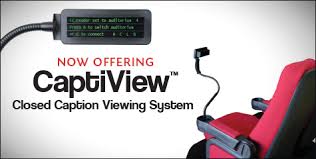
    Debs took the opportunity to highlight the issues of the awful Captiview device such as eye strain, headaches and constant device failures. Debs disparagingly labelled Captiview with the term Craptiview.  This is, of course, the none to complimentary label that the Deaf community have given Captiview.

    The ABC showed this story on Lateline. They tried to interview the cinemas responsible for the introduction of Captiview. Only one cinema franchise would respond, this was Village Cinemas.

    What I don’t get, even though Captiview is much loathed, is why they cannot provide captions for almost every session. Consider this:

    • In total there are five devices per screen in a cinema complex. This means, if Village are to be believed, that every screen has the ability to provide closed captions, even if it is through Craptiview.
    • In the next three days  there are 10 movies with closed captions sessions through Captiview.
    • Of all the mainstream movies on show only one, Tomorrowland, does not appear to have any captioned sessions. This means ALL the movies except Tomorrowland have closed captioned files.
    • There are some foreign movies with subtitles.
    • Nearly ALL the closed caption movies would also have an Open Captioned file. Indeed we know that even closed captioned files used by Captiview can be programmed to appear on screen. The cinemas stubbornly refuse to provide open captions any more than once a month. (According to Village anyway.)

    On the surface it looks like there is a fair bit of choice for people who are deaf if they want to risk the perils of Captiview. I can see the pro-Captiview people sitting up  haughtily and saying – “SEE I TOLD YOU SO” But consider this – Every movie on show at Village at the moment, bar one, has a closed caption file. This means that if the cinemas care enough all they have to do when they get the movies from the distributor is request the closed caption file. Once they have this file they simply need to ensure it switched on at the start of the movie.

    This means, potentially at least, that almost every session – AND I MEAN ALMOST EVERY SESSION – potentially can be captioned. Village cinemas can provide full access from the moment they open until the moment they close. But they don’t! And it costs them nothing because the closed caption files are part of the cost for hiring the movies that the cinemas show.

    Most Village cinemas are showing the same movies. For example they have popular blockbusters like Mad Max, Entourage, The Avengers, San Andreas, Spy, Aloha and so on. All of these movies have a closed caption file and are being shown at various locations across Melbourne. At Airport West, which is a Village franchise,  They are showing Mad Max, Entourage, Aloha, San Andreas  and several other movies that are being shown with closed captions at other locations. Yet Airport West are only showing Entourage with captions and nothing else.

    Why are they doing this when clearly there are caption files for all the movies they are showing? It is a similar story at other locations although some are showing more than one movie with closed captions. The most would be three movies at any one time. Yes, most people who are deaf hate Captiview but this is besides the point. The point is that the cinemas, not just Village, are treating patrons who are deaf with absolute contempt.

    They have the capacity to deliver closed captions to every session. It will cost them nothing and all they have to do is switch on the captions at the start of the movie. Not only do we deafies have to put up with a device that is a health hazard but we are having our choices limited by mega rich cinema franchises that have the capacity to deliver captioning for virtually every single movie at NO EXTRA cost!

    Our advocates who sold us up the creek with this device when we were clearly being screwed also have a lot to answer. They with their playing of politics and fancy semantics have a lot to answer for. We cannot turn back the clock, whats done is done. But surely we should not stand for being treated in this way. The cinemas simply do not care. It is a disgrace!

    Those hearing people who are enjoying The Tribe so much, enjoy it while you can. Enjoy it with the thought that it is probably he only movie you will ever watch where you do not fully comprehend what is going on on screen. Just thank your lucky stars you are not treated like dirt which is how the Big 4 cinema franchises treat deaf people!! The way they treat patrons who are deaf is the definition of contempt.

  • charlize
    Character Furiosa from the recent mad Max Movie. Shown here brandishing her amputated arm while fighting with and ultimately killing a bad guy. She is sitting astride the bad guy about to shoot him with a sawn off shotgun.

    There has been a lot of talk lately surrounding the feminist themes of the new Mad Max movie Fury Road. Aside from a few concerns, those themes are definitely there, definitely welcome and they were definitely intended. Vagina Monologues author, Eve Ensler, was a consultant on the movie so you know it was in the frame from the start.

    What has gone unmentioned, however, is that the movie is also a triumph for disabled people. The lead character, (not Max! He’s really a supporting actor), but Charlize Theron’s, Furiosa, has an amputated arm and she wears a steam-punk style prosthetic limb.

    The arm is never explained, never used as a plot device and no one ever tries to tell her she can’t do something because she’s missing an arm.

    She is simply and utterly a total bad-ass. She drives a truck, shoots better than Max does, kills the bad guys in hand to hand combat and throws her stump into action in a way pop culture has never shown before.

    Traditionally amputees are shown nursing their stumps, dealing with them gently and with great care. We are suppsoed to pity them and admire their triumphs. We know this is not the case. In real life amputees stand on their stumps, bash items into place with their stumps, hit balls, fight their siblings and effectively carry on as normal with the bodies as they are.

    Furiosa’s stump simply shows that this is harsh world and at some stage she lost a limb. She didn’t let that stop her from being the best truck driver in the wastelands. She just fashioned a prosthetic and got on with things.

    A nice touch is the artwork on her truck, it shows a skeleton arm on the door, her disability has become part of her personal brand but it doesn’t define her.

    The movie also features actor and disability advocate Quentin Kenihan. Although his role is small and his character’s relationship with his giant brother in the film is more a nod to the Master/Blaster character in the third movie than it is anything to do with the plot. Still its great to see him show up in the movie so many years after first coming to fame as a child.

    Of course a lot of praise must go to the strong performance Ms Charlize Theron.  Many viewers are angling for her, not Tom Hardy as Max, to be the title character in the sequel.

    Mad Max might not be your cup of tea, but if it is it’s worth a watch. We should be praising the film makers for both for their revisionist take on the action blockbuster but also for their depiction of disability.

    For more of Ricky’s writing, particularly on marketing go to:

    http://martsketing.blogspot.com

  • Raw Prawns

    My wife hates prawns.  She hates the look of them. Apparently this all started as the result of a cruel prank by her sisters. When she was a little girl her family apparently had prawns in all their glory for dinner. My wife made some sort of remark that they looked creepy. At this point one of her sisters picked up a prawn and waved it in her face. My wife let out a shriek and ran away. However, her sister was not done and began to chase her around the room with prawn in hand. To this day the sight of a prawn makes my wife squeamish. Her sister no longer teases her about it but our three lads do. Come Christmas and the inevitable prawns they will pick one up and say …“OOOH, Look mum!”

    I was shocked yesterday to find my wife in fetal position cowering in the corner in our bedroom.  Concerned I went over to her to comfort her. She was averting her eyes from the dresser. She pointed at the dresser and in a shaky voice asked me to take them away. I could see nothing that warranted this sort of reaction from her. “Take what away?” I asked. “THEM THEM THEM” she screamed.

    I scanned the dresser and the only thing of note were her hearing aids. I picked them up and showed them to her. She let out a blood curdling scream. My god, what was this? And then I saw her phone beside her. I gently picked up her phone, she pushed me violently away and ran from the room.  I looked at the phone, the penny dropped. The cause of her mania was this –

    Prawn
    Attractive lady with prawn over her ear as a mock hearing aid.

    Of course I jest. This advertisement is being used by Victorian Hearing to promote hearing aids. What they are promoting is tiny hearing aids that no one can see. The premise is that hearing aids are ugly. Something to be hidden and ashamed of. Deafness is a bad thing isn’t it? We should never let anyone know we are deaf. Certainly not by wearing this revolting prawn like creature on our ears! It is another example of out society shaming and making people with a disability outcasts.

    This particular advertisement ranks among the worst that I have ever seen. But sadly it is not the worst. Who can ever forget that bear. One day I logged into Facebook and I found myself staring at a bear. He was a kind of sorry looking bear. He had no eyes and no ears and he had stubby little legs. He looked almost like a double amputee. The bear was sitting sorrowfully on a wooden floor surrounded by wooden blocks and wooden toys. He is a bright yellow bear. He stands out from the toys that are reds, blues and greens. He looks so lonely and so sad. In the background on a blue wall were the words, “WE NEED YOUR HELP.”

    bear
    Teddy bear sitting on floor surrounded by toys. The bear has no eyes and no ears.

    This revolting and very, very creepy bear was part of an advertising campaign for a Sydney school that supports young people that might be deaf, blind or deafblind. The strategy of the campaign was clear. Give us money to assist us educate these poor deficit children. Can’t see, can’t hear – Oh how incredibly tragic. It reinforces the deficit mentality with a bang. I wrote a scathing article about this bear that elicited a response from the CEO. The CEO apologised profusely for offence caused and promised that removal of all advertising that had the bear would commence the next day.  Click on the link to revisit this article – I SAW A BEAR

    But by far the worst advertisement was the television advertisement made for the Cora Barclay Centre in South Australia. This was some years ago but this advertisement was incredibly offensive. In the advertisement there is an angelic boy. He has a mop of brown curly hair, he might have been about 12 years old. The boy looks sadly into the camera and in halting sign language explains that many years ago people who were deaf communicated in sign language JUST LIKE THIS – He stops momentarily – then in a sing song voice, with just a trace of a deaf accent he proclaims – “But NOW THERE IS A BETTER WAY.”    

    He then begins to exalt the virtues of the Cora Barclay Centre. Donate and more kids will speak just like him. None of this nasty sign language rubbish, thank you very much. I really do not need to repeat what the Deaf community thought of this one. Suffice to say several staff of the Cora Barclay Centre – past and present – contacted me at that time to express their sorrow and embarrassment in relation to this advertisement.

    It never ceases to amaze me how marketing people consistently get the marketing of disability wrong. This is particularly so in the deafness sector. The image is always one of deficit.  It is one of suffering. it is one of the victim. For whatever reason marketing people promote this idea of normalisation of disability as one where disability must never be acknowledged or seen … We have to be like them you see.

    In the three examples above only the Sydney school apologised sincerely and removed the offending material.  The Cora Barclay Centre did not even respond to criticism of the advertisement.  As for Victorian Hearing who put out the prawn advertisement, well they apologised for any offence but refused to withdraw the advertisement. They said the campaign was completed on the weekend so the advertisement would not be seen any more anyway. They said it was part of a WAR to get people to acknowledge their hearing loss and get assessed for a hearing aid.

    They are fooling no one. For them it was all about the money. It always is. Don’t worry about the consequences, if the profit margin goes upwards nothing else matters. All Victorian Hearing has done is to reinforce the stereotype that disability is a bad thing. It needs to be hidden and it is an embarrassment. But SHHHHHHHH, lets be sneaky, buy one of our tiny weeny hearing aids.  No one needs to know you’re wearing them, snigger snigger.

    Sorry, Victorian Hearing your campaign was offensive and insensitive. It was all about the profit and nothing you can say will convince me otherwise. For a business that is supposed to understand deafness you have been NOT VERY BRIGHT.

    On a positive note if you want to promote hearing aids this is how it is done:

    This:

    two hearing aids witrh colourful pictures of roses on them.
    two hearing aids with colourful pictures of roses on them.

    Or this:

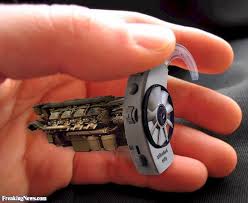
    Radical fantasy hearing aid with a mechanical cooling fan built in.
    Radical fantasy hearing aid with a mechanical cooling fan built in.

  • download (1)I want to say something. My name is Isaac and I’m 13. I’m profoundly deaf and have a cochlear implant and a hearing aid.

    Isaac happens to be deaf and have a cochlear implant. He posted recently to the Facebook discussion group called Aussie Deaf Kids.

    Reading Isaac’s post took me back to my teenage years.  I was not strong nor assured as a teenager. I was struggling to come to terms with my deafness having become profoundly deaf a few years before. I was refusing to wear hearing aids. I was wagging school. I suffered anxiety.

    I recall getting on the school bus and sitting right at the back everyday. I did this because one day I broke into a cold sweat. I was standing because the bus was full. I found myself anxiously looking over my shoulder and all around me. I feared that people were talking to me or about me and this led to a mini panic attack. The back of the bus allowed me to see everyone. It was my safe haven.

    Isaac is just 13 years old. He is proudly proclaiming to the world that he is deaf and has a cochlear implant. I am in awe. It may seem just a small thing but such confidence and frankness is a rare thing. Kudos!

    Over the dinner table last night my family were discussing a message my mum got from a lady who signs ( on FB) it made me sad.

    Those wonderful dinner time conversations! For many deaf people from hearing families dinner time conversations can be isolating and lonely times. Over dinner family members share stories. They share what they see, what they hear, what they have discussed with peers and what they think. They share what others think and what what others have done. Through dinner time discussions so much is learnt. People’s minds are broadened and relationships are strengthened. Very often the deaf family member sits largely in silence, not involved and not considered.

    Quite often it is the mother that acts as the interpreter for the deaf kid. I can well recall badgering my mother to tell me what my dad had said because he is a bugger to lipread and this still happens even today. Often the TV would be on as we ate our dinner in the lounge. I would be asking mum what was being said and what happened on the news. Mum was ever obliging.  On some days when she was tired or overwhelmed she would utter the dreaded words, “I’ll tell you later” There was nothing more dis-empowering nor frustrating than to hear those four words.

    Never underestimate the power of family inclusion on the deaf child’s development. Isaac has it and its impact on his maturity and knowledge is there for everyone to see. He is very, very lucky.

    I talk, I do not sign or wish to sign. I’m very happy and don’t feel lost in any world. I’m in the hearing world. I hear in class well. I do all the things my friends do and I can do that alone. I hear my mum call me from outside, I love music and singing and being with my friends, mostly all hearing.

    Oh I remember the first time someone asked me if I knew sign language, I was mortified. I was with three friends and we were chatting at lunch.  One of the three friends asked me if I signed. I shook my head hurriedly and tried to change the subject. My friend was having none of it and began to try and teach me to finger spell. I got up and left.

    Looking back the psychology of it all was simple. By acknowledging sign language I had to acknowledge my deafness. I had to acknowledge that I was different. As anyone will tell you, not fitting in during adolescence is the worst thing that can happen. Quite simply I was in denial.

    Accepting my deafness took a long time. I was angry about being deaf for most of my adolescent years. I saw myself as a victim. Why me? I tried to avoid all things deaf. Wearing hearing aids was one. I would leave the batteries at home. They got over this by having batteries at school. So I would leave my aids at home. I would sabotage the ear molds by giving them to the dog to chew up. In the end my attempts to deny my deafness got so bad that I just stopped going to school. I would rather face the risk of getting in trouble for wagging than have to confront the issues of my deafness. Adolescence was not a happy time for me.

    I wonder if for Isaac not wanting to sign is because he sees sign language as a weakness. Perhaps by giving in and learning sign language Issac must acknowledge his difference. By signing he is acknowledging that his deafness makes him different. Perhaps he is just proud of how well he copes in the ‘hearing world” and simply does not see signing as necessary. I think that, just maybe, there is a deeper reason that Isaac does not want to sign.

    Only Isaac can answer that one.

    “I’m not brainwashed, I’m living in my community.”

    Very clearly Isaac has grown up with hearing values. Very clearly he is comfortable with these values. Brainwashed? What is Isaac referring to? I am not entirely sure but sometimes there are more militant Deaf people who believe that HEARING people are brainwashing deaf kids into thinking they are hearing. Sometimes these militant deaf people are there own worst enemy. They need to back off.

    I hope that one day Isaac explores becoming involved with the Deaf community. The Deaf community can be a great place. Perhaps as Isaac gets older he will find it harder and harder to fully fit in with the hearing community. As deaf kids get older and mature they often find communication and fitting in with hearing people just a little bit more problematic. Big groups chatting. Lots of background noise. Dark bars and night clubs. Things change and often young deaf people like Isaac find that they become increasingly isolated. Trying to fit in and adapt can be soul destroying.

    I don’t know Isaac personally. Every deaf person experiences life differently. He may grow up and blend in with the hearing world without a hitch. He may not. But after being involved with the Deaf community for nearly four decades and having seen how many young deaf people with cochlear implants seek out and become members of the Deaf community; I am pretty sure there are a few confronting social challenges and decisions that Isaac will face in the next few years.

    Isaac, all I can say is keep your mind open to the possibility of learning sign language and being a part of the Deaf community – it has much to offer. There is no reason why you cannot be part of both Deaf and hearing worlds.

    My mum and dad made the best ever choice for me having me implanted. I wish everyone can see how happy I am. I do really well at school and even do public speaking. I love telling people that deaf kids can speak, because some don’t get the chance to.

    You are right Isaac. Your mum and dad made a brilliant decision. It has clearly benefited you and will continue to do so. You are bright, confident, intelligent and articulate. It is terrific to see. I can tell you that when the cochlear implant works well for young deaf kids, which is sadly not always the case, they develop great speech and great language.

    I was 14 when I changed schools to attend a school with a deaf unit. I was shocked at the educational level of many of the deaf kids at my school. Many were virtually illiterate. Their behaviour was not age appropriate. They often did not understand even basic concepts. This was in the 70’s, before cochlear implants became wide spread.

    I was puzzled as to why this was so. As I got older I set out to understand why so many deaf kids were like this. The tragedy for deaf kids in the past, and sometimes still today,  was not so much that they could not hear, it was the fact that not hearing and not having access to good sign language acquisition impacted so heavily on their language development. This impacted on their whole life. It impacted on their education. It consequently impacted on their ability to gain meaningful employment. It impacted on their ability to mature and deal with adult life. It was not pretty.

    Since the cochlear implant has become more widespread I see less of these language deprived deaf kids. I see deaf kids with great language development. They are literate. They are achieving more at school. But, sadly, this is not the case for all of them and we need to acknowledge this.

    Many of these kids with cochlear implants learn to sign at a very early age. Interestingly a friend of mine did some research on this. I believe she found that deaf kids with cochlear implants and who signed actually had better language development. Deaf kids with cochlear implants who had no access to sign language apparently spoke better, but their language development was not as good.

    It is true that cochlear implants come with risks. Isaac’s parents and other parents of deaf kids know this. It must be gut wrenching to have to make a decision knowing these risks. But more often than not the risk pays off and Isaac is living proof of this. No parent should ever be made to feel guilty for deciding to implant their child. Sadly, there are still many Deaf militants that try to make parents feel guilty for implanting their children. Equally, there are Oral militants that try to make parents feel guilty for not having an implant and for choosing sign language for their child. It needs to stop!

    Please listen to us kids too. I belong in my family and community.
    Why don’t you ask me rather than assume you know how I feel.
    I’m proud of who I am.
    Isaac

    And that Isaac is so true. You have every right to make decisions as to what is best for you without pressure and emotional blackmail from militants.

    We adults often assume that we know best. We all need to listen better and consider the views of young deaf people. I can tell you that people in the disability sector get fed up of non-disabled people making decisions about people with a disability over their heads. Nothing about us without us is the catch cry. I see no reason why this should not also be the case for young people who are deaf.

    Isaac, I wish you all the very best for the journey you have ahead of you. Thank you for allowing me to share your post and respond to it.

    Isaac’s post in full –

    I want to say something. My name is Isaac and I’m 13. I’m profoundly deaf and have a cochlear implant and a hearing aid.

    Over the dinner table last night my family were discussing a message my mum got from a lady who signs ( on FB) it made me sad.

    I talk, I do not sign or wish to sign. I’m very happy and don’t feel lost in any world,I’m in the hearing world. I hear in class well, I do all the things my friends do and I can do that alone. I hear my mum call me from outside, I love music and singing and being with my friends, mostly all hearing. I’m not brainwashed, I’m living in my community.

    My mum and dad made the best ever choice for me having me implanted. I wish everyone can see how happy I am. I do really well at school and even do public speaking. I love telling people that deaf kids can speak, because some don’t get the chance to.

    Please listen to us kids too. I belong in my family and community.
    Why don’t you ask me rather than assume you know how I feel.
    I’m proud of who I am.
    Isaac


  • Ability Abled

    downloadThose ability people .. you know them, the ones with no legs and stuff … they people wif abilities ain’t they .. poor abilitied people … sad ain’t it … glad I ain’t a person with ability … that would be feckin orrible .. see .. right .. yeah!!

    Bizarre huh? Cynical certainly, but oh my God political correctness surrounding disability is driving me and many others in the disability sector absolutely batty. You see organisations are beginning to position themselves to make money out of the NDIS. They are trying to come up with slick advertising and nice positive images. All they are succeeding in doing is the complete opposite.

    For some reason using the term disability has become taboo. Stating the type of disability that a person has is also taboo. This is not new. For years our prim and proper non-disabled people have struggled with disability imagery. So instead of calling some one deaf it becomes someone with lesser hearing. Blind people become vision challenged. Anyone with a disability becomes differently abled. The word ability has now become the buzz word for people with a disability. Hence the cynical and nonsense opening to this article.

    You think that I am overreacting? Well The former The Centre for Cerebral Palsy has suddenly seen fit to change its name to the Ability Centre. It’s where you go, you see, to miraculously become a person with ability. Take your choice – Go there and you get the ability to do … well whatever. Become a lawyer, professional soccer player – something like that I guess. But no – The former The Centre for Cerebral Palsy does nothing like that. It offers therapy, respite, recreation, employment support and so on. (Check out the new site – http://abilitycentre.com.au/ )

    Now that’s just misleading advertising. Someone should challenge that under the Trades Practices Act or something. What is worse is that it promotes this idea that people with a disability are these hopeless no ability creatures who can only be saved – perhaps with a trip to the local ten pin bowling alley.

    I for one have had a gut-full of the Abilityist people. Why can we not just look at a person with a disability and say- “That’s deaf Gary – he is a bloody good writer.” Look over there, “..that’s Blindy Pete – go see him and he will do you a great accounting program for your computer.” Or “…have you seen Tom, me mate with Down Syndrome, champion trick motorcyclist mate.” 

    Ok – I would rather get to the point where people just say – “It’s Tom – Champion trick motorcyclist.” My point is that by avoiding the term disability and anything related to it you do no one any favours. You just further stigmatise disability and make it seem like it is a bad thing. Disability can be tragic, I know, but being a non-disabled person can be tragic too. It is not the sole domain of disability.

    At the turn of the century I was the manager of a program that aimed to promote positive mental health for young people who are deaf or blind or deafblind. Central to this program was that they could go up to someone and just say things like- “Hi, I am deaf, you need to look at me when we communicate.” It’s a simple enough concept isn’t it? you are deaf, by nature you do things a bit differently. Let’s not hide this fact, lets get out there and tell people. Hell, if the person who is deaf is at ease about it you can bet others will be too. None of this hide your hearing aids under your hair nonsense, wear pink and orange ones. Make it obvious! What is there to be ashamed of?

    That program was run entirely by people who had a disability. We even employed a young woman whose arms had not developed properly because of the drug Thalidomide. I do not know how many fingers she had, but there were a few missing. When I told her she had the job she showed me her hands and said, “How will I use sign language?” I looked her in the eye  and said we would find a way and we did. We taught our blind coordinator of blind services to sign a bit too. It wasn’t rocket science and we didn’t make these two any more able than they already were – they were just brilliant individuals with talent!

    We had 30 mentors who were either deaf or blind. We had an administration officer who we plucked out of some obscure base grade clerks job at TAFE.  We gave her an opportunity to be the youth group leader and later a case manager. Last I heard she was studying for her masters in social work.  I take no credit for making her more ABLED,  she already had the talent, she just needed the opportunity. She got it, and she took it!

    My favourite memory is taking the blind group rock climbing at an indoor rock climbing centre. They all walked to the centre, blind leading the blind so to speak. The blind acted as belayers for the blind climbers. No one died – No one fell on their head. Inspiring? Hell no, just a group of people going out and having fun developing a new skill and learning how other blind people get on with their life.

    So enough with the ability crap. Yes, I know that personal services are important. Yes, I know without these services it would mean that many people with a disability would struggle just to get out of bed. The services are needed, no question. What is not needed is this half baked idea that these services somehow make people more ABLED – They do not! Ability is the talent that lies with in all of us. Enough with the twaddle!

  • imagesLike most parents I take my parenting role very, very seriously. I love my kids and I want them to turn out as fine and upstanding citizens. I basically do not care what they do just as long as they treat others and themselves with respect. I try as much as I can to be a good role model. That is not to say that I succeed every time. There are times when I fall flat on my face. For example when I play sport my adrenaline can sometimes get the better of me. I might yell at the umpire and utter the odd expletive. Sometimes my frustrations show. Sport can bring out the worst in me. My kids have witnessed it and unfortunately I see much of myself in their behaviour on the sports field.

    Even so I try my best to tell them what is right and what is wrong when they are playing sport. For example I blasted my eldest recently. He seemed to think it was ok to do professional fouls. He once even said to me when we were playing together, “Barge him over, don’t let him through.” I told him that I wasn’t going to cheat. Last year his mother was watching him play an indoor soccer tournament. She had to leave, she was so embarrassed with the level of aggression and cheating. I spoke with my son about it after. He said that professional fouls were  just part of the game, everyone does it. I told him he should be different and play in the right spirit. “But dad … “, he implored, “.. the coach has said he will take anyone off who doesn’t do a professional foul if the other team is in danger of scoring.” I was appalled. I told him to never do a professional foul while I am watching and if the coach pulled him off for it that I would give the coach a piece of my mind too. My son was appalled, ” You cannot be serious????” Sadly this is the nature of sport today, even at amateur and junior level.

    Parenting is so much more complex today, especially with social media. So much information and communication is happening. It never stops. Around the clock our kids are communicating and sharing information. A lot of this information is quite explicit. Some of it is derogatory.  It is disrespectful of women. It is disrespectful of people who are gay, lesbian, bisexual or transsexual. It is often racist. Kids share explicit photos of themselves in states of undress. They share photos of parties where binge drinking and drugs are the norm. The language that they use can be disgraceful. More than once I have caught my kids sharing explicit and disrespectful information. My wife and I are firm and let our kids know what we think is acceptable and what is not. It is a 24/7 job policing your kids on social media. You can try banning them, they will just set up a secret account. So my wife and I take the view that we need to guide them through the minefield. I am not sure how well we are succeeding.

    Recently I read an article about teenage sex. Basically the article implied that because kids are so sexualised through the various forms of media today that they have rather disturbing views about what is acceptable sexual behaviour. The article explained how many young girls are consenting to anal sex. They do so because they think it is normal. Young men are apparently watching all sorts of porn on the internet.  Apparently anal sex is prominent. What happens is that young men think that anal sex is just a normal sexual behaviour and pressure their partners to allow them to do it. The young women feel that it is the only way to be attractive to the young men. Suffice to say that young women are more frequently having to receive medical attention because of injuries sustained through this sexual activity. The young women also require counselling and support because of the self loathing that occurs as a result. It is horrific.

    As a deaf parent how do you monitor your kids access to music? Music today is very explicit. For a hearing parent they at least can hear music and censor what they feel is inappropriate. However, because music is largely downloaded from the internet, many parents simply will not know what their kids are accessing. As a deaf parent it is virtually impossible to know what your kids are listening to. I found out yesterday just how much is slipping under my radar.

    I was in the car with my kids driving to indoor soccer. We play in a team together in a fortnightly competition organised by Melbourne Deaf Football and Futsal Club. My kids are hearing but this comp encourages CODAs (Children of Deaf Adults) to participate. My kids love their music. When they get in the car the first thing they do is tune in their phones to the car radios Bluetooth. The names of the particular songs they are listening to appear on the radios digital display. Usually I do not take much notice. But this day I glanced at the display to see what they were listening to. A song came up called Anal Beads. I was horrified. My son, realising that I had seen the title, hastily changed the song.

    The songs title troubled me. I began to wonder what on earth my kids might be listening to. I know songs are very explicit today. But a song called Anal Beads? How revolting. How could anyone possibly write about something so horrible. On the way home we stopped at McDonalds. I sent my kids in to get our order and stayed in the car. The song title troubled me and I decided to Google it.

    The lyrics of the song were simply sick. For the meek minded I suggest you read no further. Below are some lines contained within the song:

    Anal Beads ….. It goes POP POP POP when coming out my a@######

    And it feels good!

    Shove it up real good (please.)

    I was simply revolted. I was revolted that anyone could write something so vile. I was revolted that any music company would allow it to be recorded. But mostly I was revolted to think that our kids were listening to this! Your kids are listening to this! Did you know? I naturally was furious. I held my tongue until I got home. I then confronted my kids and asked them to delete the song which I hope they have done.

    It is quite sickening to have to write this. I write it not to shock people but to raise some awareness about what our kids might be listening too. As a deaf parent I want other deaf parents to know what their kids might be listening to. Hell, even hearing parents should be concerned. I am pretty sure that the smart kids only listen to this sort of crap when their parents are not around. But kids of deaf parents have no such constraints. It is just awful to think what these innocent minds might be listening to. All of it freely available on the internet. I can only suggest parents, whether they are deaf or hearing, carefully vet what their kids are listening to. If you have any concerns Google the lyrics.

    Please be diligent. The last thing we want is for our kids to normalise this sort of crap. The research is clear -kids are becoming sexualised far to early and its damaging. If you are a parent, especially if you are a deaf parent, make sure you know what your kids are listening to – It aint pretty!

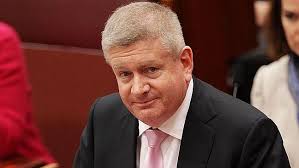
  • mitchDear Mr Fifield

    I noted with interest your speech to The Committee for Economic Development where you touched on the issue of disability employment. You published this with pride on your parliamentary website. I am not sure who was present at the meeting but I trust there was a good balance between people with disabilities and those without. After all the issue of employment for people with a disability is about people with a disability. One would hope that a fair few of them were present in the upper echelons of decision making where crucial decisions are being made about their future.

    I also want to thank you for championing the cause of people with a disability in employment. I would rather it was a person with a disability doing it but seeing as so few of us seem to be present a meetings discussing our future, who better to do it than your good self. I mean with only around 53% of us employed, 45% of us living at and below the poverty line and only 2.9% of the Commonwealth Public Service being made up of people with a disability we need all the champions that we can get.

    You will note the underlying sarcasm in my tone. Perhaps you may even sense that I am being entirely caustic. You would not be wrong. Frankly, your speech was the most appalling piece of government policy intention that I have read in a long time. They do say that sarcasm is the lowest form of wit so I will hereon seek to moderate my tone and challenge some of the assumptions that you have made in your speech.

    I note very early on in your speech that you did not want to patronise people who have a disability. Said you, “What I don’t want is for people with disability to be patronised through the handing out of a token number of jobs as some form of Corporate Social Responsibility (CSR) or worse, as a form of charity. Nothing could be more patronising for someone with disability.”

    Although you did not say it, this was clearly an attack on the idea of quotas as a solution for unemployment of people with a disability. Of course quotas is that idea of affirmative action that suggests that employers should seek to employ people with a disability as a certain percentage of their workforce. Quotas are something that many people with a disability want the Government to consider. But in one fell swoop you have rejected this idea.

    Let me say now that quotas are not patronising. Nor are they charity. Affirmative Action is not patronising either. In fact over the years affirmative action has been used successfully to create opportunities for women, particularly for management jobs. People say that affirmative action for women made it look like they did not really have the ability to get management jobs off their own bat.  They say these jobs for women were tokenism. This is rubbish. All affirmative action did was recognise that women had what it takes. It recognised that in the male dominated domain of management that women were disadvantaged. Affirmative action sought to level the playing field, so to speak.

    People who think affirmative action policies such as quotas are patronising live in a fantasy world. There is severe disadvantage for many groups. Aboriginal groups and disability among them. In the case of women, particularly in the 70’s and 80’s, they had to overcome the fact that they were the primary care giver when children were born. This hindered career development and still does. When women were at home looking after children men were foraging their way up the management ladder.

    Affirmative action simply recognised this and sought to create opportunities for women. I accept it has not been a perfect policy and many women are still, strangely, paid less than their male counterparts; but it did create opportunities for women to be appointed to and succeed in management positions.

    Strachan, 2010, notes that, ” A policy discussion paper issued in 1984 proclaimed that ‘anti‑discrimination policies, important as they are, cannot by themselves improve women’s position in the labour market, totally open up a greater range of jobs to women, nor ensure that women can compete on equal terms with men for promotion’  In recognition of this the Government of the day developed the The federal Affirmative Action (Equal Opportunity for Women) Act 1986. As is the case for women, the same applies for people with a disability, albeit with a different set of circumstances. http://www98.griffith.edu.au/dspace/bitstream/handle/10072/36422/66060_1.pdf;jsessionid=9B55DD7046991B60EAF416D19A0A0CFA?sequence=1 

    If our society really is serious about getting people with a disability into employment, that is both sustainable and well paid, our society must consider all the disadvantage. The disadvantages are many. This is particularly so the case of education. The lack of support at primary school and secondary school means that many people with a disability finish school much later and with lower marks. Consequently the opportunity to get into courses at university or even TAFE is impacted. Not only that, any number of factors can mean that many people with a disability take longer to complete their course or training.

    The implication of this is that when people with a disability are struggling through university or TAFE people without a disability are graduating and completing courses. A person without a disability will finish their course earlier. They will have the opportunity to seek work earlier. This means that while the person with a disability is still navigating their course people without a disability are entering the workforce and building their experience.

    So what happens here? Finally the person with a disability completes their course or training. It has taken them six years. They are older and applying for work at the same time as fresh faced graduates. The fresh faced graduates took three years. The person with a disability 6 years. The employer looks at the resume of each prospective applicant. One took three years one took six. Who are they most likely to pick? Most likely the person without a disability, because the person has not had to struggle to obtain access to their course, will have a higher mark too. Against this backdrop people with a disability are expected to compete!

    For a person with a disability wanting to obtain employment this disadvantage is right at the start of their career. Even if they do manage to get employment they are often overlooked for promotion. Often they are prevented from participating in professional development because their access needs are not considered. It is not for nothing people with a disability are chronically underemployed and are often in base grade jobs for the whole of their career. No wonder 45% of them are living in poverty.

    Not only that, people with a disability have to deal with prejudice. Many employers, whether you or they want to admit it or not, are prejudiced. Many have their own preconceived idea about what a person with a disability can and cannot do. They put up barriers and make excuses. Communication will be too hard. Safety will be an issues. Workplace modifications too time consuming and so on and so on.

    Employers, by and large, do not recognise the diversity of disability. They do not recognise the diversity of skills. Some do but many do not. Make no mistake people with a disability are severely disadvantaged in their ability to compete because our world is not accessible and many employers simply do not understand nor care for the depth of disadvantage that people with a disability experience.

    Just last week a deaf friend of mine missed out on an executive job. He was asked in his interview how much it would cost to cover his communication support for a year. You can bet your bottom dollar that no other applicant had to face that same question. You can bet your bottom dollar that because of this cost the people making the decisions are already considering this as a reason for not employing my friend. That is prejudice personified.

    And you say we need to leave it to the employers. You say Governments do not create jobs employers do. Well I am here to tell you that you are are being totally unrealistic. Sure we have equal opportunity legislation but it does not work. The government recognised in 1986 that equal opportunity legislation alone was not enough to level the playing field for women and introduced affirmative action legislation.

    Mr Fifield, people with a disability are in the same boat. Employers and equal opportunity legislation alone will not increase employment opportunities for people with a disability. Something extra needs to happen and affirmative action is it. Quotas are not charity, nor are they patronising; they simply recognise that the playing field is not even.  As you point out $1 billion a year spent on disability employment programs has not changed things much – It’s time to think outside the box and affirmative action through quotas is part of the answer.

    Oh and by the way, as you go out there consulting with industry, you wont forget to speak to us will you? Now about those people with a disability being paid $1.50 an hour …. Patronising much?

    Sincerely

    THE REBUTTAL EDITORIAL TEAM

  • hear
    Bald man with a beard holding two paper cups over his ears.

    I am one of the millions of Australians who have been duped into signing up for Netflix. Now I can’t turn the bloody thing off. For the first time ever I can watch any show I choose and all are captioned.  Netflix captions are quite amusing though. My hearing son tells me they are edited and sanitised, particularly American shows. For example the actor on screen will say FUCKING and the captions say FRIGGING. Last night on Suits they wouldn’t even caption the word SHIT – each time an actor used the word SHIT – which was frequently – the caption read SH–. Even BULLSHIT was sanitised to BULLSH–. I’m deaf you know, cant have my eyes seeing what all are hearing. God forbid! Still it’s access, and 100% access. I can live with it.

    I have been given cause to think a lot about captioning lately. Captioning is not just about the movies. For some it is about communication. Communication in the same way that Deaf community members use Auslan interpreters. Auslan interpreters are used in so many situations. They are used for work, to visit the doctor, at university, for weddings and funerals, the theatre and so on. Hell, Auslan interpreters are even on show when the Government makes emergency announcements.

    I have no complaints and I utilise Auslan interpreters regularly for work, training and medical reasons. But of late I have come to realise that I am actually a minority among people who are deaf. You see most people who are deaf actually do not sign. There are many that rely on residual hearing, lip-reading, writing, taking notes and, of course, captioning.

    A report produced by Orima in 2004, Supply and Demand of Auslan Interpreters, indicates that the population of Auslan users that benefit from Auslan interpreters is around 7 000.  Dr Trevor Johnston, author of the famed Auslan Dictionary, indicates it might be around 6 500. Some estimates suggest that the figure may be as high as 15 000. These statistics are probably not accurate because apparently some people indicate that they use sign language rather than Auslan. I’m not sure what this means but it could include bastardised forms of Auslan like Signed English, Signs in English, or even Makaton.

    For arguments sake let’s say the population is around 7 000. Let’s compare that with the overall statistics for hearing loss in Australia. An Access Economics report written for Vicdeaf in 2006 indicates that there were in excess of 10 000 children with a hearing loss in Australian in 2005. For Adults with a hearing loss the figure was in excess of 3 500 000.

    Of this huge number only about 7 000 appear to be Auslan users. It is very clear that most people with a hearing loss in Australia are not going to benefit from Auslan interpreters. I have to ask, given Auslan users are the minority, why is captioning not more prominent as a communication support tool?

    Recently I have been working on a submission with Deaf Victoria to obtain funding to host a conference about mental health and deaf people. It was successful and the conference will be hosted in November of this year. We believe that mental health support for people who are deaf in Victoria is inadequate. This conference aims to discuss why this is so and try to develop a blueprint for improvements. Much of the research into mental health and people who are deaf focuses on people that use sign language. A lot of the research highlights how the lack of access to interpreters hinders support and diagnosis. Very little appears to focus on clients who are deaf but who do not sign.

    This worries me. It worries me because we know that incidence of depression, anxiety and low self esteem resulting from this social isolation among people who are deaf is higher than for people who are not deaf. This social isolation is not the sole domain of deaf people that use sign language. Indeed one could argue that sign language users are less isolated because they have access to social networks and communication through the Deaf community. Many people who are deaf, but who do not sign,  do not have the same easy access to social networks.  Arguably they are more isolated and possibly more prone to loneliness and depression.

    So what happens when we have a person who is deaf, who does not sign, and has a mental health crisis? What happens to facilitate communication? What happens to ensure the right information is provided and received to make an appropriate diagnosis? We know it is hard to get Auslan interpreters for deaf people that use sign language. What of the non signers? What solutions are there?

    Do we rely on lip-reading? An art that is so variable that the best lip-readers can understand nothing in many situations and 100% in ideal situations. In a crisis situation, where medical and life defining decisions are to be made, would one want to rely on lip-reading? I think not. Is there a place to get in a professional note-taker or set up an emergency captioning service to someones phone? Surely something can be done. Alarmingly no one seems to be talking about these solutions.   It all appears to be focused on sign language interpreting.

    As an example there was a wonderful video on Facebook yesterday. You can watch it by clicking on this link http://www.signhealth.org.uk/a-message-from-dr-danny-sharpe/ 

    On the surface Dr Danny’s message  seems great, but as you can see at the end Dr Danny begins to use sign language. It’s wonderful, but what happens if you cant sign and well meaning Dr Danny comes up and starts signing to you? If you are in a medical crisis it’s likely to add to your stress especially if you are already struggling to communicate. I have lost count the number of times a hearing person shows off their rudimentary sign language to me even before they know whether I can sign or not.

    It is not just in medical situations where captioning gets lip service.  I work in education and I can tell you that captioning is nearly always overlooked when thinking of access for deaf participants. Auslan interpreters are often overlooked too. However, most times if I ask if there is access for me as a deaf person they will say Auslan interpreters have been booked. Captioning rarely gets a look in.

    They will say that captioning is inflexible and doesn’t allow for full participation. This may well have been the case in the past but it is not now. In the past captioning was just on a screen but now with Live Remote Captioning you can direct it to the deaf person’s Smartphone or iPad. This allows the person who is deaf to participate in group discussions. Of course this is all dependent on good internet and audio but it can be done. I know because I have done it . Unfortunately so few people know about it and utilise captioning in this way.

    And at the theatre they provide access through Auslan interpreters. This is great but if Auslan interpreters are chosen as the means of access there is no funding left for captioning. It’s equally true that if captioning is used to provide access there is no funding left for Auslan interpreters. Arguably captions would give access to more people. This is particularly so considering that most people with a hearing loss do not sign and many Auslan users can also benefit from captioning. I am not advocating that we get rid of Auslan interpreters and resort to captioning everything. I am just trying to highlight how lopsided it all is. Certainly, from my observations, there are far more Auslan interpreted theatre shows than captioned ones.

    Let me get this straight, I am not advocating that captioning take precedence over Auslan interpreting. What I am saying is that we do not give enough thought to how we can facilitate comunication through captioning for people who are deaf and do not sign. These people are the majority but very little advocacy seems to go in their direction in regards o their communication support. People will say that these people use their hearing aids or cochlear implants and in most cases get along just fine. They will say that of that 3 500 000 most people are ok because their hearing loss is only mild. Well this is not true, many struggle!

    People who are deaf and who do not sign have many needs in regards to communication support. Captioning offers many solutions. It can offer solutions for medical situations, for education, for work and access to community events like the upcoming Anzac day dawn services. From my perspective the debate for communication access is dominated by Auslan interpreting.  Indeed for many Auslan interpreting is seen as THE SOLUTION! Clearly it is not the solution for everyone .

    It’s time to think about this huge majority of deaf people and their needs because captioning is clearly not just about the movies!

  • AbI am a member of the Stolen Generation, my father was removed from his homelands in 1940. He lost his mother, lost his culture, his language and lost his identity. It took nearly 70 years for my father to tell his story, share his shame, his grief and his fear for us as children who might also be removed. There was constant sadness of waiting for letters. There was sadness of waiting forlornly for his mother to come and find him and his brother. I have witnessed all my life the utmost sadness and anger in my father because he was ripped from his People, Country and Culture.

    My grandmother looked for and found her children, but she was never permitted to see them. She was denied many times but she never gave up, not until the day she died. She was only 39. This is the true history of this country towards the Aboriginal peoples. It is this history that drives me and motivates me to share the knowledge.

    I am not looking for empathy, sympathy or an apology. I want Australia to have a better awareness of this history. I want Australia to understand the needs of our Aboriginal people’s with disabilities. Aboriginal people still are experiencing hardship and fear of being removed from their homelands. Aboriginal people are still witnessing the destruction of their Land. Aboriginal people are still being stripped of their cultural identity, sense of belonging, their connections to their history, stories, families and Lore. History repeats itself again and again.

    The Federal Government of Australia has decided that to save money for the states of Victoria, Tasmania and Western Australia the closing of municipal services in remote Aboriginal communities was needed. This decision was made without proper consultation with Traditional Owners, Elders and Community members living in these remote communities. The Traditional owners and Elders have been responsible for their lands for thousands of generations.  They are the custodians who protect, care and nurture the Lands for generations to come.

    “We took the traditional lands and smashed the traditional way of life…: Redfern Speech (Year for the World’s Indigenous People) – Delivered in Redfern Park by Prime Minister Paul Keating, 10 December 1992

    For generations the Australian Government policies and practices have led to genocide and the raping of the Lands. This history must be told, acknowledged and understood if generations of Aboriginal people impacted by these policies are to heal and prosper. It seems National Apology offered on February 13th 2008 by the then Prime Minister, Kevin Rudd, was nothing but hollow words.

    What about people with disabilities in these communities?  The oral evidence that Aboriginal people use to document Lore (law), Ceremonies and Protocols of daily life for people living on Homelands with disabilities often does not identify “disabled peoples”. Instead the Traditions outline how members who may have disabilities are cared for and provided with the special care that they need to enjoy their daily lives. Often support for people with a disability on these Communities is not provided by the Australian Government. It is the community Traditions and Lore that ensure that members who may have a disability are properly cared for.

    As one of Australia’s leading Aboriginal community consultants that specialises in disability I witness the harsh reality when government policies get it wrong. Government policies for Aboriginal people, with or without disabilities, are often developed without proper consultation.  Proper consultation takes time and is absolutely necessary. Why? Because past failures of Government policy, established without proper consultation, has led to great mistrust between Aboriginal communities and the Government. Put bluntly, given previous history of Stolen Generations, Aboriginal communities fear the Governments intent. This is particularly so for Aboriginal people with disabilities.

    I see Aboriginal people with disability living in fear of being removed from their Homelands, which is all they have left. I have witnessed young people with disabilities being sent to larger towns to be cared for by non-Indigenous carers. When this happens these young people lose their connection with Traditions, the Land and their Identity. They are displaced.

    All too often this leads to substance abuse and sometimes physical abuse. All too often these Aboriginal people with disabilities are rejected by the mainstream and placed in the too hard basket. I witness neglect by workers who do not or will not try to understand the cultural requirements of Aboriginal people with a disability. I see regularly the abuse of power and control over Aboriginal people with disabilities who are displaced and without Identity.

    I have had conversations with Deaf Elders in remote communities that ask for clarification of what is happening to their Lands. They want to know who will keep the stories and dreaming alive for the young people of these communities. Aboriginal people with disabilities have a real fear of losing their cultural practices and their place as the keepers of Lands and Traditions, Lore, Spirit, Healing and Dreaming if they are removed from their communities.

    Aboriginal people with disabilities and Deaf Aboriginal people fear that they will be forced to live in separate worlds. They fear that they will lose their Culture and Identity as they are forced into government support programs that have been established with no thought to the cultural needs of Aboriginal people with a disability and their connection to the Land.

    Deaf Aboriginal and Aboriginal people with disabilities are our own mob who live within our mob who live within the kinship system of the wider Aboriginal and Torres Strait Islander communities. We have our Lore that is never changed, we have our Protocols that must never be broken, we have our Ceremonies we cannot forget and we have our Land who calls us to Country.

    Regardless of how long we have been away. Regardless of what we do in life. Regardless of what needs we have; taking our Aboriginal people off their homelands is cultural genocide, not because we own the Land, but because the Land owns us…

    All too often this is disregarded, particularly where disability is involved. And the Government calls it a life style choice – It has to stop!

    If you wish to be involved, if you wish to attend, if you wish to take part in the STOP THE FORCE CLOSURES OF ABORIGINAL COMMUNITIES RALLIES check out the website www.sosblakaustralia.com or their Facebook page of the same name sosblakaustralia it will give you the dates and details for the rallies on May 1st 2015 , there will be a list of places, times and there will be a honest commitment to have Auslan interpreters at these events ( based on availability of interpreters) Jody Barney Deaf Indigenous Community Consultancy www.deaficc.com.au