• netWhen I was a lad, and at 50 that was some time ago, my mother was my ears. I lost my hearing around the age of 8 or so and with it my access to many things. I used to love listening to the radio in the mornings and can still recall the Beatles singing Let It Be. I can still recall the narky radio ads which often seemed to be simply the audio of the television ads.  “I’m Louie the fly, Louie the fly, straight from rubbish straight to you …. “ To this day these tunes still reverberate in my head. I sometimes spontaneously begin to sing them, my kids hate it!

    When I turned 8 my access to overhearing these things went with it. My mother became my ears. She would make phone calls to my mates to get them to meet me over the oval for a game of cricket or a kick around. A lot of the time I would pester her to let me know what is happening on television. There were no captions back then. So I was forever asking mum to tell me what so and so said, why the blonde lady was sick, why the bald guy was angry, why the house was on fire …  they were always blonde, bald, fat or whatever because I didn’t hear their names.

    And most times she would let me know. Occasionally she would squirm if the characters were discussing sex. She is British you see. “You know, down there …” she would say and expect me to realise this referred to two people who were about to get into the act of copulation. My mum, like most mums of kids who are deaf, was my key conveyour of information.

    In the late 80’s people who were deaf rejoiced as they began to get access to television captioning. Prior to that we would get access to movies with captioning on SBS. For a young lad with raging hormones, SBS was not always the most appropriate place to access entertainment. In the 80’s we began to get access through the Teletext Decoder. This was basically a set top box that you attached to the television set.

    At first there wasn’t a lot of choice. Home and Away, Neighbours and the a few British shows on the ABC. For a time we had subtitles on 60 Minutes but they stopped because the Deaf community complained. They complained because some stories on 60 minutes were shown before they could be captioned. Consequently the odd story did not have captioning. Rather than hurry up with the captioning, Channel  9 considered us deafies ungrateful bastards and just stopped the captions altogether. That shut us all up quick sharp.

    I purchased my first teletext decoder  in the early 90’s from the now defunct Adelaide store called Brash’s. It cost me nearly $500. I had it for less than a year before it was stolen when my parent’s house was broken into. They left the remote behind so I am not sure what use it was to the people who stole it. All the device did was show subtitles. No doubt they thought it was a video recorder or something.

    Over the years televisions began to have teletext built into them. So we deafies began to buy these TV’s. The set top boxes were no longer needed.  Teletext TV’s were considerably more expensive than normal TV’s. I seem to recall  that you could actually get a form from the Deaf Society in Adelaide, fill it in, and get some kind of discount on a teletext televisions. Nowadays digital televisions all come with captioning capability. No longer do deafies have to pay extra for access.

    Naturally, as people who were deaf began to invest in captioning technology they began to demand more access to television captioning. Deaf Australia and Deafness Forum worked very hard in this area. Today we virtually have full time captioning on television. Although pay TV and the new free to air digital channels still have some catching up to do.

    From these early days of television captioning people who were deaf got a thirst for access. Campaigns began to have captioning introduced to cinemas. Interestingly cinemas were and remain very slow to catch on. I remember seeing my very first caption movie at the Cinema around the year 2000 –  This was the first Harry Potter movie.

    Cinema captioning has been slow to improve and is still crap. People who are deaf initially would get access to only one film per month and this movie was often shown at inaccessible times when people were at work or in bed. Frustratingly, sometimes captions would be advertised but not shown. Although today some privately owned cinemas have begun to introduce open caption screenings for people who are deaf, access to the cinema for people who are deaf has been very slow to progress.

    In the 80’s we also saw the rapid introduction of videos.  A few of these videos were open captioned, but not many. Video stores began to crop up everywhere. But very few videos from video stores were captioned. Then in  the 90’s some videos, nearly all American ones, were produced with closed captions. To access the closed captions you needed a special Video player. This, of course, was far more expensive than a normal video player. No matter, it was access. I think the first video my family saw with closed captions was Monsters Inc. Unfortunately closed captioned videos were few and far between.

    No sooner had we invested in a video recorder that could play closed captions than the DVD became common place. Over the years the DVD has meant that virtually all movies have captions. It has been a godsend for people who are deaf. There are still some DVD’s that are not captioned but these are very much the minority. The introduction of DVD’s, perhaps for the first time since silent movies, has provided people who are deaf with virtually full access to all mainstream movies.

    AND NOW – we have the internet TV services that have cropped up everywhere. There is Fetch, there is Stan and there is Foxplay to name a few. Unfortunately none of these appear to offer captions. And then came Netflix this week. Netflix are an American company that were sued under the American Disabilities Act for not providing captioning to their internet content and lost. As a result all their shows must now be captioned. The great thing is that Netflix Australia seems to be captioning all of its content too. With virtually 100’s, possibly 1000’s, of movies and TV series to watch, all captioned, Netflix is a deaf person’s Utopia.

    A little over 30 years ago Australians who are deaf had virtually no access to television or movies through captioning. As Video was introduced it took more than a decade before these videos were actually captioned.  Fast forward to now  and nearly all our television is captioned, all our DVD’s are captioned and with Netflix we can watch 100’s and possibly 1000’s of movies and TV series, all with captions. We have certainly come a long way from those dark days of the 70’s and 80’s – Not quite Utopia but we are getting there! All we need is for those dastardly cinemas to catch up!



  • Cos We Can!

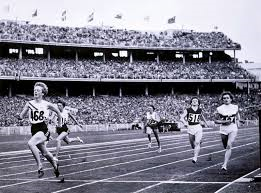
    untitledLast night I was watching Australia, the Untold Story. The show had a fascinating story about the Television coverage of the Melbourne Olympics. At the time Television had only recently been introduced to Australia. The 1956 Melbourne Olympics was the first time that the Olympic Games had been held in the Southern Hemisphere, let alone Australia. Broadcasting the Games was a mammoth task.  The ever so new television industry of Australia had the  ginormous responsibility of bringing the Games live to the TV sets of Australians and the world.

    I cannot remember the name of the guy who was in charge in 1956, but apparently he had no idea about how live television worked. He did not even know how the equipment worked let alone how to control the cameras. Things like placement, close ups, switching cameras and the like; all these things were foreign to him. Indeed when the technology for the live television broadcast arrived in Australia no one knew how to use it or how it worked. It is fair to say everyone, including the guy in charge, was winging it.

    Despite having to navigate this enormous learning curve the live television broadcast of the 1956 Olympics was a brilliant success. Indeed the guy in charge introduced many new live television strategies and techniques. He apparently was told such techniques were not allowed. He didn’t care, he tried them anyway. He was a true risk taker and set the standard for sports broadcasting for many years to come. It was said that before the Games commenced he was sitting down by himself at the MCG and he broke down and wept. The enormity of the responsibility he had taken on hit him. But he did it!  It is probably one of the greatest achievements ever by an Australian.

    For some strange reason this story took me back to the very first Rebuttal. There were five of us and we were about to release a publication that aimed to challenge conceptions of the deafness sector to the very core. The five of us felt that the deafness debate was very much controlled by a few and that decisions and ideas were very rarely challenged. In setting up The Rebuttal we had long discussions about legal ramifications and the like. It was not quite on the scale of the Melbourne Olympics TV broadcast but like the guy who was in charge of the broadcasting, we were putting our heads on the block. We were on a hiding to nothing.

    That very first Rebuttal in 2006 challenged the deafness sector to consider employing people who are Deaf  as the bosses of deafness organisations. The message was simple, that we have a wealth of Deaf people out there who have the skills to take charge. The challenge for the deafness sector was to identify these people and begin to systematically employ them in the major leadership roles. Despite having a wealth of talent and skills among people who were Deaf the deafness sector primarily chose hearing people for leadership roles. Rather than look at the talent that was available among professionals who are deaf, it seemed to us that the deafness sector chose to find reasons to ignore this talent.

    The excuse that most deafness sector organisations used for not employing people who were deaf in leadership roles was the MERIT principle. They would claim that they didn’t give the Deaf person the job because the hearing person they picked had much more experience and won the role on merit. Well of course they had more experience. Most likely they hadn’t faced enormous barriers to getting work and retaining it.  I mean people who are Deaf didn’t even have full access to the telephone up until the mid 90’s. Interpreters were in short supply, captioning for work didn’t exist and government programs that were to be introduced later, like the EAF, were a distant Utopia.

    What this meant is that for most people who are deaf or have disabilities, the opportunities to take on leadership roles and to obtain the experience that would enable them to compete with hearing  and non disabled people simply didn’t exist. In the new millennium technology and improved Government programs meant that some of these barriers were removed. This was fabulous, but it also meant that people who I went to University with and people who started University after me, and who had faced little disadvantage, had long since passed me by. While I was struggling for something as simple as telecommunications access these people had moved up the management rung at a rapid pace. How am I, and people who are deaf of my ilk, supposed to compete with them on merit?

    The other thing that really gets me is that there were people in the deafness sector who would tell me that people who are Deaf are not ready to take on the leadership roles. I kid you not!  I have lost count of the number of times where I have heard people tell me that so and so was aiming too high and should set their sights a little lower. So and so might have two degrees and an MBA but, apparently, they still  needed more time. Just recently I heard that there was a line manager within the deafness sector who was “being groomed” for the CEO role.  How insulting is that?

    Out there we have a wealth of talent. We have any number of people who are deaf who could step in and carry out a deafness sector CEO role with aplomb. In fact, if they so chose, a deafness sector organisation could advertise its CEO role and state that only Deaf people could apply. I am 100% certain they would find a wealth of deaf talent out there ready to take on the CEO role – AND I MEAN READY. Don’t give me this “grooming” crap. Don’t tell me that so and so will be ready – IN A FEW YEARS. I am telling you – here and NOW – Deaf people are ready and they don’t need no grooming . (And that goes for the disability sector too, thank you very much.)

    The Deaf community is full of talented, innovative and experienced people who are ripe for the picking. I am 100% certain that you could take any of our Deaf Societies and fill every role from top to bottom with professionals who are deaf. Except, perhaps, interpreting roes where hearing is required. We could have a CEO who is deaf. We could have a Business Manager who is deaf. We could have Human Resource manager who is deaf. We could have a Fundraising Manager who is deaf.  We could have a Services Manager who is deaf. We could have a Senior Projects Officer who is deaf.  All of these roles could be filled by people who are deaf and who are imminently qualified for these roles. Yet in the last few years several of these positions have been advertised. I am aware that several imminently qualified people who are deaf that have applied for these positions and missed out. They missed out to people who are hearing because, supposedly, they didn’t quite have the same experience. They lost out on merit. Funny that, hey?

    I challenge anyone of our deafness sector organisations to open up its CEO role and allow only people who are deaf to apply for it! I challenge them to replace every senior manager that they have with a person who is deaf. I challenge them to proactively seek out people who are deaf and use affirmative action to fill these roles only with people who are deaf.  And why? because people who are deaf  already have the skills that they require. If the deafness sector wants the wider world to employ more people who are deaf, they have to practice what they preach.

    If some guy that knew nothing about television can come on board and successfully organise the live broadcasting of the 1956 Melbourne Olympics, surely this is possible? And what’s more, unlike the guy that successfully organised the broadcasts, these professionals have the experience already.  Which organisation will take up the challenge?????? If the 1956 Olympics could take the risk of employing a complete novice to run its live broadcasting, targeting imminently qualified people who are deaf for leadership roles in the deafness sector should be easy!


    *** I am aware that in recent years several people who are deaf have risen to management roles in deafness sector organisations, including the role of CEO. However, progress is still far to slow.


  • crossIf you ever wanted proof that the Deaf community consists of talented, committed and passionate people you only had to be at the forum that was organised by Deaf Victoria last week. Deaf Victoria organised this forum so that its members could begin to understand the new membership structure that was being proposed by Deaf Australia, as well as the Deaf Friendly Scheme.

    The great thing about this forum was that it was live streamed. the live streaming technology was provided by Vicdeaf. The technical expertise was provided by staff who were Deaf and employed by Vicdeaf.  Of course the live stream was all set up and run entirely by technical people who were Deaf. They had the live stream programmed to receive captioning, ably provided by Bradley Reporting. And of course there was also Auslan interpreting. Here we had live streaming, interpreting and captioning – all organised By Deaf Victoria, a very small and not very rich organisation. It was world class best practice in accessibility and all organised by Deaf people. Deaf Victoria put some of our bigger and far better resourced agencies to shame.

    Looking at what Deaf Victoria achieved you would not think that one of the Deaf Communities most cherished institutions, Deaf Australia, was at the cross roads. Sadly that is exactly where Deaf Australia are. The organisation that fought so hard to bring us equal access in telecommunications, captioning, recognition of Auslan and improved access to education and employment is in danger of folding. This is because the Australian Government has deemed Deaf Australia surplus to requirements and has cut their funding. The funding was recently reinstated until the end of June to help Deaf Australia to transition to the new order. Even so, make no mistake that the future of Deaf Australia is in grave danger.

    Deaf Australia has known this for quite some time. In an effort to try and expand its membership and increase its income it has worked hard to design a new membership structure and the Deaf Friendly Scheme. At the forum Kyle Miers and Todd Wright sought to explain and get support for what Deaf Australia has recently implemented through its constitution.

    Unfortunately what Mr Wright and Mr Miers were proposing was not well received, particularly the new membership structure. The purpose of the new membership structure is to ensure that Auslan remains strong and that the integrity of Auslan sustained. The gist of the new membership structure is that people who are deaf, who join Deaf Australia, be assessed in terms of their Auslan proficiency.

    If prospective members who are deaf pass the assessment they only have to pay a once off $100 for life membership to Deaf Australia. They also get the privilege of being able to sit on Deaf Australia’s Board. If they fail they can become members and vote at the AGM, but they cannot sit on the Board. The members that fail will be supported and encouraged to continue to develop their Auslan skills and can resit the assessment at a later date, but with an additional cost.

    The aim of the new membership structure is to expand Deaf Australia’s membership base to include people who are hard of hearing. Deaf Australia want to embrace diversity and include members who are hard of hearing, even those who may not be proficient in Auslan.

    It was a fairly complicated membership structure that included proviso for casual Board membership if people had particular skills that could benefit Deaf Australia. It also had membership for organisations and people who are hearing, but these members have no voting rights. Clearly much thought and debate had gone into the development of this new membership structure. Unfortunately it was not well received by people that attended the forum in person or virtually.

    It is fair to say that the whole membership structure was pretty much loathed by the majority. People who had been signing all their life didn’t respond well to the idea that they needed to be assessed to become members. People questioned the fairness of embracing people who are hard of hearing but not allowing them to be full members of the Board unless they passed the Auslan assessment. Questions were asked about the fairness to hearing parents of kids who are deaf who had to pay ongoing membership. In fact no one came out and said that the new membership structure was a terrific idea.

    People seemed to think that people who are hard of hearing  were being used simply to expand Deaf Australia’s membership base without really considering their needs for representation. It seemed that people were questioning the motive of embracing people who are hard of hearing  but not allowing them on the Board unless they were deemed to be proficient signers. The consensus seemed to be that if you have them as members you at least had to give them a voice on the Board. If Deaf Australia were worried about the integrity of Auslan, and about Auslan users being swamped by the potential influx of members who are hard of hearing, they could simply introduce rules to ensure the Board is always an Auslan majority.

    The biggest bone of contention was that Deaf Australia failed to consult properly before introducing the structure. Mr Miers stated that they had consulted with 36 members out of 150 and the 90% of those 36 were in favour. That would mean that 32 out of 150 members were in favour. Most likely some of them that actually voted were current Board members too. Out of a potential membership base of a possible 9000 this was considered a proper consultation. It did not go down very well. In short those at the forum, in person and virtually, rejected the new membership structure outright.

    It wasn’t the result that Deaf Australia wanted. The Deaf Friendly Scheme also received a lukewarm reception.Claims that the Deaf Friendly Scheme had the potential to generate $2 to $3 million,  for Deaf Australia were met with great skepticism.(or was it $1 to $2 million?)

    Still you cant blame Deaf Australia for trying. As Mr Wright said, if members didn’t like what was being proposed they were welcome to propose an alternative. While the criticism of Deaf Australia was heavy there was very little in regard to alternative ideas. Alternative ideas are desperately needed.

    At the other end of the spectrum Deafness Forum are also at the cross roads. Rather than worry about membership and income streams such as a Deaf Friendly Scheme, Deafness Forum are trying to realign Deafness with the health agenda rather than the disability one. Deafness Forum is aiming to have Deafness recognised as the tenth National Health Priority. In this way they hope to be able to tap into different sources of funding.

    Already the skeptics in the Deaf community are taking aim at the Deafness Forum proposal. Mostly because they do not want people to get obsessed with “fixing” deafness. Personally I think Deafness Forum are on the money.

    Why? Because health is far reaching. You can argue that participation in recreational and sport activities is essential for positive mental and physical well being. In this way funding for things such as interpreting and captioning for recreational and sports activities can be secured. You can argue that the health of people who are deaf is at risk because they cannot properly access the health system. You can argue that crisis mental health support for people who are deaf is lacking, thus putting them at greater risk of mental illness and suicide. You could argue that access to language, including Auslan, is essential for the ongoing mental health and well being of young people who are deaf and their families. There are many possibilities. At the moment it is all hypothetical. The only thing that is clear is that both Deaf Australia and Deafness Forum are seriously at the cross roads.

    It is not all doom and gloom though. If the recent Deaf Victoria forum is anything to go by it is clear that the Deaf community is alive and thriving. It’s members care. Not only that, these members are savvy, talented and passionate. That alone will maintain the Deaf community for many years to come – with or without Deaf Australia or Deafness Forum.

    That said, I hope that both Deaf Australia and Deafness Forum do survive – Let’s get in behind them. The constructive criticism received by Deaf Australia at the forum last week proved that the community is strong, do care and have much to contribute – Long may it continue.

    * Since originally posting this article I have edited it to acknowledge the contribution of Vicdeaf who provided the live streaming assistance and also the Deaf staff that provided the technical assistance. This needs to be acknowledged. Viccdeaf are a wonderful supporter of communication access to the Deaf community. They are certainly not an organisation that neglects their responsibility in this regard.

  • Such is Life

    capSuch is life – But it don’t need to be so! Life’s a bitch sometimes. Some weeks are just bastards. There are weeks that you wish just did not happen but they do. Perhaps at work you missed that deadline and you are at loggerheads with the boss. Perhaps  one of your teenage kids has gone off the rails and is stealing money so that you are missing $500 or so from your account. Perhaps you have lost your job, you separated or your dog died. Yup, life’s a bitch!

    Now these little examples that I have provide did not all happen to me. One did and the rest are simply things that happened to friends last week. Yup, last week was a horror for many. Work and personal issues sometimes combine just to make periods of your life living hell. That’s life, there is good and there is bad. Usually the good and the bad even out in the end. We simply have to navigate our way through the minefield.

    Part of what we do to deal with the negative things is to try and balance them with positive things. Some of us struggle to deal with the negatives and require medication. I’ve been there and for a time Diazapam was my friend. Mostly we just try to balance the negatives by doing positive things. We meet friends, play sport, paint, go out for a meal or simply take in a movie.

    For my deaf friend seeking to wind down after a tough week, a simple trip to the movies became a nightmare. Going to the movies is never a simple thing if you are deaf. You have to scour the newspaper ads to see if a movie is captioned. More often than not the ads never indicate whether a movie is captioned or not. Sometimes even when they are advertised as captioned they are in fact not. To be safe a phone call to the cinema is advised to check. The whole process can sometimes be more trouble than it is worth.

    This is what happened toy my friend last night. He had just experienced a week from hell. It happens. If you have a family and have a week from hell your family, simply by association, experiences that week too. As much as we try to cocoon them from the hurt it impacts on them. So my friend and his family, having had a crap week, decided a trip to the movies was what was required.

    Being an experienced movie goer the said friend phoned in advance to see if the movie he wanted to see was captioned. It was, wisely he asked the cinema to reserve him the captioning device that is known as Captiview. The Deaf community have affectionately dubbed the device Craptiview.

    For those not in the know, Craptiview is a device that essentially looks like an alien on a bendy arm. You attach the said device to the drink holder and adjust it so that you can see it and the screen. The captions then appear on this device for people who are deaf. If you have decided to have a drink the said drink then sits in your lap for the duration of the movie because there is nowhere else to put it. No matter, at least you get access to captions.

    So anyway, my friend had rung ahead and booked his device. This is wise because there are only a limited number of devices. If you do not book ahead it is entirely possible that the devices may all be taken and you end up with nothing. Not to worry, my friend has thought ahead. All he needs to do is rock up with his family pick up the Craptiview device and Bob’s your uncle or Deb’s your aunt.

    So he arrived with his family. Its a late show – 9.40 because the cinemas think deaf people and their families are all night owls and schedule the bulk of the captioned movies at these ungodly hours. As they arrived my friend’s wife noted that there were a group of six deaf people there and they each had a Craptiview device. This didn’t worry my friend too much. After all he had called forward and booked his device.

    He arrived at the counter and asked for his device. Oh dear – There were none left. The ticket seller then went off to the manager to get advice. Luckily there was one more device in the back room somewhere and they sought this out. Now these devices are a bit like Playstation controllers. They have to be charged so that they do not conk out in the middle of the movie.

    Oh dear – This spare device was flat. They needed to recharge it. This would take about 30 minutes. No good at all when the movie is starting in five. Particularly annoying for my friend who had booked ahead and arrived 30 minutes early to get his device set it up. I guess when you have had a crap week and then you go to enjoy something as simple as a movie, if something like this happens it might be the last straw.

    This was the case with my friend and he was naturally furious. Not wanting to spoil the night for his family he told them to continue on with the movie. His son offered to wait for the DVD. His wife, having also been part of the week from hell, burst into tears. His daughter, in sympathy for father and mother, burst into tears too. What was supposed to be a relaxing night with the family turned into hell.

    And I am furious too. I am furious because these mega rich cinemas don’t give a shit. They were told Craptiview was crap as soon as it came out. They were told that it spoilt the enjoyment of the movie. They were told that the device was unreliable and the captions frequently dropped out. They were told that the device was, in fact, a health hazard. Said one friend,“Going to a cinema is now a health risk….for myself like many it’s stressful for one, the eyes sight and brain power is two, and the seating is another…especially if one is 6ft plus…slouching in the seat to lower yourself to view Captiview leaves one with back pain post event.”

    They ignored all of this advice and went ahead with rolling out Craptiview anyway. And as they rolled it out  the universal loathing of the device became obvious. Its failings became crystal clear. No  one in the cinema industry that represented the Big 4 cinemas cared. We, the deaf people of Australia, had to suck it up and go without.

    And the cinemas lied. As the Deaf community began to implore for a return to open captioned movies they said it wasn’t possible, that open caption files were no longer available. And then a private cinema provider worked out how to put files designed for Craptiview on screen. “Look!” we said, “It can be done.” 

    And then the cinemas tried to prevent this happening because they had concerns about quality control. And then the Deaf community began to take things into their own hands. they would book out cinema rooms and sell tickets so that they could get access to open captions. There was even a DDA complaint that meant distributors had to supply open captioned movies, something that they had denied could happen.

    And in Horsham the local cinema regularly provides open caption sessions. Simply because a deaf woman and a mother of a deaf child asked them too. They provide open captioning in Ballarat and Ararat too. Small cinemas willing to do the right thing. These are not mega rich cinemas either.

    But the Big 4? Hoyts, Village, Reading and Greater Union refuse to join the party. For them the pathetic excuse for access that is Craptiview is enough. Despite its failings and despite the complaints they continue to provide a device that often is flat, often doesn’t work properly and to top this off is a health hazard for many.

    But worse is that they don’t care about people. They fail to see the impact that not having proper and quality access to the simple joy of a movie can have. Last night Craptiview failed again and the pain this caused to my friend was immense. All he wanted to do was wind down after a crap week, instead his crap week became crappier. Thanks Craptiview.

    This has to stop. It is time for all of us to take up arms again. It’s time to start making DDA complaints en-masse. It is time to Boycott the Big 4 in every shape and form.

    As for the Big 4 shame on you – You heartless bastards! But yeah – Such is life!

    (Last nights fiasco happened at the Knox Cinema complex which is part of the Village franchise. I encourage you all to post on the Village Facebook site them and let them know how appalled you are –  https://www.facebook.com/villagecinemas

  • sticksKaren Lloyd, former manager of Deaf Australia, wrote a pointed article on her Blog … Sticks in the Forest  In this article Ms Lloyd makes an impassioned plea for us to all get together to save Deaf Australia. Deaf Australia were recently defunded by the Australian Government. Ms Lloyd calls for unity using a well known metaphor, “A teacher takes some students to the forest and asks them to each bring her a stick. When they return, the teacher takes each student’s stick in turn and breaks it. She sends them back into the forest to collect more sticks. Again she takes each stick and breaks it and sends them back to the forest. The third time the students return, they confer and when the teacher asks for their sticks they give them to her together in one bundle. The teacher cannot break the sticks, the bundle is too thick and strong.”

    The moral of this little anecdote is that together we are strong. As individuals we are weak. As a collective we are hard to break and can present a united front. Ms Lloyd is pleading with the Deaf community to bind together as one to save Deaf Australia.  Ms Lloyd admonishes the reader , “Now is not the time to be dragging out personal dislikes, ancient grudges, criticisms and personal agendas.”  

    And she is right to a point. But the problem is, as I see it, the Deaf community has changed dramatically over the years. Arguably for Deaf Australia to survive and represent the Deaf community of the 21st century it has to represent this change. It is all very well to plead with us to save Deaf Australia, but what is it that Deaf Australia should represent in the 21st century?

    To return to Ms Lloyd’s metaphor of the sticks, what really is this bunch of sticks representing? Now we could argue that this bunch of sticks is uniform and the same. That together they are stronger and hard to break. They are united in their approach and presenting a strong platform. All of this is valid.

    But we can also argue that this bunch of sticks lumped together is rigid and inflexible. We can argue that it is representing a uniform and unbendable view. We could argue that each stick is a different colour, from a different tree with varying and diverse needs. Some of the sticks are green and bendy. Some are dry and easily broken. Some are long and some are short. All are different. The survival of the sticks requires a flexible, diverse and considered strategy.

    As we move forward to consider the survival of Deaf Australia we need to consider this diversity. The make up of the Deaf community today is very different than what it was in the past. A lot of this has occurred because kids who are deaf are receiving cochlear implants at a very early age. My observation is that the majority of young people who enter the Deaf community now have cochlear implants.

    The consequence of this is that the values and needs of the Deaf community have shifted. The issues that these young people see as important are also changing. They want access to maintenance of their implants. They want access to sound. They value sound perhaps more than Deaf community members of the past. While they embrace the Deaf community and Auslan they bring with them a different set of values and needs.

    Over the years I have observed closely young people who have been implanted . Of course most of these young deaf people are from hearing families. I have no research to back this but anecdotally I have noticed that their speech quality is better. Their language development is better and we have less language deprived deaf kids. Academically they appear to be performing better. The consequence is that they are more articulate and savvy.

    That is not to say they do not have their problems. They still have delays in conceptual development and language. They still struggle socially. They still miss out on many things that can benefit their development such as overhearing. We cannot ignore this but I have noticed that the conceptual and language delays are more frequently not as severe as was the case in the past.

    As the community evolves, how we represent these new community members must evolve with it. Organisations like Deaf Australia are funded to represent their community. The challenge for the future is to change how it represents this community so that its policies and issues represent the diversity of its members.

    The political landscape has also changed. We have the NDIS coming in. Most issues impacting on the Deaf community are decided by State Governments. Important issues like access to education, health, local services, local communities etc are all decided at State and Local government level. Arguably we need to focus more on strengthening local and State representation. How do we do this?

    There is no question that the Deaf community needs Deaf Australia. The recent defunding of Deaf Australia may, in fact, be a godsend. It might be the trigger it needs to reset its agenda and consider the changing demographic and political landscape of the Deaf community.

    As Ms Lloyd has suggested, it is important that the community become stronger and move forward together. It is also important that new and evolving issues are debated widely. It is important that Deaf Australia consult broadly with its members. Indeed it is already doing this now. On March 13th Deaf Australia, in partnership with Deaf Victoria, are holding a forum to discuss its new membership structure and the Deaf Friendly Scheme.

    To the credit of both Deaf Australia and Deaf Victoria they are trying to make this forum as accessible as possible. The forum will be media streamed meaning that members of the Deaf community from all over Australia can participate. The media stream will be captioned as well.

    This Forum will strictly focus on Deaf Australia’s new membership structure and the Deaf Friendly Scheme. It will touch on what Deaf Australia is doing to make Deaf Australia a stronger and more inclusive organisation. Let this forum be the start of a stronger and more intelligent community involvement with Deaf Australia. Let’s help Deaf Australia navigate the tough road it has ahead of it.

    Deaf Australia Membership Structure Forum

    When:             13th March.  

    Where:           JML Centre Vicdeaf, Level 3, 340 Albert Street East Melbourne

    Time:              7pm – 9pm

    Media Streaming Link – http://new.livestream.com/vicdeaf 

    If attending the forum, please RSVP to info@deafvictoria.org.au

  • shakey
    Picture of William Shakespeare with quote – Unnatural deeds Do bring unnatural troubles. Infected minds To their deaf pillow will discharge their secrets.

    “How should I interpret this in theatre? The word is Baroque, but it is a play on broke. ‘If it’s not baroque, don’t fix it!’”

    I remember having a discussion about this with an interpreter who was doing the performance of Beauty and the Beast.  The very first interpreted theatre I saw and it was a fascinating insight in the thought, preparation and care in delivering an accessible theatre performance. I watched it in wonderment with my mother and sister. It was the start of my love affair with accessible theatre and sharing the experience with family and friends.

    Did you know the United Nations Convention for the Rights of People with Disabilities  (UNCRPD) clearly outlines that, “States Parties recognize the right of persons with disabilities to take part on an equal basis with others in cultural life..”

    Fantastic! That’s my right to access the theatre ticked!

    It also adds; “Persons with disabilities shall be entitled, on an equal basis with others, to recognition and support of their specific cultural and linguistic identity, including sign languages and deaf culture. “

    Even better. We can pick what the appropriate mode of access is– Auslan interpreters or captions that suits our disability best.

    Finally the piece de resistance – “…that persons with disabilities should have the opportunity to be actively involved in decision-making processes about policies and programs, including those directly concerning them..”

    We get to be consulted. We get to be asked what we want! Captions or Auslan interpreters or both! Fan-bloody-tastic!

    Right now, interest in accessible theatre has never been higher.  We have Auslan Stage Left who provide interpreters for a wide variety of theatre, from big to small budget productions, from lavish musicals to minimalist dramas, from community events to book readings. For others, there is the Theatre Captioning Studio, who provides captioning access via iPads or TV units for usually different theatre productions from Auslan Stage Left. Other theatre venues also include hearing loops as another way to provide accessibility.

    The Gordon Frost Organisation brings many popular productions to Australia. Of these, Dirty Dancing, Once, Wicked are some of their shows. Wicked was Auslan interpreted in Victoria this season.  Attendance and reviews were excellent. Then, the Gordon Frost Organisation decided to provide captions for Wicked in NSW only and did not provide an interpreted performance. Confusion reigned as to the sudden changes in accessibility without any prior consultation or reasoning.

    Enquiries were made about Dirty Dancing and accessibility. Gordon Frost said it would be captioned. We asked about Auslan interpreting as well. The answer was no. It would only be captioned and they were trialling it as an option.

    Surely that’s okay I hear you ask? Surely captions would be better suited for everyone, I hear you say? Well, being deaf is not the same experience for everyone. Different hearing levels, different language and literacy levels and different communication levels mean that the deaf population is very diverse. Not everyone has the speed to read captions quickly. Not everyone has the required English expertise to understand and decode text and understand the different layers of meaning in a sentence. This is where Auslan interpreting comes in.

    The interpreters are skilled in translating the meaning, the nuances of dialogue, and the emotion within the voices of the actors. What we cannot hear clearly, the interpreters show.  The amount of work and professionalism the interpreters put into their show is amazing. Being a part of the Les Miserables experience as a language consultant gave me a better appreciation for the work they did. Over 80 people attended that night. It was a significant success.

    We must not forget that captioning provides access to many people with a hearing loss who do not use Auslan. It is equally important. I watched Love Never Dies and a Shakespearean play with captions.  People who do not use Auslan have a right to theatre access too.

    However, I love interpreted theatre because there is such a big community feel about it. Many people I know who use Auslan attend along with me. Sharing it with your friends and discussing the performance in detail after enhances the theatre experience.  Ideally theatres performances will provide access through both Auslan interpreting and captioning.  Let’s not also forget hearing assistance technology like loop systems; this enhances access also.

    The UNCRPD clearly says we have a choice and we have the right to be consulted. An email sent to Gordon Frost saw them reply they were providing access in a manner they saw appropriate, albeit in a different form. Where was the consultation with their Deaf and hard of hearing consumers? Where is the acknowledgement that different access needs may be required?

    Unfortunately the consultation did not occur. Gordon Frost were making decisions based on their own judgment and without consultation. Sadly this means that many people who prefer access through Auslan will not get the access that they require.

    We have to educate and remind decision makers that to be deafness is diverse and access is different for everyone.  We must remind decision makers of  the right to choose the access that best suits us.  Most importantly we have to remind the decision makers of their requirement to consult.

    Email Gordon Frost. Email producers of other theatres. Remind them of your right to have a choice. You are the one requiring access, not them. You are the one paying your view the show, not them. There is no one size that fits all, access requirements are diverse. We must remind and demand this from our theatre producers.

     “If it’s not baroque, don’t fix it.”  Don’t let them break it!

    If you wish to email your thoughts about theatre access do so to the following email addresses. Be sure to CC them all.

    info@gordonfrostorganisation.com

    www.auslanstageleft.com.au

     http://theatrecaptioning.com.au/

  • Listening In

    217f2b713275aa77d1dfb1ba5879fe7cddd9aecd
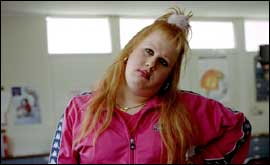
    Photo of Vicky Pollard, Character from the TV show, Little Britain

    I have recently become a regular user of public transport. The interesting thing about public transport is that human behaviour is laid bare. If you sit back and observe, you will see human quirks in all their glory.

    On a train you will have a bogan sharing space with the prim and proper. You will have a man in a Hugo Boss business suit standing next to a woman in leotards who is, no doubt, heading down-town to the gym. You will have the grimy the clean, the young and the old, the nice and the foul all sharing a confined space.  It is a zoo!

    The most amazing thing about people on the train is that they are so nosy. If they are not trying to look at a person’s phone or newspaper over that persons shoulder they are constantly eavesdropping. They give the impression that they are minding their own business by focusing on their phone, listening to their music or seemingly being engrossed in their book/newspaper- but I know better.

    I was watching my fellow commuters one morning. There were a group of teenagers and they were typically rowdy. They were talking about god knows what and laughing loudly. They were standing next to an elderly woman. As they chatted away you could see her furtively looking over her shoulder. Perhaps the teenagers were having a Vicky Pollard moment. Their conversation might have sounded something like this:

    “Yeah but no but yeah but no but there’s this whole other fing wot you dont know nuffin about so SHARRUP! u SHURRUP! and Tasha ses ur gay but dont listen to er cos she smokes weed and she’s pregnant with Darren’s baby so SHAP u!Doesn’t matter ne way coz we got one of dese (sniffs pritt stick) Come on girls, lets gwo, dis place is RABBASH! takes a bow u like? – “

    What ever they were talking about the elderly lady did not look impressed. Occasionally her eyes would widen, as if in shock. Then she would give her head a little shake and gently puff out her cheeks as if to show her disgust. Other commuters would simply roll their eyes. A few would grin. Others who didn’t want to know would reach for their music devices. You could see them adjusting the volume in the vain hope that it would shut out the mindless conversation and worthless noise coming from the youth.

    Being deaf I am spared the mindless chatter of my fellow commuters. Nevertheless, I remain fascinated about what I may be missing. Just as an experiment I decided to try and lip-read peoples conversations. At the seat across the aisle a woman was in animated chatter with her friend. Of course trying to lip-read and look inconspicuous is no mean task. I gave my best impression of looking at the scenery through the window and fixed my sight firmly on the woman’s lips. She said something like:

    “At this point my father in-law joined the conversation…..”

    And this is as far as I got because the woman twigged on that I was looking at her. She leaned forward to her friend and began to whisper. I have no idea what she said but it was probably along the lines that some creepy old guy across the aisle staring at her.

    What I really needed was Sign Guy. This is, of course, the wonderful Mark Cave.  Mr Cave has become an overnight sensation for his brilliant interpreting of the recent cyclone emergency in Queensland. Sign Guy has become an internet sensation and stories about his exuberant and expressive interpreting have been printed all over the world. I need Sign Guy to zoom in, like Superman, and eavesdrop on conversations on the train for me.

    But wait, I have my own Sign Guy. I was travelling this morning with my son, Finlay. I was determined to eavesdrop on a conversation and Finlay agreed to assist me. At first he told me not to be stupid. A bit of bribery in the form of letting him use my phone to while away the boredom of the trip home was all that was needed to loosen his ears.

    He sat himself directly opposite two geeky looking guys and relayed their conversation to me. It went something like this:

    “They are talking about currency and gold and bronze and something like that.”

    “He is talking about being more adventurous with his food and making arrangements for dinner.”

    “He made some kind of joke about coming to terms with his gayness.”

    “This is the worst conversation in history dad … can I have your phone now.”

    You may laugh but there is a seriousness in eavesdropping for people who are deaf, particularly if they are young. For example the discussion on currency could have piqued some interest in a young person. After listening to the conversation of the two geeks they may have gone home and recounted the conversation to their parents. They might have learnt from this of the various currencies all over the world, how the exchange rate works and so on. Simply by over-hearing this simple conversation they have a pathway to learn something new and expand on new concepts.

    Or they may gave gone home and mentioned the joke about coming to terms with ones gayness. This may have led to discussions about coming out. It may have led to discussions about the appropriateness of making jokes about gayness. Perhaps over dinner the topic is raised and a discussion ensues about same sex marriage. Through the simple art of over-hearing much can be learnt leading to much maturity of thought and knowledge.

    But if you are deaf you miss out on this information. What may seem an inane conversation between people is in fact a wealth of knowledge to be tapped into. It’s a natural learning that occurs through everyday social interaction. It happens on the train, it happens at school, it happens waiting for the bus – IT HAPPENS EVERYWHERE. Yet if you are deaf you miss out on it. The consequences can be profound. New vocabulary is missed, new concepts are missed, diversity of opinions are missed. This can have a profound impact on the development and maturity of the young deaf person.

    For me I am simply a nosy old man. But eavesdropping is a crucial part of our social learning and its impact is not well understood. So next time your deaf friend or your deaf child asks you whats going on, take the time to let them know. Just by taking the time to fill them in can help them feel included. More importantly it can be crucial for ones learning and social development – More than most people will ever know.

  • imagesI have been a victim of workplace bullying. It is absolutely no fun at all. It was made worse by the fact that the perpetrators had no idea as to what they were doing. For them they were, ” … being professional.” or they were, “.. ensuring the integrity of the organisation.”  

    When you are the only person in the workplace who has an obvious disability everything that you do is magnified. If I miss a meeting, because I am ill or held up, everyone knows because the interpreters make it obvious. If I do things differently, simply by doing the bulk of my communication electronically, I am challenging the culture of the organisation. It is very hard just to blend in seamlessly. I envy workers that can.

    At my last work place I fought this bullying for almost 18 months. I am an advocate, I fight for the rights of people with a disability. I fight hard and I take no backward steps. I challenged the organisations professionalism. I demanded change from others because without that change I could not work. And the organisation resisted the change to the point that they were monitoring my every move including my Facebook.

    They wanted to trip me up and lay blame on me. The simple solution would be to tell their staff to respond in an appropriate time frame to electronic communications so that I could do my job properly. But no, this was too hard and everything was my fault. They were sly and they were nasty. They delayed approving work. They delayed providing feedback to reports and then demanded that they be completed. They refused to respond to emails. In short they did everything possible to make it impossible for me to do my job.

    In the end I broke down. The relentless pressure got to me. The constant looking over my shoulder got to me. It got to a point where I thought I was working in a fish bowl where my every move was scrutinised.

    After 18 months my confidence was shot and they broke me. I was off work for two months. I am fixed now, but they broke me for a time. That was almost 12 months ago.

    I have been thinking about this often recently. I have been thinking about how people become bullies without really knowing it. Not just the people at my work but even YOU the reader. Even me the WRITER. We become bullies simply through our everyday actions. And like my workplace did, we try to justify it. It took Tony Abbott to make me realise this.

    “TONY ABBOTT is like the man who has stepped in what a dog left behind, yet is mystified by the rank odour of everything he approaches.”[1] Imagine arriving at work and opening your email to read this! It may well be true, but imagine if this was you. Imagine if this was just one of hundreds of things that you had to read about yourself everyday, simply because you were doing your job.

    For Tony Abbott this is the reality. His workplace is Australia. He is our Prime Minister and is under immense pressure. To the best of his ability he is doing his job. Sure I do not like the way he is doing his job. I do not like the policies of his Government. I think they are grossly unfair. I do not like the “Stop the Boats” policy, I think its inhumane. I think the rich are getting off easy and the poor are carrying the can. That’s my view.

    Tony Abbott has a different view. And for that he gets lampooned everyday. He will turn on the TV and he will be critisised roundly. He will open up his social media  and there will be any number of memes ridiculing him. And they are nasty, believe me they are nasty.

    Here are some of the things people think are ok to print about our Prime Minister:

    1) Fuck I’m a dickhead – Vote for me you stupid woman! (meme)

    2) Hey girl, our broadband uses the latest technology, hold my 3.5 inch floppy and I’ll show you. (meme)

    3) Tony Abbott is a misogynist, sexist, homophobic, bully, racist, a liar and is the worst PM in Australian History. (Tony Abbott Worst Prime Minister Ever Facebook page.)

    4) ‘Mutant pig with human face and penis on forehead draws crowd’. My first thought was that Tony Abbott was holding another press conference. (Comment on Anti Tony Abbott propaganda.)

    Just for doing his job, whether we agree with how he is doing it or not, he must put up with this every day. If you have been bullied, if you have been made ill by bullying, if you have known people to suicide because of bullying – this kind of treatment of any human being has to worry you.

    And this happens not just from us the bullying public, but from people within Mr Abbott’s own Party. With this immense pressure he is expected to do his job. His every gaffe is printed and his every mistake laughed at. From here to America he is lampooned as the worst Australian Prime Minister ever. And the Australian public think it is perfectly acceptable. And shamefully I, who have been a victim of workplace bullying, have contributed to it.

    And I fear for Mr Abbott. His behaviour is becoming all the more erratic. His gaffes are becoming all the more prominent. Surely we can disagree with our Prime Minister without the constant cruel and cutting comments. By all means protest, suggest alternatives, lobby hard and even vote him out. But play the man – not the ball.

    Some will say that it is just the life that politicians choose to live. Others will say that he has it coming. I say we all need to take a step back and think long and hard about what we are doing. I am no fan of Mr Abbott or his Government. But whether we like it or not, he is just doing his job and trying the best he can.

    It is time for us all to clean up our act.

    [1] https://independentaustralia.net/politics/politics-display/tony-abbott–meet-sigmund-freud,7367

  • crossBefore I commence with this article I must go on record to say that I have nothing but respect for the organisation that is Deaf Australia. I think it is a valuable organisation that has served the Deaf community tremendously. I have many dear friends who have served with Deaf Australia on the Board. It has achieved much and is a true cultural institution of the Deaf community.

    As the primary author of The Rebuttal I have sometimes been critical of Deaf Australia and Deafness Forum. This is not because I have any ill feeling towards either organisation. It is because I feel strongly about issues and I believe it is important to discuss alternate views. Be it captions at the cinema or the lack of consultation with members,  I have spoken up often. I have been critical and I have been criticised back. That is ok. People in glass houses should not throw stones as they say. I have to be prepared to accept criticism if I dish it out.

    Recently Deaf Australia and Deafness Forum were defunded. They were defunded along with a host of other disability advocacy organisations. The Government, in its wisdom, has decided decided to fund a Cross Disability Peak. The new Cross Disability Peak comprises of five organisations:

    • People with Disability Australia
    • Children with Disability Australia
    • First Peoples Disability Network Australia
    • National Ethnic Disability Alliance
    • Women with Disabilities Australia

    This new Cross Disability Peak will receive up to $300 000 per organisation. They will be expected to represent all disabilities across the various portfolios. For more information click HERE.

    Predictably the organisations that have been defunded have had an almighty dummy spit. They claim that Cross Disability will not work. They claim it is unrealistic to expect this organisation to represent all disabilities. They claim that the new system has effectively silenced the voice of people with a disability. I share these concerns.

    However, I believe that to show that Cross Disability can not work you first must work with the new system. Protesting now, before any evidence has been gathered of the effectiveness or otherwise of the new system, is counter productive. If one is to say the new Cross Disability focus will not work they have to show that it is not working. This can only be done by making an honest and professional attempt to work with the new system.

    If at the end of the day the new system is effective, then wonderful. If it is not, then at least one can say that they made a real attempt to make it work. They can present data and evidence as to why the system did not work. One cannot dismiss this new system without at first giving it a fair go. That is my view.

    I have publicly stated this view on many social media discussion sites. In doing so I have come in for some abuse. I have been accused of having it in for Deaf Australia. I have almost been accused of celebrating the demise of Deaf Australia. Let me go on record, here and now. I take no pleasure in the threat to the future of Deaf Australia or any other defunded Disability Peak.

    Today Deaf Australia put out a media release. Predictably it was an angry media release. It denounced the Abbott Government. It claimed that the Government had deliberately silenced the voice of Deaf Australians. They claimed that the new Cross Disability Peak simply could not hope to represent the complexity of issues associated with the Deaf community. I agree to a point  – But at this early stage, and before the new Cross Disability peak has properly commenced business, they have no evidence to back their claims.

    Bizarrely, the President of Deaf Australia had this to say of the new Cross Disability Peak, “…it seems to indicate that the government thinks that the primary disability someone can have is being labeled as a woman or a child. For a deaf person, gender, race, cultural background or population group is not the issue.” This statement, to put it mildly, is ignorant to the extreme.

    The new Cross Disability peak represents five groups:

    • People across disabilities.
    • Women.
    • Children.
    • Aboriginal and Torres Strait Islander people withe a disability.
    • People with disabilities from ethnic backgrounds.

    Now the Government has in no way implied that being a woman is a disability. It has in no way implied that being a person who is of Aboriginal Torres Strait Islander descent is a disability. It has not implied that being a child is a disability. Yet Mr Wright has made this totally bizarre statement that, “The Government thinks that the primary disability someone can have is to be labelled as a women or a child.”

    It did nothing of the sort. What it did say is that within these various target groups, disability exists. There are woman who have physical disabilities, there are women who are deaf, women who are blind and women who have multiple disabilities. Likewise for children. Likewise for ethnic backgrounds. What it implies is that within these groups there are specific disability issues.

    This might be one of the strengths of Cross Disability. If you are woman with a disability and a victim of domestic violence there might be specific issues that impede your access to support. For example there are houses where women who are victims of domestic violence can reside and be safe. Now it is well known that women with disabilities can be vulnerable to abuse. Are these houses accessible. Do they have ramps, accessible toilets and the like. In the case of deafness when counselling is provided is interpreting funded or provided? If you have an intellectual disability and have been abused, is information available in Plain English or in formats that people with an intellectual disability can understand?

    Potentially the new Cross Disability organisation can now lobby for all of these issues to the Government as one. Rather than have several organisations approaching the Government from different angles, and with different messages, there is one coherent message being provided to the Government. It can be a message that has been developed through extensive consultation across disabilities.

    Aboriginal and Torres Strait Islanders people with a disability also have specific issues that need to be targeted. Displacement, ear health, isolation, remoteness, access to equipment and technology. There are women of Aboriginal and Torres Strait Islander descent who have disabilities and who have been victims of domestic abuse. There are children that can benefit fro the expertise of the Association of Children with a Disability. All these issues are Cross Disability. Potentially there are many benefits for people of Aboriginal Torres Strait Islander descent who have a disability.

    Across disabilities, and across specific target groups, there are many overlaps in relation to disability. A Cross Disability Group can, potentially, present a stronger and more coherent message to the Government. Rather than weakening the disability advocacy message it may, in fact, strengthen it.

    That said I am skeptical that the Cross Disability Group will have the expertise to understand all the issues across the various disabilities. I am skeptical that it will be properly resourced to be able to consult across such a diverse platform that is disability. I am old school, I prefer specialisation.

    But being skeptical does not allow me to be outright dismissive. I believe strongly that the new Cross Disability organisation must be given every opportunity to succeed. If it does not, and we have given it a fair crack of the whip, we will at least have the evidence to show that it is not effective.

    I realise this is cold comfort for organisations like Deaf Australia who are struggling to survive. I have no idea how long Deaf Australia can survive. I have no idea how long Deafness Forum can survive. What I do know is that the anger and the dummy spits that are currently occurring among the Disability peaks that have been defunded will achieve nothing. Abusing the Abbott Government, as useless as it is, will achieve nothing. Making sensationalist claims that, ” .. the Abbott Government does not want deaf people to have a voice… “ will only alienate the deafness sector even further from the Government.

    By all means document concerns. By all means articulate the skepticism of the new system. But do not dismiss it outright. The new system may surprise us all yet. I have my doubts but I am prepared to give it a go.

    I hope Deaf Australia survive, they are very much needed. But if they are to survive they have to work a hell of a lot smarter than they are now.

  • Jo’s Story

    dogI am very proud to be able to bring you this story. Through my work I have developed an extensive network, especially through Facebook. One of the friends that I have made, but never met, is Jo Russell. 

    Jo is the mother of Meghan. Meghan has severe autisim. I often see Meghan referred to as the Megsta in Jo’s post. Last year Jo had a battle with severe depression. She told her story today on Facebook. She has given me permission to print her story here.

    Thank you Jo. We hope by sharing this story it will help others to realise that they are not alone. I give you the wonderful Jo Russell.

    So this morning I thought I’d have a chat about my battle with depression. Only because I’ve had several people message me privately, and it appears it is more common than people would think. But I promise I won’t be talking about it every day, and perseverating on the same topic, it would get tiresome and repetitive.

    I first felt the sting of depression about a month after after Megan’s tenth birthday which was last year in mid March. I remember waking up with a start in the middle of the night with a panic attack, the trigger was Meg’s birthday, and the stimulus was the realisation that in spite of my best efforts, I hadn’t “fixed” Meg, her autism was still highly prevalent.

    From there, the slide downhill was quite rapid. My brother Greg who is a master of solving problems, came to Kalgoorlie, and organised for me to be admitted to Perth Clinic. I booked in there in around the middle of March. I was quite confused and astounded that I had fallen prey to such severe depression, it was foreign and debilitating, and I didn’t like it at all. My little(!!) other brother (who stands over 6ft tall), Paul Rogers, arranged for me to occupy a private room, rather than sharing with someone else in a double room. Although our medical insurance didn’t cover the full cost of admission to the clinic, Paul contributed the difference.

    Whilst in Perth Clinic, I attended group therapy and learned about strategies and methodologies with which to combat depression. After four weeks, I flew home to Kalgoorlie. My mother stepped into the breach of caring for Megan whilst I was hospitalised. Otherwise, I would have been stuffed.

    Greg escorted me home – I was the beneficiary of significant family support, which I was very fortunate to have available to me. I felt reasonable upon discharge from the clinic, and was ready to deal with life again. I failed however, to realise how persistent and all compassing severe depression can be.

    I was functioning okay and holding down a part time job up until the middle of June. But once that was ceased, I slipped into the guts of a severe depression again. I decided to see the psychiatrist, and electro-convulsive therapy was suggested. I had been on medications of about 4=5 different types, in quite large doses, with no appreciable effect.

    Once again, I returned to Perth for treatment. I undertook a series of ECT, approximately 12 episodes, which is the standard number for treatment of depression. There were quite a few people ;who thought ECT was similar to how it was portrayed on One Flew Over The Cuckoo’s Nest. But these days, ECT therapy is applied much more scientifically, and is done under general anaesthetic by a trained psychiatrist. A muscle relaxant is also administered to prevent unnecessary contraction of muscles when the shock is applied.

    Once I had received my “package” of twelve sessions, I flew home to Kalgoorlie, keen to remove myself from a situation where I felt as though I was a leper. Unfortunately, I may have jinxed myself with my rapid approach to ECT of get it done, and get the hell out, as I was barely home in Kalgoorlie for 4 weeks, before I was already struggling again, and seeking help.

    I was admitted to Kalgoorlie Regional Hospital in September, with a noticeable slide in mood and affect. My mood was low, and my outlook bleak, very bleak in fact, and I battled to find anything uplifting or encouraging. Whilst I wasn’t in the situation of being one of those who self-harm I could absolutely understand why people do. It was as though a black scarf of depression had been cast over me, and there was absolutely no crack of light or relief in sight.

    After a week in hospital I was discharged, and went home, not awfully improved to when I was initially admitted. I elected to stay at my mother’s house, as I felt uncomfortable about going back to my own home, The reason why I felt like that, I can’t really say, that was just how it was.

    Naturally my mother had been caring for Megan, and then took on the task of caring for me. I ‘m not proud of that period of time, but again that was just how it was at the time. After around 4 weeks, I returned home gradually, although Megan remained in the care of my mother, as I was barely capable of caring for myself, let alone a young child with severe autism.

    I struggled along, with no noticeable improvement in mood or outlook. The world looked very black and very black and very black, that’s how bad it was. My brother Greg once again came to Kalgoorlie to lend what assistance he could. Again I felt lousy, as he had come back from AMERICA, for goodness sake, so I was fairly close to completely detesting myself. In spite of his best efforts, by December I was significantly debilitated again, and another admission to hospital seemed to be the only appropriate solution.

    I was admitted to Hollywood Clinic, for another series of ECT. My father accompanied me to Perth, and came in every day to see me, and take me out of the hospital environment for some light relief. My mother once again stepped in and took care of Megan. I was also aware that SP, Daniel and HMC were affected by these episodes, which seemed relentless and neverending. Some assistance had also been given to me by my friend Diane, who visited me every day, and made sure I was eating properly, and that I was at least interacting with others, and removed from the black hole I was living in, for a period of time each day.

    The first two weeks of December were pretty much a blank. I was being treated with ECT again, but the current had been amped up and the placing of the electrodes had been altered, so that it was more effective. Along with ECT, I experienced a transient memory loss and some vagueness, which is a common side effect of ECT. Of course we had a break through the Christmas period, ;whch was kind of annoying, but necessary.

    Again I felt guilty as the boys and my husband were left in Kalgoorlie over Christmas, and Megan came to Perth with my mother. On Christmas night Megan had a seizure, which my mother and father had to deal with, as I was still resident in the clinic. I felt even more guilty that this episode was put upon them.

    It was after Christmas and into January that the ECT was recommenced. Somehow I was noticing a recognisable change in my mood. I was starting to feel more like the person I usually was. I felt more social, and more open, and got to know several other patients quite well. From that period on, I just got better and better. By the time I had got to the final session of ECT, I felt that I was living in my own skin, and that I was the person I had previously been. Thank fuck!!!

    I flew home once again, and it felt excellent to be home. HMC funded my flight, and Daniel was very conscientious in asking what he could do to support me in my recovery. SP was obviously happy that his wife was the person he had known. We stared a program of transitioning Megan back home, a program which is still in place.

    Tomorrow I will talk about how the road of true recovery is magnificent. I’ve covered quite a lot of space in this post, and enough is enough. I determined very early in the piece that I would be very open and transparent about my depression journey, as it feels therapeutic to share my story. But that’s it for now, time for another coffee tongue emoticon
    Sayonara babies.