• Power Trip

    On her way from St Albans to Nottingham, Shona Cobb nearly found herself stuck on a train on three separate occasions. Cobb had booked wheelchair ramp assistance for each required change – but not one staff member turned up to help her. Instead, at one stop, she had to rely on a friendly couple to help her; at another, the only way to prevent the train door closing with her still on board was to stick her foot in it. (https://www.theguardian.com/inequality/2017/nov/15/whats-life-really-like-for-disabled-peopld-disability-diaries-reveal-all)

    The above was taken from a revealing article printed in Britain’s Guardian newspaper. For those of us who live with disability everyday it really comes as no surprise. It’s just one of the many challenges that people with a disability must confront everyday. It’s not just public transport that is the issue. For example in the article  a guy with Parkinson’s explains how he struggles just to get in a pub because people think he is drunk. There are no disabled changing rooms at shopping centres to try clothes on  and deaf people are for ever receiving phone calls even though companies that call them have it on file that they are deaf and to text or email.

    I thought through my week and wondered if it would make for interesting reading. On Saturday, for example, I woke in a panic because I realised for my meeting on Monday I had forgotten to book either interpreters or captioning. Booking communication supports is the bane of my life. I am sure other Deaf professionals will tell you that they have to be supremely organised. It is one of the main reason I have all of my communication support contacts on SMS, email and even Facebook Messenger. Facebook message to Barney at 9 am Saturday. “I’ve got a ten thirty for two hours on Monday. Can you please check if you can serve. In the meantime I will get it into the online system.”  Barney is, as always, ever obliging and saves me and the day. For good measure he sends me a photo of his new baby … Cute indeed.

    It’s late Saturday afternoon and teenage son number 2 finally gets out of bed.  Comes down stairs and stomps around as teenage kids do. Shirtless and in shorts showing the tops of his underpants. He mutters and mumbles something that I cannot understand. He mutters and mumbles something again and adds a few sloppy signs to his message. I tell him that after all these years with Deaf parents he should know how to communicate.  Eventually he gets his message through. Something about not being home on the weekend and needing money for his Myki card. I’ve just read out what I wrote to him. He tells me he wasn’t even home last weekend, and that is true. But it is something that happens very often. 3pm is the new morning and muttering is the new way of saying “I’m skint give money.”

    It’s Monday now and I have missed breakfast as I often do. Travelling a long way to work everyday I often try to grab as much sleep as I can and get out of bed as late as I possibly can. Quick coffee and quick shower and I am out. I arrive at work, do the morning stuff and take my phone with me to the Café to respond to any number of emails while having my bacon and eggs. As I am ordering some guy I’ve never met strikes up a conversation with me.  “Please sir, I’m really not in the mood to lip-read strange people.”

    I really, really want to tell him this. Instead being the polite chap that I am I try my hardest to communicate with him. He is oblivious to the fact I am deaf. I understand less than 10% of what he is saying. It’s only because he is pointing to photos of items on the menu that I work out he is telling me what he likes to eat. I nod sagely and agree with him that those things are indeed yummy. He gets his coffee, salutes me with it and he is gone. Meanwhile while ordering I didn’t hear the questions from the waiter. I end up with fried eggs instead of poached, no mushrooms and a latte instead of a long black. It is an ominous start to the week.

    Back in the office I am frantically getting ready for my meeting with my client. I need two computers. One to do the data entry and one for the captions. Someone had borrowed my laptop charger, unbeknown to me. I notice at the last minute that the laptop that will have the captions is nearly flat as a result. Lucky for me the client is late so I steal another persons charger and get myself set up. The client comes in and we are away.

    I welcome the client in. I explain that I am deaf and the lap top will be doing magic tricks and typing everything that they say on the screen. It’s really good I say and I use it all the time. So we start and the captioner informs me she can’t get any audio. I apologise profusely to the client and assure them it will be fixed soon. It is fixed but the captioning is going off screen and I cant read all that is being said. I apologise again and the captioner fiddles with the formatting. We end up having to shut down and start again. 15 minutes later it is all sorted. Lucky for me the client has the patience of a saint. At the next meeting the client has a heavy Indian accent and the captioner struggled to understand them. I tell you that one was hairy but we managed somehow.

    It really is no wonder that when I come home I am absolutely buggered. Its hard work. It is constant concentration. I supervise staff and have to lipread them all day. Don’t get me wrong they are great. They try to ensure I miss nothing and do everything that is needed to accommodate my communication needs. But it is tough and its tiring. On weekends I sleep a lot.

    You know the world really is not designed for people with a disability. To fit in we have to work very hard. We have to deal with an awful amount of ignorance. There are also wonderful people who just accept and adapt as required, comfortably and naturally. But the weird thing is the ones that work with disability, often don’t get it and are the worst. I will end my little diary with this story.

    I have a client who has a rare condition. So rare it does not even have a name. It’s currently the subject of intensive research to identify a mutant gene and give it a name. The end result of the condition is multiple disabilities that manifest in cognitive and physical challenges.

    I assisted this client last year. They got a lot of support. Assistance for travel, care, physio and  occupational therapy to name a few. There was support for assistive technology and some minor home modifications. The support was quite comprehensive.

    As it is we have to review support every year. There are often delays in getting some support. Particularly for equipment, home modifications and technology. If this happens this support is rolled over to the new support plan. So in reviewing the support this is what I did.

    I sent the final recommendations away for approval. The support was approved but to my horror all the equipment for home modifications were removed. I was horrified.  This stuff helped the client get in and out of the house. Have a shower, go to the toilet and so on.

    I swore out loud in the middle of the office, several times. I got hold of the person that made the decision by text chat and demanded to know why. They said that because the “Rare Condition” had no name they could only go by the diagnosis that was listed on the computer, intellectual disability and therefore they would not fund the equipment and home mods because there was no listing of physical disability.

    I pointed out that this was the case last year but all support was still approved. I pointed out there are any number of reports in the data base that list the disabilities and support requirements. I pointed out the condition did not yet have a name but the result of the condition was multiple disabilities. I said that following the logic of the decision that was made if this person had been a wheelchair user, but the system only listed the intellectual disability, that the decision just made was akin to taking away the wheelchair!

    “Look”, said the person in power, “The supports been approved as it is. If they don’t like it they can appeal.” And that was it.

    It was left to me to have to break the bad news to the client. Why? Because someone on a power trip didn’t want to consider the evidence in front of them, didn’t want to admit their error and didn’t want to have fix it. It’s just disgusting. This is the hidden shit that people with disabilities confront everyday. My little challenges are really just that – little!

    We have such a long, long way to go. It is scary!

  • Shutting Down

    When I was a young lad my mother was my phone. I would get her to call my mate Phil to meet me over the oval to play cricket or soccer. She would do this without complaint. I spent many an hour over the oval with my mates playing sport. I was rarely home. I would be out in the morning and home when it got dark. After school was the same. There was no time to waste. There was a ball to be kicked, thrown or hit. There was a game to be had and teams to be created. There was soccer to be trained for and golf to be improved. That was my life and a lot was obligingly arranged by the phone that was my mother.

    As I got older she would sometimes call girlfriends too. As cringe-worthy as it may sound she would sometimes have to call my girlfriend to confirm or make arrangements. Obviously I tried to keep this to the minimum but it was often the only way. This was, of course, in the years before the National Relay Service (NRS). It was before mobile phones. It was before we could reach any one all the time and at anytime. All just from the small electronic device that has become a permanent part of our palm.

    I think I saw my first ever TTY in 1985. It was when I was studying at Mt Gravatt College of Advanced Education.  There were deaf students at the halls of residence where I lived and a TTY was provided for them. Of course we could only call people that we knew who had a TTY. My poor friend Bobbie was the only one I knew who had one and I would call her. Probably too much. Sorry Bobbie but it was a novelty for me at the time.

    Back in those days the lack of access to a phone drove me nuts. I always had to find someone to call for me. I remember living in England and a girl at a bar slipping me her phone number as we left. I had to get my cousin to call her. He pretended to be me on the phone because I was too embarrassed back then to have to tell the girl that I was deaf. He actually arranged a date for me but I had something else on that night and jilted the poor girl.

    That is how it was back then. Lack of phone access was a real barrier for people who were deaf. It prevented them getting jobs. It prevented them calling hearing friends. It prevented them doing simple things like calling a cab or ordering a pizza. It was a pain, but it didn’t kill us did it? We some how found a way.

    Then came the NRS in 1995. Suddenly we could make calls on our TTY to anyone that we wanted. OK it was kind of stilted communication but it gave us access. We could call friends. We could arrange travel overseas through the phone. For many of us it allowed us to do jobs that previously we could not.

    The NRS excited us  deafies in 1995. We were not to know what would become possible in less than a decade. By the year 2000 mobile phones were booming. The first mobile phones were like bricks. I remember working for what is now Deaf Children Australia. I took a portable TTY and a mobile phone with me on a road trip. It was this massive brick of a mobile phone. I was out on the Great Ocean Road looking for a farm where a deaf kid resided. As I do I got lost and was late. No matter I had my portable TTY and my brick mobile. But dang it there was no reception. I had to drive around for half an hour before I could find any. Eventually I got reception. I put the TTY on the bonnet of the car and dialed the NRS through the mobile. I had to hold the mobile down tight on the phone sockets of the TTY to make it work and type with one hand. But no matter I phoned the kids mum and found my way to the farm house. It was primitive by today’s standards but back then it was OH so exciting.

    Of course mobiles then got smaller and smaller. At first you could only send text messages to a phone that was from the same provider – Eg Telstra to Telstra or Optus to Optus.  But thanks to some lobbying from Deaf Australia and the phone companies realising  it was good business they opened up SMS to all phones. It wasn’t cheap and SMS was addictive. At anytime, and without a go between, we could now communicate with people through a text message. At 25 cents a pop a text thread could set you back a pretty penny. It is a far cry from today where we can get unlimited text as part of our phone contracts. I know of many a deaf person who got into trouble financially because they caught text mania. (For the record a text in 1999 cost phone companies something like .007 cents and they charged people 25 cents a message – It was a huge rip off.)

    So in a few short years from 1995, where deaf people only had a TTY and the NRS, suddenly our telecommunications options boomed. It was like all of our Christmases came at once. But it didn’t stop there because the internet started to take over. And then there was MSN messenger!!!

    Believe it or not I found out about Messenger from my hearing boss. I arrived at Ballarat for my new job as the Regional Disability Liaison Officer and she told me that this was a way that we could communicate with each other. She showed me how to sign up and we were away. I promptly then told my wife and all my friends. Suddenly I had this network of friends who I could contact at anytime! And there were chat rooms. I chatted in those too and a few of the people I met there became Facebook friends later. And you know for the first time I felt equal. In chat rooms or MSN Messenger I could talk with anyone at any time and on my own terms. It was heady stuff.

    In a little over ten years I went from having virtually no access to the phone and having to rely on hearing people to make phone calls for me to being able to communicate with virtually anyone at anytime. Mobiles  and data plans became cheaper and more flexible. In the palm of my hand and at my finger tips I had a tool to communicate with anyone, 24/7. Be it text, Messenger, email or occasionally the NRS; communication and independence were finally mine.

    Then in 2007 Bobbie, the poor soul who I TTY’d constantly all those years ago, invited me to Facebook. At first the idea of status updates and throwing sheep at people (remember that) did not appeal and I rarely used it. But my wife did and she was on it all the time. First at the computer and then, when data plans became cheaper and the internet more accessible, on her phone. It was not until 2008 that I gave it a proper go.

    And I got hooked. Well and truly. By the time I got round to really discovering what Facebook was it had grown into a monster. But it was an exciting monster. It was exciting because it kept me up to date with everything.

    Prior to Facebook deaf people missed out on a lot. Captioning on TV was not nearly as good as it is now … On Free to air now (not the new channels) its almost 100%. Of course deaf people don’t listen to the radio either. They cant sit in a cafe and passively take in the gossip and the happenings of the world. They cant sit on a bus and listen to what Jemma heard Sally tell Peter that she heard from Rob who heard it on the radio while driving to work. In short deaf people missed out on heaps. Facebook changed all that.

    Tempest would update us every ten minutes about her gay friend who got married in the Maldives but the marriage couldn’t be recognised in Australia and what a scandal that was. And of course all of her 3000 facebook friends had to offer an opinion in the comments. Peter could share about the latest Football scandal and add his opinion about why AFL was dank and the SANFL was better and all of his 15 facebook friends could comment about what rubbish he was talking. All the political news, the scandals and the gossip appeared every second of the day through posts or status updates. All we need to do to be up to date is keep looking at Facebook.

    And then Facebook developed video and Auslan was everywhere. And it took over Messenger so that if some bit of gossip came up we could get our besties online and chat about it anytime and all in one spot. Then it developed groups where like minded people joined to talk about like minded things. We could talk about disability things, the NDIS, Football or our favourite music genres.. There were clips and videos and funnies. It was and remains a wonderful thing. The problem is, even though technology and Facebook have made the world more accessible for deaf people, it never stops.

    Technology and Facebook consume us. They take over nearly every aspect of our lives. At home families spend all their time on the couch looking at their phones and forgetting to talk to each other. People use it as a tool for bullying and this has led to tragedy. Among the positive there is also a constant bombardment of the negative. Trump is here. Trump is there. Trump is everywhere. Every time we look at him or read something about him there is rising anger and fear. Politics is non-stop. Racism rears its ugly head. Bigotry is in your face every day. For all the times that we are entertained and comforted there are a multitude of times that our sensibilities are constantly attacked. The beauty and the ugliness of humanity is right there in front of us 24/7. It has begun to sap us, well me at least,  of our energy.

    I found that I could not switch off. At work I would be focusing on the NDIS. After work any number of people by text, Messenger or usually Facebook would contact me. I was always happy to help and remain so. It could be about applying for the NDIS, understanding a plan, working within the NDIS or just an almighty whinge about how dreadfully complex the system is. It is almost like I was at work 24/7. I often cannot switch off!

    It is a roller coaster. It can be funny, it can be poignant, it can be angry, it can be tragic, it can be relevant or irrelevant.  Mostly it is never ending and it all became too much. So I shut it down.

    Technology and programs like Facebook have been godsends for deaf people BUT at some point it has become too much, for me anyway. I know it is my fault that I let this happen, I know I became way to invested in this new world and I have no one else to blame except myself. But it became time to switch off and find some inner peace so I switched it off. I am glad that I did.

    I will be back soon. But I will switch off regularly. I gotta post Rebuttals after all. Take sometime for yourself, leave your phone at home, walk the dogs, go for dinner or see a movie. Just leave your bloody phone at home sometimes.

    We lived quite successfully without mobiles once. A few hours a day or even a week wont kill you but the alternative might.


  • IMG_1120

    I am a proud disability advocate. I have always prided myself on being able to say the things that no one else will say. Too often in life we people with a disability are expected to suck it up. We are expected to be grateful for what we get. We are expected to adapt and adjust to a world that simply refuses, for the most part, to acknowledge our existence.

    It is always us that is expected to adapt. In the case of the deaf, we are expected to hear better. We are expected to go through painful surgery to do so. We are expected to pay through the nose to hear better and fit in with the norm. We are expected to organise everything around our access … because it’s all our fault.

    Even with the NDIS we are expected to accept what is given. We are expected to do so in the name of sustainability. Currently if we have 65db loss in our better ear NDIS is trying to tell us they won’t help us. A 65 Db loss will mean we can’t hear speech and will struggle. No matter, our needs don’t count cos NDIS has to be sustainable. We, of course, have to adapt. Sorry folks, hearing life rules.

    I have been ashamed of myself of late. I have been ashamed of myself because I have been grateful. I have been grateful for support. Grateful for money for interpreting. Grateful for money for captioning. Grateful for my job.

    For a while I forgot my own value. I forgot what I contribute. I forgot how much knowledge and value people get from my experience and input. I forgot that I matter.

    I began to make excuses for the people I worked with. I began to compromise too much. I began to accept mediocrity.

    Worse,I began to make excuses for the appalling behaviour of others. I began to say things like …  “ … but they are so good and supportive of me.

    I forgot just how good I am at my job and just how much people get from my input. I began to believe I needed others more than they me. The opposite was, in fact, the truth.

    And then something changed. An advocate reminded me that everything needs to be reciprocal. He reminded me that it’s not just us that need to adapt but it is the non-disabled that must adapt too. He reminded me that it’s about co-design. This is where the world and systems should be designed with equal input from people with a disability. I already knew this but for a while I forgot because – “They are so good to me.”

    And then they began to exclude. It is done in a subtle way. They would impose on me systems where I could not fully participate. They would insist on teleconferences. They would expect me to adapt. Indeed they expected me to arrange all access needs.

    I didn’t matter .. I was a burden. If I wanted my knowledge and experience to count I had to do everything to ensure I could participate. No one else had any responsibility except me.

    It came to a head when
    I was interviewed for a temporary managers position. “8.30 am tomorrow Gaz” …

    I waited for the boss to tell me that she had booked interpreters. It did not come. I sent the boss a rather sarcastic message … “ have you developed super powers of communication or have you booked interpreters for the interview?” She replied .., ” Please book interpreters.”

    It was about there I knew I had no chance . Why? Because interviewing me was an after thought. If my boss truly valued me she would have made the interpreting arrangements herself.

    I got really angry. I was angry because I was being undervalued. I was just an add on. An inconvenience that did not matter.

    And then a colleague was treated unfairly. She had been treated unfairly for sometime. I made excuses for the perpetuator. ” … oh but she is so good to me”,  I would say.

    I had begun to be grateful for being included. I began to think that I owed people. Well cop this. I owe people nothing. The knowledge that I have, very few people possess.. If communication issues exist it’s because two people can’t communicate and any strategy implemented is for everyone ..: not just for me. I owe people nothing.

    I became something that I find abhorrent. I became a suck up. I was disgusted with myself.

    Then and there I decided I could not condone the treatment of my colleague any longer. I wrote a long email to the powers that be outlining the abuse of power I had witnessed.

    It was a healing and cleansing moment. But most of all I was able to support my colleague who had been badly treated. One must never be silent when they witness abuse of power. It must be challenged always.

    Let me say this now for the final time. What I have to offer is of extreme value. That interpreters or captioning are needed is because two people can’t communicate .. not just me.

    That means everyone must adapt and change. It should not just be me doing all the leg work.

    That was my reawakening … I am back and I matter. I owe the world nothing. Watch out world.


  • Desensitisation

    Picture is of two women. They are looking to the air in desperation. One is holding a gun to her head while holding the other woman close to seemingly to shoot themselves together.

    I was at training yesterday. The training focused on disability complaints. How to make them and how to deal with them. This is for when people with a disability are discriminated against, neglected or abused. Of course the training had the mandatory videos. There were two. The first was captioned which was great but the second wasn’t. The interpreter looked at me and rolled her eyes. It was a classic FFS moment. A key disability organisation that focuses on disability discrimination not providing access. I gave the interpreter a wry grin and shrugged my shoulders.

    As I did so a colleague tapped me on the shoulder. Another colleague was trying to get my attention. The other colleague pointed at her phone, gesturing to me to check my own. She had sent me a message – It read as follows, all in capitals, “NO FUCKING CAPTIONING. ARE YOU KIDDING  ME – SHOULD I COMPLAIN?!!” My Colleague is hearing and she was livid. I just smiled at her and shrugged my shoulders. Just another day, another incident of indirect discrimination in my life. Years ago I might have been really angry, but today I wasn’t. I wonder where all my anger went.

    As the training continued the trainer pointed out that people don’t like complaining.  She pointed out some of the reasons that people do not complain:

    • Fear of retribution
    • Not aware of rights
    • Don’t want to be seen as a whinger
    • Don’t know how

    And the list went on.

    The trainer continued and she pointed out that apparently less than 1 % of people with a disability complain. I put my hand up about here. I said to the trainer, – ” How ironic that so few people with a disability complain. How ironic is it that Australia’s disability law is built on a platform of complaining. How ironic is it that the only way that people with a disability can get assistance from the law is to complain. If less than 1% are complaining, how effective is that law? It’s totally ineffective and people with a disability get no protection whatsoever.”

    The trainer admitted that this was the case. She went as far as saying that the strategies that are used to resolve complaints  have been largely ineffective and needed to be strengthened. She pointed out that Victorian laws had been strengthened recently so that more could be done to address abuse and neglect. That’s great, I am glad abuse and neglect is being addressed. The point still remains that Australia’s disability law does not work. It is toothless. It is cack. It’s so pathetic that the platform of conciliation that it is built does not even mandate that the people discriminating have to come to the table and negotiate. If they choose to not come to the table the only avenue is court and at great expense.  Is it any wonder that less than 1% of people with a disability complain? It was kind of depressing to hear her, a representative that handles disability complaints, tell everyone that complaining was largely a waste of time. But there you have it.

    So a little later I went to a meeting that was a consultation about the needs of people who are Deaf and mental health. Basically the Mental Health Commission wanted to know how deaf people were engaging with the mental health support system, what was wrong with the current system and what could be done to improve it. It was a bit of a case of  – Where do we start?

    Of course there were not a lot of positives to say.  My colleague, Melissa, pointed out that the way the system is structured and the constant barriers that we must confront every day was actually impacting on the mental health of deaf people. I put my hand up here to tell my tale of woe. Tales of woe are my specialty. This was my tale –

    “Yesterday I was talking to an official at my work. I was text chatting by Skype trying to resolve an issue for a participant. Suddenly the official typed out – call me on 09816709. I typed back that I was deaf and that it was easier to continue the discussions via Skype text chat. The official did not respond. I prompted her several times. Are you still there I typed, hello – But to no avail, she was gone. I got one of my colleagues to call her. Apparently the official had rung my participant and resolved the matter with her. This was great except that she left me hanging and not knowing what was going on. I told my colleagues what had happened and they all encouraged me to complain. And I just said no – After 30 years I’m done complaining, I’m tired. I don’t expect this from a service that is Australia’s premier disability support system.

    And you see a couple of weeks back I was going through depression and the psychologist who got my mental health plan rang me on my phone to set up an appointment.  I just get this number showing on my mobile so I rang it through the relay service and it turned out to be the psychologist wanting to make an appointment. I pointed out to the psychologist that my file said text or email. He acknowledged that it did. He asked me to send him a text  to which he would respond with a time to meet. So I hung up and sent him a text. I never heard from him again. I mean I was depressed and I could have killed myself – What would he care? My point is that these constant negative interactions with a world that won’t adjust make deaf people sick and depressed to a point that it is easier to actually not seek help and remain ill.”

    All the consultant could do was shake his head ruefully. A little later he confessed to us all that deaf people have it worse than any one else. He confessed that the barriers that we face to access a system that should be helping us  are the worst of everyone. Well, gee, thanks. If this wasn’t depressing enough my colleague, Melissa, asked him what the Commission would do with the information we had just provided. His answer, in a nutshell, was that he didn’t know.

    And this is why I am tired of complaining. I have become so desensitised to this hearing world that constantly shuts me out that I have almost reached a point where I do not care anymore. I have reached a point where I am letting discrimination happen simply because responding to it all the time is making me ill. It’s not just me, it is nearly every deaf and marginalised person in Australia today that faces this. A friend said to me on the weekend that his father had said that the challenges that people with a disability face are good for them. It makes us a resilient mob apparently. Well I tell you what mate, I must be so resilient now that I am almost fucking bullet proof. Of course I am not, it takes its toll.


  • Hearing people can be dense. They really can. Not all mind you, but so many of them are it is not funny. This hit home to me today, again, when a deaf friend sent me a text bemoaning the fact that a hearing person had once again tried to call him on his phone. This in itself is not unusual except that that the person that made the call heads a department of disability and inclusion at one of Australia’s most prominent universities. One would think such a person would be a bit savvy about how to communicate with people who are deaf. Apparently not.

    Deaf people reading this will be face palming themselves. These voice calls are an all too common occurrence. It is a hangover from a world solely designed for people who are hearing and who think that the world is only for hearing people. Anyone not hearing is expected to somehow fit in with the norms of hearing folk. New fangled things like text, email or even live text chat are beyond many of these hearing people.

    I mean how many times have we heard that Australian Hearing, of all organisations, have rung deaf clients to remind them of  upcoming appointments. How many times have we heard of deaf people at hospitals who have missed their appointments because they did not hear their name called out. This despite telling the receptionist not to call out their name but to give a wave. Or how many times have we told trades people to text and not call when they are coming only to have them call your phone and not turn up because no one answered. Yup!

    And at work you tell people you can’t talk on the phone so they insist on having teleconferences.  You get left out of high level discussions because these hearing people can’t think of a better way to meet. You get left out of delegations because you were unable to participate and demonstrate your knowledge and expertise to the powers that be during these teleconferences. “Oh but Gary you were not part of our discussions.” – “Oh but Bosso how was I to be involved.” – ” Couldn’t you have booked that captioning thingy.” – “Oh but Bosso, we met every night for four weeks it would have cost 10 grand.” – “Oh but perhaps you could have just attended one or two?” – “Oh but Bosso how am I supposed to contribute, I don’t even know who is talking and by the time the captioner captions what has been said you are three sentences into the next topic.”  And this is why so many deaf employees miss out on promotions and are not considered for high level tasks. Simply because hearing folk can’t step out of their hearing ways and design a process that is accessible to all.

    And of course when you go to the doctor, the doctor is God and you must fit in with whatever means they choose to communicate to you with. You have rang the National Auslan Booking Service (NABS) to get an interpreter because you got sick today, and you cannot predict sickness. And NABS have not got back to you or their are no interpreters available at such short notice. So you rock up at the doctor with no interpreter. The doctor rolls their eyes as if to say, “You have come to me without an interpreter, how could you??”  You tell the doctor, who is from Pakistan and impossible to lipread, that you cannot understand them and will that they will need to write. They, of course, refuse to do so and continue to talk. Five, six, seven, eight, nine tries later they eventually give up the ghost and write something – One word – FLU – then scribble you a script and send you on your way, but not before writing on piece of paper – BOOK AN INTERPRETER NEXT TIME.

    Then of course the same doctor surgery, despite it being listed on your files that you are deaf, call you to tell you your test results have arrived and to come in for an appointment. You get a number listed on your mobile which you call back through the relay service. You point out to them during this call that the file says text or email only. They apologise and ask you to send a text to their mobile and they will text you back. You do so and never hear from them again. You could be about to die for all you know. But, hey you are deaf, no great loss. I still don’t know if anything is wrong with me. No news is good news I guess.

    Then there is the prominent disability program providing support for people with a disability everywhere. For whatever reason they ring virtually every single person to let them know that they qualify for the program, even if they are deaf. You see they cannot be bothered with checking the records. So after calling a number several times to know avail they will send a letter asking the person to contact them. The consequence is that on the system the record reads – Could not contact – for virtually every deaf person that applies. Embarrassing!

    But thankfully there are good news stories. Like St Kilda Football club who provide captions for deaf spectators on the screen. Like the Melbourne Theatre company that  provide captioning. Like several Blockbuster Theatre shows that work with Auslan Stage Left to provide access to Auslan users who are theatre goers. Then there are my work mates who will sit down at the computer  and transcribe for me when there are impromptu meetings, without being asked. There are good people, yes good people. But the dense ones are all too common – These are the people have mastered the art of being hearing – Audist to their boot straps!


  • I have been working in the disability sector for a long time. My expertise is working with deafness, obviously.  Mostly I have worked with people from the Deaf community. Usually these people have been born deaf or lost their hearing early in life before they had started to learn language. Many of these people struggle with English. It is not that they could not use English, rather it is that their deafness has made it difficult to learn English as it is spoken. Often they can make themselves understood in English, and very well at that, but they make significant grammatical errors.

    But hearing people who are not knowledgeable about the issues of early deafened individuals often pass judgement on these deaf people. They see them as slow and incapable. They see them as uneducated. Some of these deaf people are native Auslan users. Even though they are strong with Auslan they still make grammatical errors in English. Because of this they are often over looked for jobs and promotions. Often they stay at base jobs for many years never achieving promotions. Meanwhile hearing colleagues who might have been there a lot less longer pass them by.

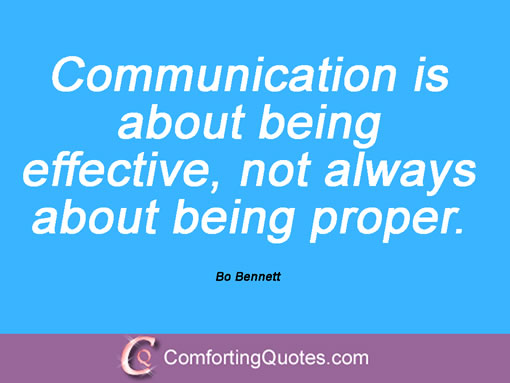
    It is really unfair. I have always been very angry that the hearing world cannot overlook grammatical errors when meaning is obviously clear. To me it has always been important that a person is able to communicate what they need or want and be understood. If that can be done any grammatical errors, even spelling errors, are really unimportant. Unfortunately I am in the minority.

    Consider these two examples which I have taken from a web page that is discussing what we shall call Deaf English:

    “Good one, and I DO have good reason here… Almost all deafies who learn English through English instead of ASL. That’s the MAJOR problem!!! Deafies’ natural language happened to be ASL. Problem is that they were never educated about ASL in the first place so that they can better understand English! There was so much opposition in hearing world on ASL from pre school to even in college! Hearing thinks its BAD IDEA or WRONG to teach deafies English with ASL… “

    Why do I think this way. About 10 years ago, I learned what ASL really is, I dropped my jaw and realize that it is a LANGUAGE PERIOD. ASL has its own rules, syntacs, structures, etc. Same with English language. Unfortunately Deafies just happen to use these rules naturally and not even know it. If they had knew there is such thing in ASL, they can better compare English and ASL and will always say ohhh got it… It rarely happened.

    What you have just read is entirely comprehensible. It is clearly written by a person who is intelligent. It is written by someone who has a good grasp of why many people who are deaf struggle with the English Language. I have highlighted in red some of the more glaring grammatical mistakes. My question is – Do they really matter? What the individuals has written is fully comprehensible. In my view that should be the only thing that we judge.

    In reply to this another deaf person wrote:

    I don’t know ASL well…
    and still my grammar is messed up.

    It is just that I didn’t hear much of what people said,
    and all of my life… I didn’t have closed caption tv.
    And the schools I went to… they didn’t taught me well…
    I always made C’s and D’s

    Some of the more pedantic people who are experts in English might find other areas of this paragraph with errors. They might even say that the language use in the paragraph is immature. BUT – Does it matter? In my view NO! What matters is this person has communicated a complex concept effectively. They have done it in a way that is readily understood. We are in no doubt of their message. YET, they will be judged for this and even overlooked when it comes to applying for jobs and promotions.

    I well recall a friend of mine who got a job quite high up in an organisation. She was deaf and made minor grammatical errors such as you see above. I had a Board member of the woman’s organisation contact me. They were concerned about her writing because it made them look unprofessional. I asked if  there was anything that the deaf woman wrote that could not be understood. The Board member admitted that this was not the case. They admitted that everything that my friend wrote made sense, despite the minor errors.  All she could say was – “… but its not professional!”

    Sadly, the hearing world is not only ignorant of the struggles many deaf people have with English grammar but they are also unforgiving. Rather than look at the skills and the talents of the deaf person they judge them on their English grammar. Don’t get me wrong. I get that grammar is important and is often crucial to meaning but this is not always the case. What is important in the end is that communication happens and everyone is understood. That is my view anyway.

    But it is not just hearing people that are language snobs. There are people in the Deaf community who are too. Often times I have seen members of the Deaf community mock people over their use of Auslan. Like it or not the MAJORITY of people who are members of the Deaf community learn Auslan as their second language. There are very few PURE users of Auslan in the Deaf community. As it is with English there are language elitist in the Deaf community who will mock, ridicule and even exclude people who are Deaf who they feel do not meet their lofty standards.

    Most people that I know who are Deaf who sign use a combination of Auslan, English and what is known as Sim Com. Sim Com is where people speak and use sign language at the same time. Often you will see Deaf people use a sign in the wrong context. For example you have the sign for affair. Affair in English can have two meanings. One can have meaning for when a person cheats on their romantic partner, as in having an affair. The  second can mean a persons or an organisations business or personal matters such as – I am putting my affairs in order or the Department of Consumer Affairs. Yet English, being the daft language it is, uses one word to mean both of these things. It all depends on context.

    In Auslan there are two separate signs to represent the the different contexts of the English word affair – One will be the sign to signify one is cheating on their partner and the other will be the sign for business. Yet users of Auslan quite often just use the one sign for affair. Which is the sign for cheating on your partner.

    So one might say Office of Consumer Affairs and use the sign where the tips of the fingers of the right hand tap the closed fist of the left hand twice. Contextually one might visualise a department where consumers are all having affairs. The point is that for many Auslan users for whom Auslan is their second language, English is never far from the surface.

    I have many deaf friends who use Auslan. I have to be honest, very few of them are absolutely proficient. And if I am totally honest many use Sim Com to a degree. They may not actually speak, but they mouth the words in English order. They might sign – Me – Last Saturday – went football – See Essendon vs Crows – But mouth a perfectly grammatical English sentence .. “I went to The football on Saturday to see Essendon and the Crows.” 

    If I am really honest, most of my Auslan interpreters also use Sim Com to a degree as well. They do this because they know that English is my first language and by providing me with English cues it enhances my understanding. They probably adjust their interpreting to meet my requirements. Whereas if they were to interpret for a native signer they may actually use close to native Auslan. It all depends on the customer I guess.

    The point I make is that even with this hybrid of Auslan, English, mis-signs, broken English or broken Auslan we all manage to communicate and swimmingly at that. That is all that matters in my mind. I have worked with too many people who have been so language deprived that expressing themselves is a daily challenge.

    Life is too short to be worried  about fickle rules that are often pointless when communication is obviously clear. I understand there is a need to preserve native Auslan in all its beauty and English as well for that matter. It would be a tragedy if the best of these languages were lost. That said, it is not an excuse for language snobbery and exclusion. Communication is the key and we all need to come down from our high horse and remember that.

    And on that note I leave you with this quote. Replace English with Auslan and speak with write and the meaning is just as valid:

    Even if you do learn to speak correct English, whom are you going to speak it to?

    Clarence Darrow


  • English is my first language. I bastardise the language everyday. I misspell, misplace and misgrammar virtually every aspect of it. English is simply the most absurd and ridiculous language to learn and use. It has a myriad of pedantic and unnecessary rules. It has words that sound the same  but mean different things. I am having a sale/sail today is one simple example. We have to be in context to know what someone means. Otherwise we are left to guess whether I am likely to drown or proffer a number of bargains to buyers.  And that is the crux of English, it often just makes no sense. Consider these examples taken from https://www.oxford-royale.co.uk/articles/learning-english-hard.html

    One of the reasons why English is known for being difficult is because it’s full of contradictions. There are innumerable examples of conundrums such as:

    • There is no ham in hamburger.
    • Neither is there any apple nor pine in pineapple.
    • If teachers taught, why didn’t preachers praught?
    • If a vegetarian eats vegetables, what does a humanitarian eat?
    • “Overlook” and “oversee” have opposite meanings, while “look” and “see” mean the same thing.

    So anyway English is open to be made fun of and I make fun of it – All the time!

    The thing is that when I take the piss out of the English language the whole of England does not come down on me. I don’t get crucified for daring to challenge or bastardise the language. People just chortle or roll their eyes and carry on with their lives. BUT if I were to make fun of Auslan, which is my second language, you could bet that a large slice of the Deaf community would come down on me. Why is this so?

    The Deaf community is sensitive and extremely protective of Auslan. Indeed Deaf people the world over are as equally protective of their sign languages. This is understandable because for many years hearing people have sought to oppress sign languages through suppression.

    The HEARING world typically  wants Deaf people to assimilate. To do that Deaf people had to communicate just like everyone else. It couldn’t be done if they were using that damn fangled hand talk could it? By golly they would only be able to understand themselves and what good would that be? And sign language is so graphic it’s akin to sin. We cant have that can we? The Deaf, they’re dumb you know? – So let’s  make them as much like hearing people as we can so that they will be less dumbsome. Believe it or not these are all historical reasons that you will find as to why sign language had to be suppressed.

    Attempt of the hearing world to suppress sign languages has caused much damage to Deaf people. It has often led to language deprivation. Language deprivation impacts on learning, development, relationships, mental health and so on. We in the Deaf community are all very aware of the damage the suppression of sign language has caused. More importantly, the suppression of sign language impinges on basic human rights.

    This is why  Deaf people are so fiercely protective of their language and community. It is also why they are so extremely cynical and defensive towards the motives of many hearing people. Especially when it comes to hearing people using and abusing sign language. This is what Andy Dexterity has found recently.

    But who is Andy Dexterity? Dexterity is an artist, and a damn fine one at that. His art is unique because it fuses contemporary art, particularly music, with a combination of mime gesture and sign language. He is really creative and great to watch if you like his style of art. He is also much acclaimed and has won numerous awards. He apparently advises the Wiggles on what is known as sign dance. He  clearly loves sign language and seems to have an aim to fuse sign language as much as possible with mainstream art. To learn more about Dexterity click on this link – https://andydexterity.com/about/

    Below is an example of his art:


    Recently Dexterity gave a Ted Talk. His talk was a combination of English and samples of sign language. He has put the Deaf community offside with this talk because he appears to have made himself a spokesperson of the language.  Above all his Ted Talk was not accessible.

    I have watched his Ted talk. He uses signs mainly to make a point. He often breaks rules. For example at the start he signs “My name is A N D Y ..” He finger spells his name. As he finger spells he pronounces each letter separately.  The Deaf community would not do that. Rather they would finger spell their name then mouth/say their name once they had completed spelling it. They would not mouth/say each letter of their name separately.

    I fancy that Dexterity has chosen to pronounce each letter of his name, not to break rules, but rather to show his audience that each letter that he is forming with his hands represents the letter he pronounces. He has done this, in my view, because he knows there are people in his audience who do not know sign language and it is his way of showing them that sign language can represent each letter of the alphabet on the hands. It makes sense to me but members of the Deaf community have become annoyed about this as they feel he is misappropriating Auslan.

    He also seems to have upset the Deaf community in how he portrays sign language. In his Ted Talk he signs in a way that is almost childlike. He has done so to engage with his audience and pique their interest. In doing so he has come across to many in the Deaf community as infantilising their language. It is a little bit cringe-worthy. Especially as the Deaf community have fought so hard to have Auslan taken seriously. He started by talking and signing the dialogue below:

    “Hello hello …

    Welcome to the Tedx Sydney show

    My name is A N D Y (finger spells and says each letter)

    You’re name is what?

    (Cups ear) Pleased to meet you

    How are you? How are you?

    Thank you I’m good too

    Let’s start, come on dance and sing

    Let’s all sign

    And have a really good time.

    It really was a bit Play Schoolish.  This probably is not surprising given that Dexterity advises and choreographs sign songs for the Wiggles.  But seriously this is probably the first introduction to sign language that many in the audience have had and what must they have thought? Many would have been thinking it was a cute and sweet way to communicate.  It was not the best way to start something as serious as a Ted Talk that had a heavy focus on sign language. It is understandable that many in the Deaf community felt patronised and mocked by Dexterity’s introduction. I am sure that was far from his intent.

    In his talk Dexterity explains his art is made up of  mime, gesture and sign language that are forms of physical communication. Then I pretty much get lost because he speaks and just adds a sign here or there. There was no interpreter and no captioning so it is very frustrating.

    It galls me that he is representing Deaf people and I cannot  understand all he is saying. It leaves me flat and more than a little angry. A bit of lipreading and I understand some of what he says, “… 5% of the worlds population have a disability ,  360 million  have something or other, oh my goodness, oh my goodness, … thumbs up you are best …. ” I am sure the rest of his speech was thrilling but that was all I could get so about there I gave up.

    Can I just say Andy .. Please make sure everything you do is accessible .. especially if its about Deaf people and especially so because you are the Ambassador of  Deaf Australia.

    I have been following the outrage against Andy. Some people were really angry. Said one, “.. the more I see of him the more angry I get.”  Many are frustrated with him and the reasons are quite extensive. They include:

    • He makes glaring Auslan grammatical errors.
    • He speaks and signs
    • Sign dance doesn’t fully interpret a song
    • He misappropriates Auslan
    • He doesn’t use Deaf people as part of his message
    • He mocks the language by making it seem infantile

    And the big one HE ISN’T DEAF and has no right to use Auslan for his own personal gain. This last one maybe so, but when the Deaf community and it’s stakeholders started using Auslan for commercial gain those people who invested in it, Andy being one, gained a stake in it. It is an unfortunate spin-off of commercialisation.

    I will be honest. I am not quite sure why people are as angry as they are. I see a lot of benefits from having someone like Dexterity on board. As Deaf Australia alluded in their media statement about the outrage towards Dexterity, he is a bridge to the mainstream in away that many of us cannot be. His style, his talent, his networks and the fact that his work brings so much attention to sign language can potentially mean many more people will go out there and learn Auslan. Some will become interpreters. Others will simply learn it and spread the word. Dexterity with his talent and networks can benefit the Deaf community in many ways.

    It is equally true that we have many Deaf people that can have a huge impact if  Deaf Australia were to appoint them as Ambassadors. Actor Sofya Gollan, for example, arguably could have just as much impact as Dexterity. Being Deaf she would be an excellent representative too. We have Colin Allen and Dean Barton Smith – Both who have enormous reach and impact. And what about our very own Alastair McEwin of Disability Commissioner fame, although he maybe conflicted.

    There are many that could fill the role alongside Dexterity. Let’s hope that Deaf Australia will consider the breadth of talent among Deaf people that exists within Australia who could be brilliant ambassadors. They certainly would be great role models for Dexterity and lead him down the right path.

    If Dexterity is going to be an Ambassador for the Deaf community he has to spread a message that is relevant and accepted by the people that he is representing. It’s important that he consults and takes on board the feedback that they are providing.

    I feel the degree of anger towards him is not all warranted. He certainly has made mistakes, that Ted Talk being among the worst. That said, in my view, he has much to offer. I hope the Deaf community can find a way to accept him, work closely with him and help him spread a message that will promote Auslan and bring more people into the Auslan fold. Hopefully people will not cut off their nose to spite their face.


  • No one likes a gnashnab. A gnashnab is a miserable person that moans and whines all the time. Every little thing that they see they have to complain about. They nitpick and are seemingly never satisfied. Gnashnab is an old English word that was used to insult people who grumbled about things all the time. It seems that this is what we in the Deaf and disability sectors have all become.                       http://www.dictionary.com/slideshows/12-insults-we-should-bring-back?param=DcomSERP#Gnashnab

    I probably am one of our prime gnashnabs. The Rebuttal has been around for over ten years now. In that time I have complained about anything and everything that impacts  on the ability of people who are Deaf or disabled to live a life that they see fit. I have complained about Deaf Society’s and the lack of Deaf people leading them.  I have complained about cinemas and their inability to provide a source of access that does not break down mid movie or indeed not start at all.  I have complained about our Deaf sector advocates for not consulting nor listening to Deaf people. Rather they would choose to dictate to Deaf people what they thought was good for them. I even complained about Graeme Innes, who is sacred in the disability community. Yup, I am a gnashnab who is right up there with the best of them.

    The paradox is that our Australian society, and indeed our disability legislation, means that the only way that we, the Deaf and disabled, can get change is to complain. When things are lacking, if we want them to improve, we have to bring attention to them. No captions? Then we have to complain that there are none. No accessible toilets? Then we have to complain that there are none. Can’t get on a bus cos bus stops are in accessible? Then we have to complain about it to action change. Our very own Disability Discrimination Act is so pathetic and weak that it requires the whole of the Deaf and disability population to become gnashnabs for it to even kick into action.

    I am probably taking a much too liberal interpretation of the word. I think gnashnab mostly refers to people that continuously make petty complaints.  But the thing is that we Deaf and disabled people have become so accustomed to complaining that the minute we get a chance to complain, we do so. And so it was recently when the Deaf guy got kicked off Ninja Warrior.

    I confess I had no Idea that a Deaf guy was on Ninja Warrior. I wasn’t watching that crap. Instead I was watching other crap called Masterchef.  But the world being what it is, within minutes of it happening, I found out that Deaf guy screwed up on Ninja Warrior.

    First it was Facebook Messenger and then it was Facebook itself. Maria came on Messenger asking me if I knew the fella. She messaged me and Mike. I didn’t know him but Mike did. “He didn’t last long.”, said Mike.  That was kind of ironic because Deaf guy lasted for a fair few days after that.

    It seemed that every other post on my Facebook feed was about Deaf guy. Now I don’t want to understate the achievements of Deaf guy. That he lasted 3.7 seconds of the obstacle course doesn’t matter. His achievement was being there. His achievement is being a wonderful specimen of a fit human being. He is 48 and fit as a fiddle. He pumps iron and has a body many men, years his junior, would be proud of. I, as a lump of lard, envied him greatly. Let’s take nothing away from him. He is awesome.

    That said, he lasted 3.7 seconds. He jumped from one board to another. Slipped, his foot hit the water and the buzzer went off. That should have been the end of it because once you touch the water you are out. But he seemingly didn’t realise his foot had touched water and carried on. It was all a bit  cringe-worthy because a studio official blocked his way waving frantically while his stepson interpreted for him that his time was up. Deaf guy looked pained and shocked. Nevertheless, he accepted his lot with dignity and hopped down. His Ninja Warrior journey was over. But not for the gnashnabs.

    I am not sure poor Deaf Guy realised what was coming. Probably just as well because if he had he may well have chosen to never leave home. The minute he slipped Channel Nine became Deaf and Disability public enemy number one.

    How dare they let Deaf guy go up there without a proper interpreter. How dare they not  put flashing lights in for him. You know, he didn’t even understand the rules properly cos he didn’t have a proper interpreter. How dare Channel Nine make him look like such a doozy in front of the world. And it went on and on. As we say to our friend James when he is hysterical – CALM DOWN FLUFFY!!

    Of course the gnashnabs are entirely right. But lets put a few things in perspective. The producers of the show probably had no idea of the political sensitivities that the gnashnabs had highlighted. Most likely the Deaf guy and his family were their sole source of information about deafness.

    Sure they could have researched better but if Deaf guy says, ” .. hey its OK my boy can interpret.”, who are they to refuse him. It’s likely they had no idea of visual alerts. Let’s face it, the visual alert could have been as simple as a red flag waving so that Deaf guy knew his foot got wet and he was out.

    It is a fact of life that we Deaf and disabled often have the responsibility to inform and request. We have to disclose our needs. If we do not then most likely we wont get. It is not fair but that’s how it is. None of us know what happened with Deaf guy and the producers but to hear the gnashnabs was to think that Channel Nine had near murdered him.

    The truth is there were many risks that Channel Nine created and they could have been in serious trouble. Say, for example, he got the wrong information from the “unqualified” interpreter, jumped the wrong way and broke his neck? Who would be liable? Most likely Deaf guy cos he probably signed a waiver. But perhaps the waiver was written in a way that he did not understand and he signed it without being fully informed. There are heaps of scenarios.

    In a perfect world the producers would have known these things but they did not. They are like 95% of Australia. An Australia that is almost solely designed for people who are not Deaf and disabled. An Australia that only meets the needs of Deaf and disabled once someone says … “look I cant get up steps. I need a ramp!” … So they add it on later at great expense. Hell, I worked for a council that put Braille signs on the wrong side of toilet doors, put a disabled park in a place that no person, unless they were a contortionist, could get out of or into and placed a sofa in front of the one door that people in wheelchairs could use to access a building. Believe me when I tell you that a high proportion of non-disabled are often – “Not very bright”

    And then there was the poor stepson that interpreted. He was virtually labelled as incompetent and setting his step dad up to fail. How bad was that? I really felt for him. I think that to say many of us over-reacted is putting it kindly.

    Let’s be clear. In an interview after the event Deaf guy said he didn’t realise his foot hit the water and it was a bit of a shock for him when he was told. So it seems he really did understand but it was just unfortunate. I’ve lost count of how many times my deaf netball team have streamed up the field  and kept throwing the ball fifteen seconds or more after the whistle has gone for an infringement. Meanwhile umpires are chasing them down frantically to get them to stop. It is a Deaf world problem. Deaf guy said he wanted the hearing world to know what it was like to be Deaf .. And he certainly achieved that.  http://www.nowtolove.com.au/celebrity/tv/exclusive-australian-ninja-warrior-contestant-paul-cashion-speaks-out-elimination-39226

    Is this the society of Deaf and Disabled that we have created? Have we created a group of people that, by conditioning and necessity, react angrily and complain incessantly? Is this because they know that this has been the only way that change has happened in the past?

    So that’s what they do. It doesn’t make for a fun world to live in a lot of the time. All I can say … is fix that bloody DDA please, and quick, so we dont all have to continue to be a bunch of gnashnabs. It’s embarrassing and tiring!

  • Pauline Hanson is a repulsive being. There is no other way to describe her. She is racist and ignorant. Most recently she described disabled kids as a hindrance to the education of normal kids that want to, “.. Get ahead in leaps and bounds.”  You see our Pauline, that upstanding Australian, believes that kids with disabilities get too much attention from teachers and therefore other kids are neglected.  A lot of attention has been focused on her mentioning Autistic children but she actually was referring to all kids with disabilities. Said our Pauline, “… teachers spend too much time with autistic children and children with disabilities to the detriment of other students.” (Taken from the Courier Mail)

    Pauline claims she has been taken out of context. She claims it’s not that she doesn’t want these disabled kids educated but rather that they should have special classrooms or more special schools to look after them. This is so the other kids don’t have to suffer them obviously.  Inclusionist have had a field day with her.  They say that since the 90’s the philosophy of inclusion has changed education for the better. (Paraphrased from The Guardian)

    I want to address the elephant in the room. As much as I hate to say it, Pauline is not all wrong.  Nor are the inclusionist all right.  In fact one could argue that inclusionism, as it relates to education of kids with a disability, has failed many of them.

    Inclusion, according to the Oxford Dictionary is, “….the fact of including somebody/something; the fact of being included.” Unfortunately that is how the education system defines disability inclusion. If they are there then they are included. Of course this is far from the case. Inclusion can be the most secluding thing ever for a person with a disability.

    Over almost 30 years in the disability sector I have seen some horrendous things in the name of inclusion. I remember an organisation I worked with enrolled a deafblind girl who was 22 in a walking group. Problem is the youngest in the walking group was about 70. They would walk and she would follow. They would eat and talk and she would just eat. She never said a word to them nor they to her. But she was included so that was ok. Right?

    So many times I have seen disabled kids in a school setting. Of course they are mainstreamed but at lunch they sit alone. In group discussions they say nothing and are ignored. When work needs to be done they are taken away into a room with the teacher aid and given a book to colour in. They might be teenagers when this happens.

    Back in 2011 I was asked to observe a young deaf girl in her classroom. Her mother was worried as the young deaf girl seemed depressed and not happy with school. The girl was mainstreamed and had a class interpreter.  In the morning the kids sat down at their table. It was Monday and they were to write about their weekend.

    Diligently the girl began writing about her weekend. The rest of the kids were all chatting with each other and sharing their stories. The girl watched them. You could see her anxious glances around the table. She was wondering what her peers were talking about and the interpreter did nothing. Later they went for story time. The interpreter would interpret the teacher telling the story. The teacher would ask questions and the kids would answer. For some unknown reason the interpreter didn’t interpret the answers from the kids. This meant that the girl had no access to peer learning.

    I later wrote a report outlining what was happening and how the school could facilitate better inclusion. The school refused to acknowledge the report. The interpreter apparently threatened to resign because she felt insulted by the report. The school were angry claiming that I did not understand classroom dynamics. I guess that sometimes the truth hurts. Inclusion was clearly failing this girl.

    And I remember being a teacher aid for a couple of young  deaf aboriginal people. In the morning the home class got together and then got to work. When they got to work I was asked to take the aboriginal students to another room and teach them. I was virtually their teacher. They would take part in sport and excursions and sit with me the whole time.  As soon as we returned to the class I would be asked take them into a room and teach them. Is this what we call mainstream education?

    And then there was Charlie. He was a five year old in a classroom. Story time that day was a story about animals. The teacher read this innovative picture book to the class. Basically the book allowed the teacher to flip tags that had parts of various animals and create bizarre creatures. The creature might be a mix of crocodile, kangaroo and wombat. A Crokanbat. The kids loved it.

    The little deaf guy didn’t have much speech to write home about but he was excited about the Crokanbat.  He got up and pointed while squealing delightedly. He clearly wanted to know what the creature was. The teacher shushed him and when he refused to be quiet removed him from the class and made me take him to the library. Yes this actually happened. His questions unanswered. His language learning opportunities lost. His soul destroyed.

    I am sure there are success stories out there where inclusion works really well. But when it does not it is a disaster. It is soul destroying and I am sure it contributes to poor self-esteem and mental health issues later in life for many of these kids with a disability.

    And this happens because the system is horrendously under-resourced. Teachers are expected to be a Jack/Jill of all trades. They are expected to deal with a class and also support kids with disabilities too. Most are not trained in disability and get minimal support from visiting teachers and minimal support from teacher aids. It’s not that inclusion is wrong, it is that the system just does not provide the tools nor the funding to make it entirely successful.

    I don’t like segregation either. I would rather the system provide the level of support that it needs top to make inclusion a success. The reality is that it does not and it is the poor teacher that is expected to do it all. It is a recipe for disaster and often is.

    As abhorrent as Pauline Hanson’s view are she is not entirely wrong. The system needs to change and it needs to be funded properly. As it stands, at this very moment, inclusion in schools can be the the most secluding thing ever for many kids with disabilities. It is doing them great harm.

    So hate Pauline as much as you want but the end of the day she may have done us all a favour bringing the issue to the table. Our job is to keep it there and highlight all that is wrong with inclusion policy in education and everywhere.

  • You know that since I was at secondary school I have actually been receiving a lot of my information second hand. This is because I have had to rely on interpreters, captioning or note-takers to get my information.  I have to put an enormous amount of trust in the person that is supporting me. If they get it wrong, I get it wrong. If they don’t understand, I wont understand. If they pick and choose information that they think is relevant and exclude stuff they think is not – well I have to hope to high heaven they are good judges of information.

    At school I had note-takers. This was BC – Before Captioning. The teacher might sign somethings to me in crappy Signed English occasionally but  mostly I relied on their notes. So in class the teacher would jot down the important information. If there were discussions happening in the room I generally got no access to that cos the teacher didn’t note this. In that sense I had no access to peer learning. So what I had to do was learn based on the information my teacher/note-taker thought was important. I passed somehow, not sure how but I did.  I was apparently the first deaf person to matriculate from a Centre for Hearing Impaired in Adelaide. This was in 1983.

    It’s true I barely passed but no matter. I was a shit student. There were more important things in life than studying endlessly – soccer being one. But nevertheless I passed on what was really very limited access to information and what I could garner from my own limited reading. Looking back, that’s a  huge achievement.

    So after secondary school I decided I was going to be a teacher. A teacher of the deaf (TOD). I reasoned that I would be good at it. After all, who understands deaf people better than deaf people themselves? I remember when completing my last year of school I nominated a number of courses. Parks and Recreation was one. Aboriginal studies another. Teaching was my priority. I was accepted into all of them but chose teaching. I wish I had chosen Parks and Recreation now. Being outside all the time in the wilderness has an appeal. But I reasoned at that time that Park Rangers communicated by two way radio and it would be too hard.  Whoo boy, how I and times have changed.

    So I started teacher training at the Salisbury College of Advanced Education. I attended for six weeks or so and sporadically at that. This was 1984 and disability support for tertiary education in South Australia was non existent. I had no note-takers and no interpreters, nothing. I didn’t learn much. Correction, I didn’t learn anything. If this experience taught me anything it was that access to at least some information is better than no access at all.

    After six weeks I found out that there was this university in Durham (England) that provided support to deaf students. They had a teacher of the deaf course so I went out and bought me a plane ticket, wrote them a letter and left for England. All before I even knew if I would be accepted or not. Meanwhile I didn’t even withdraw from my course in Adelaide, I just left. No doubt the record reads FAIL somewhere.

    So away to England I headed , got myself an interview at Durham, got myself accepted and found out that I didn’t have enough money to afford the fees. No doubt there were grants around I could have accessed.  But the Red Lion up the road and the English Deaf community had more appeal. In short I was too busy having a good time.

    Meanwhile in Australia Mum and Dad were besides themselves and trying to find money from the Australian Government to fund my studies. While they were on their hundredth phone call I was probably downing a pint while chatting to some attractive deaf woman. Mum and Dad even got in the newspaper. I still remember their serious faces in the article photograph while holding up a photo of me smiling broadly. The gist of the article was that I was deaf boy wonder trying to make good in England and abandoned by the Australian Government.

    BUT mum and dad’s efforts were not wasted because they found out about a teacher of the deaf course that was being set up by the late and great Dr Des Power in Brisbane. So I flew back to Australia and before I knew it I was on my way to Brisbane to study. Dr Power was way ahead of his time. He got funding for interpreters and note takers so that Deaf students could access the course.

    It was perhaps the first time that I had close to full access to information. I say close because I was till learning Auslan at the time so I didn’t really have full access. The supply of interpreters was also a bit limited. I was the student that had to do without when interpreters were in short supply. I spoke well, you see. So when interpreters were in short supply they were prioritised to the students that were full signers and didn’t speak so well.

    Again I wasn’t the best student. I lived at the University Halls of Residence. It was brilliant but also distracting. Beer, social functions, pool tables, table tennis, ready access to the city and night clubs – Well it sure beat being stuck in a dingy little room studying all night.

    I generally did OK. I once had an all night study party where we studied for an exam that was at 9 am next day. We had started at 7pm. We had beer, a couple of breaks to play cards, ordered pizza and ribs. Naturally we studied a bit. We finished at 7am next morning showered, had breakfast and went to the exam. How I got a credit for it I will never know.  I reckon that the access that I was being provided played a large part in it.

    BUT, alas, along the way I broke my leg three times. I got a bit depressed about that. I was trying to imagine myself in a room with 30 screaming kids, five days a week, for the rest of my life. That was even more depressing than the broken legs. So I upped and left back to Adelaide and enrolled in a Social Work course.

    I went from Queensland where I was spoilt for access to Adelaide where I had none. Although support was promised, it was never forthcoming. I actually had to stand out in front of the class and ask students to help me by sharing their notes. This struggle went on for six years until I graduated.

    I fought and fought for access including meeting with the Education Minister. I appealed and wrote countless letters to the Vice Chancellor explaining my difficulties. It was not until my final year that I got access to interpreters. And even then I had to fight lecturers to allow the interpreters into their classrooms. Believe me when I tell you that I value all the support that I can get. I’ve worked hard for it and earned it.

    So over the years I have used interpreters and captioning in a variety of situations. Work, recreation, training, study, medical and social gatherings. I am always thankful for the interpreter and captioners. I do everything that I can to make sure they have optimal conditions so that they can interpret or caption to the best of their ability. I make a point in giving opportunities to young interpreters so that they can upskill. We all know that there is a lack of supply. If us deafies don’t take some responsibility to upskill the interpreters who will?

    My respect for interpreters is immense. When I use them I take control of the situation. I try my hardest to stop people talking over each other so as to make sure the interpreters job is easier. If they have optimal conditions then I get optimal information. I make sure they have breaks. I am patient when I know a speaker is difficult or speaking too fast and will often ask speakers to slow down. Interpreters know that they can tell me when a situation is hard and I will try to rectify it. Good interpreting and translation is a team effort.

    I have been at the bottom in terms of access and now I am at the very top. I know that interpreters (and captioners) are a precious resource that need to be nurtured, encouraged and supported. Criticism of interpreters worries me. It’s not that interpreters should be immune from criticism because its only from criticism that they can grow. The problem is that often this criticism is unfair and unrealistic.

    I am well aware that interpreters must be good. They are often in situations where people’s futures or lives are on the line. Because of this they sometimes have to take control. This means that they sometimes have to tell people to repeat things. If this slows down the process then so be it.  They sometimes have to ask deaf people to finger-spell more slowly.  Their job is one of immense responsibility and accurate translation is crucial. For this reason if a Deaf person says to me that interpreter X was crap because they asked them three times to slow down their finger spelling I’m likely to go into battle for the interpreter rather than the Deaf person. Sure, its not ideal but accurate conveying of information must be the goal at all times.

    Interpreting is a limited market. I would love for them all to be brilliant here and now. Bottom line is there are many that need years to get to the level that we deafies, especially professionals, desire. For that reason we have a responsibility to lower our expectations a little, support interpreters more and help the market upskill and develop.

    If an interpreter is struggling with finger spelling now it is only through constant exposure that they will get better. So if they say slow down – just do it, even if you are a big wig academic. Otherwise our lofty expectations may create a world where only the best survive and there are even less to serve the market than there are now. I’ve been there and I have no desire to return.