We need Sherlock Holmes and we need him now. You see over in Adelaide there is an incredible mystery unfolding. The mystery is the sale of 262. Now we were led to believe that Townsend House want to sell 262 and are desperately seeking a buyer. You see, its services arm, Deaf Can Do, is going belly up. Townsend House inherited Deaf Can Do when they agreed to help save what was the old Royal South Australian Deaf Society. Despite injecting many hundreds of thousands of dollars into Deaf Can Do it is still running at a loss. Townsend House want to recoup their investment. The answer? Sell the spiritual and cultural home of the Deaf community so that they can get back their ill thought out investment.
Regular readers of The Rebuttal have been following this saga avidly. Indeed it has become the most popular series of articles that The Rebuttal has ever produced. Mysteriously I awoke on Sunday Morning to find an email informing me that there is a buyer for 262. The buyer is Healing Life Ministries. It seems they are an arm of the Baptist church. They are familiar with 262 because they hire it regularly for churchy things. They heal people apparently. Ironically they heal deaf people too. I guess that’s one way to put the final nail in the coffin of Deaf Can Do. Heal all the deaf people of South Australia so that Deaf Can Do becomes redundant.
Anyway Healing Life Ministries have told their members that they have an opportunity to purchase the Deaf Centre at 262. They are asking their members to show the support of the effort to purchase 262 by donating money into their bank account. Sounds a bit suss doesn’t it? What is more curious is that 262 is not yet on the open market even though Townsend House have made it clear they desire to sell 262, and quickly. Despite the apparent urgency of a sale there is no information on the Internet that hints that 262 is on the market at all.
Despite this Healing Life Ministries have made the extraordinary claim that they have an opportunity to purchase 262. How has this become so? Have there been negotiations going on unbeknown to anyone in the Deaf community? Is this the reason why Townsend House have refused the approach of the Community Housing group that offered to take over the maintenance of 262 in exchange to be able to build apartments on vacant land? Even though 262 is apparently not yet up for sale the appearance of Healing Life Ministries as a serious buyer suggests some intensive negotiations have been happening. Have Townsend House been fully transparent about their efforts to sell 262? Come in Sherlock, we need you!
It is becoming quite bizarre. Two weeks or so back Townsend House released a video explaining why they needed to sell 262 and why they had rejected the offer of the Community Housing group. In the video there was a woman speaking while an Auslan interpreter translated what she was saying. I received an email indicating that this woman was from an external Public Relations firm. The firm were hired to make the announcement because apparently the Townsend House CEO is being stalked by a “mad deaf man”. I am quoting directly from the email here. SHEEEERRRRRLOOOCKKK COMMMMEEE INNNNNN!
It gets worse. There are accusations and allegations that there is someone associated with the Baptist church who is closely associated with Townsend House. Of course the Baptist church that the Healing Life Ministries are part of has many streams. It may well be that this allegation is unfounded but something very strange is happening here.
It is clear that Townsend House is not being fully transparent about what is happening. Of course they will claim that they could not say anything because negotiations were “Commercial and In Confidence.” Well this is not the case now because Healing Life Ministries have publicly asked their members to donate so that they can follow through on the purchase of 262. It’s not confidential any more so perhaps Townsend House might like to take the opportunity to be fully truthful about what is going on.
The sad thing here is that the Deaf community of South Australia are being treated shabbily and disrespectfully. This has to be one of the most shameful episodes of mistreatment of a minority group that has ever occurred. And we don’t need Sherlock to deduce that for us!
The Rebuttal calls on Townsend House to stop this farce now! Come forward and be fully transparent with the South Australian Deaf community. They deserve that much at least!
I was going to write about committees today. You know committees that run our lives. These committees are everywhere. You know they are either Boards charged with running our disability orgs or they’re groups of volunteers running our sports clubs and so on. Well I was going to write about how people stack them. They do this by picking only people that think like them. Well I am here to stand on my soap box and tell the stackers that diversity is good. What you need on a committee are people that will disagree vehemently with you but are willing to debate to consensus. It’s about the community people not just you and your mates .. Nepotism sucks.
I was gonna write a whole article about this. But then Howard Sattler decided to be a dick. In fact anyone that has seen Howard Sattler on Sunrise will know he is a dick at the best of times. But this time, to misquote the late and un-great Saddam Hussein, he decided to be the mother of all dicks. (With apologies to mothers who really do not deserve to be mentioned in the same sentence as Mr Sattler.) Speaking to The Prime Minister, Julia Gillard, Dick Sattler asks, “Is your partner gay?” It’s not because Dick thinks so you see, its because others do. Dick is just asking the question on behalf of others. Cos you know Prime Minister Gillard’s Partner is a hairdresser. It’s possible isn’t it? You know hairdressers are gayie sort of people aint they? Im not sure how the local Barber feels about that but there you go. Hairdressers are the gayie type.
I am trying to use humour here. I fear that if I do not then I will get really offensive. I just cannot believe that anyone could dare ask the Prime Minister of Australia if their partner was gay. Now of course if Prime Minister Julia Gillard was gay that would be fine but as far as I know she is not. BUT the question was asked simply to shock. It was asked simply to disrespect. No one, let alone the Prime Minister, should have to put up with this crap. Can you imagine a radio interviewer asking Tony Abbott if his wife was a Lesbian? Come on! What is happening to this country? It’s not just disrespectful to the Prime Minister it’s disrespectful to people who are Gay or Lesbian. It’s disrespectful to women. It’s disrespectful to men who choose career paths that traditionally are female oriented – nurses for example. I despair, I really do.
I thought that was bad but then It actually got worse. I have a friend on Facebook who I have never met. She has a son who has Down Syndrome. Her son was lucky enough yesterday to meet Prime Minister Gillard. Tom is his name and he wanted a photo taken with the Prime Minister who was more than happy to oblige. His proud mum put the photo on Facebook. It is a beautiful photo. Tom is beaming excitedly and the Prime Minister is clearly enjoying the moment too. It was a moment to be celebrated. But no! Some people had to make derogatory comments about the Prime Minister. Presumably for taking advantage of people with a disability. I just cannot believe that people would want to spoil this wonderful moment for Tom and also the Prime Minister. When did people become so narrow minded and mean? I despair, I really do!
On another matter someone posted a rather humorous email about a well credentialed woman who was asked to champion a product of a Multinational company. Problem was the Multinational company expected this woman and others like her to do it for free. The woman wrote a rather scathing email to the company that suggested a rich company trying to promote women in a positive light should at least pay for it. Especially given the general lower status of women in Australia. (Did you know, for example, that women apparently only own 1% of property in Australia and earn only 10% of the money even though they make up more than 50% of the population.)
I can tell you that a similar mentality exists in the Disability sector. I have lost count of how many committees I have sat on for free for organisations that are actually quite wealthy. Hell I even sat on the Disability Advisory Committee to the Premier in South Australia and received not a penny. Government groups are forever contacting me to seek my advice and they hardly ever pay. In fact the first time I ever received a sitting fee for a committee was back in 2009.
Look, I get it that many groups lack funding. I am always happy to volunteer my time to these groups. BUT there are many that actually have the capacity to pay. For some unknown reason people with a disability are expected to offer their services for free. Apparently there have been complaints about people who are trying to profiteer from offering advice to the NDIS. Well I am sorry but we can not be expected to forever offer our services for free. And then the Australian Human Rights Commission pays able bodied models to sit in wheelchairs for a photo shoot. I despair, I really do.
There once was a boss who asked me advice on an issue. I gave advice that went along the lines of that disability is not a cost. I gave data and examples of where disability was a return for investment. I gave examples of embedded disability planning into processes. For some reason, perhaps because I am British, my advice was poo pooed. It could not be because I was disabled could it? But anyway the boss suggested that we speak to a consultant about the issue. A consultant was booked in for a meeting. The consultant basically repeated verbatim what I had already said. But because he was a consultant his information was for some reason revealing and the boss was willing to put forward up to $10 000 to receive this advice. Advice I could give as part of my salary. The worlds gone mad!
Yep I despair, I really do. Now off the sop box, the weekend is coming and thank god for that!
The saga of 262 continues to rumble over in South Australia. The Deaf community there continue to fight tooth and nail for what is the last asset that their community has. There is a Save 262 Facebook page that reminds everyone that 262 was built largely through the efforts of Deaf people who worked hard to raise the funds to build 262. Morally the building belongs to them. Legally it belongs to Townsend House who control the title and deed. Please don’t tell me it belongs to Deaf Can Do. The reality is that Deaf Can do is nothing but a trade name under the Can Do group of services and companies administered by Townsend House. The final decision of 262 and Deaf Can Do lies with the gang of 8 who are the Townsend House Board.
To the credit of Townsend House they are communicating openly with the Deaf community. They are transparently putting forward their reasons for needing to sell 262. While we may not agree with their reasons or their methods, credit where it is due, they are engaging with the community. This includes using an Auslan interpreter for a video communication.
However, their reasons still do not stand up to scrutiny. Their most recent communication was by video on June 5th. This article will challenge some of the arguments that Townsend House have put forward.
Argument One – Since 1985 it has been a struggle to find the money to keep 262 Open.
This is true but it is not the building alone that is at the centre of this issue. Part of the problem is also how Disability services in South Australia were restructured in the early 90s. Originally the Old Deaf Society received Government funding to run case work and case management services. This changed in the early to mid 90s when the South Australian Government set up the “ONE STOP SHOP” Options Coordination services. This meant that the old Deaf Society lost a lot of its funding. Arguably the services they currently provide have been unviable for a number of years and it is these services that are swallowing money rather than the building itself. Rather than see 262 as the reason and the answer perhaps tough decisions need to be made about the viability of the current service model of Deaf Can Do. Is it time to close it?
Argument 2 – Although we did not really want to, the Board decided that it had to sell the building so that the Deaf Society could continue to provide interpreting and Community Services.
Now Townsend House have said that if Deaf Can Do closes the Deaf community will lose vital services like free interpreting for certain community services and the like. This does not need to be the case. Interpreting services could easily be incorporated into Townsend House. Indeed interpreting services make money. It is true there have been a number of independent interpreting providers that have come on to the market. This has provided the current Deaf Can Do interpreting services with competition. Understandably this would have also impacted on revenue. They no longer have a stranglehold on the market. This said, arguably, interpreting services still do not operate at a loss.
The Deaf community themselves need to ask themselves whether they would want free community interpreting over the loss of their building. Today Governments and educational institutions are increasingly accepting the cost of interpreting. NABS provides free interpreting for GPs and private appointments. Public health providers that refuse to provide interpreting run the risk of being slugged with a DDA complaint. The playing field has now changed. Perhaps it is time to look at FREE community interpreting in a different light given recent developments in the funding of interpreting.
As far as services go perhaps the Deaf Can Do business model is actually duplicating what is already out there. How much of the current services are viable, needed or already being provided by the case management services that are based at the Guide Dogs and funded by Disability Services South Australia? Perhaps the hard thing to do is to really look at scrapping some services that might now be outdated and ineffective.
There was mention that the audiology service, Can Do Hearing, has not made the profit expected. Perhaps the hard question to ask is; is this service actually needed? Is the return that is being received worth the investment? Is the audiology and hearing services market already over saturated? I do not know the financial return from the audiology business but if it is not making the returns expected, perhaps it simply is not viable.
Perhaps these are the decisions that need to be made rather than blaming losses on 262. It’s puzzling why Townsend House have continued to invest money in a business model that increasingly is looking unviable.
Argument 3 – In May last year DCD Board offered to gift the building to DSRSA if the accountants could work out that DSRSA could afford to pay the cost to run the building. – It worked out that DSRSA could not afford to pay to run the building …
This was always a no brainer. Deaf Sport Recreation South Australia (DSRSA) is a small community group that gets virtually no Government money and has minimal if any viable assets. It was never ever going to be able to afford the upkeep of the building alone. 262 could have been gifted so that DSRSA could decide what to do with it independently. They may have decided to sell anyway and use the profits to establish the Deaf community centre so that they were independent of groups like Townsend House. The conditions that Townsend House placed on the GIFT, which included that DSRSA could not set up services in competition with Townsend House, always meant that the GIFT was never a serious option.
Townsend House really needs to stop insulting our intelligence by constantly reminding the Deaf community of the GIFT. It was never a serious or viable option!
Argument 4 – So the working group looked at a number of other options. One option was to sell the land at the back of the building and spend a lot of that money on the building so that the community could use it. When the architects and building engineers worked out how much was needed to be spent on the building, it was clear that option would not work because there was not enough money to do that. The other two options mean that the whole property at 262 would be sold.
Of course we know that a 4th Option has been offered where a Community Housing group has agreed to take over the maintenance of the building, the building can remain with Townsend House. The Deaf Centre out the back can be redeveloped for the Deaf community. This will allow the building to be used by the Deaf community and it will also mean the building remains as an asset that will continue to appreciate. It appears this option will cost Townsend House nothing. The deal means that the Housing Group will develop other parts of the property into apartments at profit. In five years it is estimated around $1 million will be generated. This $1 million would go to Townsend House.
The 4th option was rejected. It seems it was rejected because it would not immediately generate the cash that Townsend House invested in to Deaf Can Do services. Townsend House wants to recoup this money as soon as possible. It also wants to reinvest some of the profits of 262 back into the Deaf Can Do services.
It’s been a bad investment. They have thrown good money after bad. Arguably the business model of Deaf Can Do is not and will never again be viable. The logic of Townsend House is that they need to sell the last viable asset to save a business model that will never work.
I am sorry it just makes no sense at all. Are these people really business people? Again I have to emphasise – Perhaps it is time to accept that Deaf Can Do is a relic from a bygone era that cannot be saved. Selling 262 to save Deaf Can Do is insane. Or do Townsend House simply want to recoup their wasted investment in Deaf Can Do?
Argument 5 – Management are looking for a place that is not too far out of the city, where there is good public transport and parking and a place large enough for Deaf groups, the Church and sports groups to gather. Deaf Groups have been asked to help look for a place too. The Board is willing to buy a building when 262 is sold and will make sure that Deaf people are able to manage and control the new place themselves if that’s what the Community wants.
Ok, here we at least have a glimmer of light. If Townsend House carries on along the path to sell 262 they will invest money into a new property that will be solely managed and controlled by the Deaf community. Ok if this is to happen let us have specifics.
Ideally Townsend House can outline the percentage of proceeds that they will channel back to the Deaf community. They can outline who will have ownership of the property and potential gains in the appreciation in the value of the new property. Ideally if the 262 building is sold and a new facility is established the new facility will be OWNED, CONTROLLED and MANAGED by the Deaf community.
As it stands this proposal COULD work but detail and specifics are vague. The ideal outcome is that it allows the Deaf community to be fully independent with no restrictions. Ideally it will mean that never again will the Deaf community be at the mercy of an organisation like Townsend House. Ideally it will mean that they can grow and expand EVEN if that means in competition with Townsend House. Ideally it means not just a property but CASH that the Deaf community can invest and grow independently.
If 262 must go, and this is looking increasingly likely, lets ensure that the proceeds can be used to ensure the future and empowerment of the Deaf community in South Australia.
That future might mean 262 is sold and the end of Deaf Can Do. Be it so let’s at least ensure the Deaf community have a destiny that is their own to map out and control.
That’s a lovely poem innit. Thanks Jim. I was looking for inspiration of some sort. You certainly didn’t give it to me. You see Jim you’re not deaf, or at least I don’t think you were. Your not disabled either, not as far as I can see. I even Googled you to make sure. And blow me down, it’s possible that you were. You struggled at school apparently. You were always in trouble. Frequently absent. Maybe you had ADHD before it was known or some other kind of learning disability. But I tell you what! Apparently, despite telling us not to whinge and complain, you complained a lot about your teachers. Wikki says you had nothing kind to say about your teachers. That’s what happens when you perceive you are not treated fairly. You tend to complain and whinge. No one, absolutely no one, should just put up and shut up and accept their lot if they are treated unfairly.[1]
“Just as cheap and easy to rejoice” says Jim. Sure count your chickens. You should; it could be worse couldn’t it? It could also be better and no one should be critisised for striving for something better. But Jim’s poem is how society perceives whinging. They don’t like it. They love to see the positives of everything. Good news stories and romance are the order of the day. Cool, but if you are downtrodden and beaten all the time, well I tell ya this, you gotta whinge. Otherwise just accept your lot and suffer. You can do that but I certainly won’t!
So this is what I am gonna do. I’m gonna whinge. Here in Australia it is legislated that I have to whinge. You see if I am treated unfairly society don’t protect me. Nope! It protects me only if I have a whinge. Australia’s Disability Discrimination Act (DDA) is built upon the concept of having a whinge. If you are discriminated against you have to whinge to the Australian Human Rights Commission, who supposedly will then bring down the full force of the law upon whoever it is that discriminated against you. Right? Ok join me in having a giggle at that one.
Ok I accept the DDA actually says you should complain but as far as I can see the definition of whinging is to complain. Ok complaining suggests something a little more formal. Whinging has a deeper meaning. Wikitionary says whinging is, “To complain, especially in an annoying or persistent manner” To get fairness for people with a disability through this sorry excuse of a law that is the DDA, that is exactly what I/we have to do – Complain, badger and annoy the powers that be persistently and consistently so that positive change happens. Whinging is the only way to make the DDA work!
Yes, today I am cranky. I am cranky because people won’t return emails. I do my work by emails, its kinda like my phone. If it is not by email it’s by text chat. It’s how a deaf professional works. We can go through the NRS if we like, but that third person is a hassle, even though I accept it is a valuable service. I used the NRS today. It dropped out. I finally got through and I got an answering machine – “We are open from 9 to 5. Please call back then.” is what the message said. Ok sure, but it was 10.15 am. Pick up the bloody phone! Well I am sorry but its annoying when five emails go unanswered, the NRS drops out and then you get an answering machine!
But this week I am mostly cranky cos of what is happening to the South Australian Deaf Community. Failed fundraising, crappy government funding, poor returns for business ventures and good old fashioned mismanagement has seen the famous old Deaf Society on the brink of collapse. Because of all this the South Australian Deaf Community are on the brink of losing its community and spiritual hub at where they have existed for nearly a century. “Its no use to grumble and complain.”, says Jim, “It’s just as cheap and easy to rejoice” Sure, sure … There has to be something worth rejoicing first!
Of course we have to whinge. But we don’t just whinge, we have to also offer alternatives. It just seems that when we offer alternatives the powers that be ignore those too. I am trying to be a wee bit humorous here but I can tell you there is nothing humorous about what is happening to the South Australian Deaf community. It is a human tragedy unravelling like a speeding freight train without brakes and just as unstoppable.
I try looking for positives. It’s hard to be positive when you read about some girl with cerebral palsy who also is deaf. The girl is refused a seat on a plane by Jetstar. WHAT THE HELL! “It’s no use to grumble and complain” You try not to but what choice do you have. Jestar said it was cos the girl would not have been able to understand instructions. This is despite the fact the girl had apparently flown before without issue. It is hard to take Jetstar seriously. This is the same airline that was so inflexible that Kurt Fearnley had to crawl on his hands and non functional knees to get on a plane. It is the same airline that rigidly refuses more than two passengers in wheelchairs per flight! Disability Commissioner Graeme Innes was asked what he thought about Jetstars refusal to let the girl on the plane. He said something along the lines of.“It’s terrible, but I am not surprised.” This is our most senior disability representative! How inspiring is that – NOT!
Today I was just looking for a phone contact at the Deaf Children Australia website and I saw their latest fundraising campaign. It’s the Autumn Campaign. Now I am going to be controversial here … But I absolutely hated the campaign – The campaign implores us to, Help Keep Deaf Children Safe From Harm –
Now this is the headline that is on the home page. You click on the headline and it takes you to their fundraising campaigns page where it states, “Sadly, deaf children are more vulnerable to abuse than most children. You Can Help Us Protect Them.” Just below that it says make a donation. You click on that and it takes you to the donations page where the headline is … I am Deaf Not Defeated. I despaired.
Now let me first congratulate Deaf Children Australia on the program that they were promoting. The program is aiming to make the world a safer place for deaf children. It is true that children with a disability, deaf included are vulnerable. It is true that they can be at greater risk of abuse. Any program that can prevent this happening is a good thing. BUT that’s where my praise stops. I will try my best to explain.
There is an interesting website called Socyberty.[2] At this website there is a powerful article about societies attitudes towards people with a disability. Frederick Zammit has written this article. Zammit claims,“A person with disability is presented to us as a personal tragedy or impaired body. In general terms, disability is constructed as an individual misfortune.” Now I will be the first to tell you that disability is not always a barrel of fun, it can be tragic. But the problem is that the way the media and fundraising campaigns paint people with a disability is as Zammit explains, “Tragic and impaired”.Zammit’s view is that this leads to the continued oppression of people with a disability.
Zammit’s argues that these negative stereotypes that are constantly promoted contribute to an extreme power imbalance. These images of tragedy and despair are used by organisations that have a great deal of power and control over how people with a disability are promoted.. Says Zammit, “An attitude is a positive or negative emotional reaction to a person or object accompanied by specific beliefs that tend to cause its holder to behave in specific ways towards its object” The implication is that by constantly promoting the negative stereotype it contributes greatly to the general negative attitude of society towards people with a disability.
Now let’s return to Deaf Children Australia and their fundraising page. On this page you can, Become a Barrier Breaker. If you become a Barrier Breaker you can become:
automatically part of something bigger,
part of a growing community of monthly givers helping to break down social barriers
This all sounds lovely doesn’t it? BUT the language that is used promotes the idea that the giver has POWER. It promotes a helpers mentality. The helpers are helping the helpless. Even if the GIVERS make something positive happen for the helpless the power is still with the givers. In this indirect way people with a disability are oppressed and indeed controlled.
Now let us go back to the South Australian Deaf Society and the 262 saga. One of the arguments that Townsend House uses to justify the sale of 262 is that they have to continue to support those Deaf in NEED. The concept of need suggests support to those less fortunate. This is the welfare mentality. The website DisabilityPlanet explains that the welfare mentality as used by, “Charities through advertising and sponsorship campaigns reinforce stereotypes of disabled people that being, dependant, poor, needy, requiring non-disabled people to drag them out of their pit of despair through making minimal donations.”[3]
Now in the case of the 262 building the Deaf community want to retain it. They want to run it and they want to control it for themselves. It was, after all, set up for them. But Townsend House supports those in NEED. The very thought that the Deaf don’t NEED them is too much for them to stomach. It’s not all about the money that 262 will raise if it is sold, it is also about the CONTROL of the Deaf community and the continued oppression of them.
Neither Deaf Children Australia nor Townsend House will agree with these arguments. They will claim they are providing positive programs with positive outcomes. This may well be but they continue to promote the negative stereotype. It is interesting that some of the most positive fundraising campaigns do not use negative stereotypes even though they deal with issues of death and tragedy. Red Nose Day, Shave for a Cure and Australia’s Biggest Morning Tea are great examples of positive campaigns that are also fun. It seems that among our Deaf charities there is too little of this. The Deaf Children Australia campaigns, in my view anyway, are examples of how not to do it.
So that’s my whinge for today. For as long as the disabled are denied everyday rights such as getting on planes and controlling their own destiny we all must all continue to whinge. As I said earlier, Australian discrimination law dictates that we have to whinge to get change so whinge we must. As Martin Luther King said, “In the End, we will remember not the words of our enemies, but the silence of our friends.” Sorry Jim – Just as rain was your choice – not accepting second best is mine.
It’s been a big week for the South Australian Deaf Community. They received an offer to save their beloved 262 building. This building is their second home; if they lose it they have nothing. They received an offer from a Community Housing group to take over the maintenance of the building and also rebuild the Deaf centre. What the Community Housing Group would want in return is to build apartments on the vacant land at the back of 262 for profit. 262 would remain in the hands of Deaf Can Do and the Deaf community could still use it as their home.
To the Deaf community it seemed like a win win. But the management of Deaf Can Do, in reality the Board of Townsend House, rejected the offer. To be fair on them they made an effort through a letter to the community to explicitly explain their reasons. However, their reasons do not really make a lot of sense.
The bottom line is Deaf Can Do are in a bad way. Money that is being raised through fundraising, businesses and government grants is not covering the cost of managing Deaf Can Do. Townsend House, in an effort to keep Deaf Can Do afloat, have lent a lot of money to the Deaf Can Do entity. Understandably they want that money back.
Judy Curran, CEO of Townsend House, in her letter to the community explained that they felt that the Community Housing proposal would not make enough money to cover the losses that Townsend House has made. Further she explained that the money raised was not enough to keep Deaf Can Do open. Under Corporate Law, argues Ms. Curran, the management of Deaf Can Do must do all they can to save the business and its services. They also must do all they can to keep Deaf Can Do afloat so that those Deaf in ‘NEED’ can continue to receive services.
One can empathise with the dilemma that the management of Deaf Can Do are facing. Firstly they want to keep Deaf Can Do running for the Deaf in ‘NEED’ and secondly they want to get back the money they have invested to keep Deaf Can Do afloat.
Let’s be honest here, Townsend House did not really loan money to Deaf Can Do. In every sense of the word the management arrangement that they have for Deaf Can Do puts them in full control. One could argue that they actually OWN Deaf Can Do, including its last asset 262. It is hard to understand how they could loan Deaf Can Do any money because Deaf Can Do is actually THEM. It comes under the Can Do group of companies and services that Townsend House manages. What they have done is invest in Deaf Can Do hoping that it would come good. It hasn’t, its gone arse up to put it bluntly.
Ok they have invested in an entity and they have not seen the return that they had wished for. Understandably they want to cut their losses and even recoup the investment that they have made. The logic of Townsend House is that to do this they have to sell what is probably the last viable asset of the Deaf Can Do business. They will sell 262. They will then, presumably, take back what they are owed. Then they will give what’s left to the Deaf Can Do arm of their franchise hoping that it will remain afloat.
This is where their business reasoning becomes perplexing. It’s perplexing because they already know that keeping Deaf Can Do alive is like flogging a dead horse. The money raised from the sale of 262 will keep the Deaf Can Do arm of their Can Do franchise running for a year or two more and then it will keel over. It will be finished. Townsend House will not want to invest any more money in Deaf Can Do and they will have to let it die. After 262 is sold that will be the end of the last asset that can keep Deaf Can Do afloat. Once it is gone there is nothing and the real losers are the Deaf community.
The smart thing to do is to let Deaf Can Do die. Let it go. Townsend House, if they so wish, can keep the profitable parts of the franchise, perhaps the audiology business and perhaps the interpreting business. They can let Deaf Can Do go and still keep 262 for the Deaf community. But how?
Well firstly they need to follow one of their arguments for retaining Deaf Can Do and selling 262; namely the commitment to support the Deaf who are in NEED. If they are really serious about this they will see that 262 is the single most important thing needed by Deaf people. Without it they have nowhere to go. They have nowhere to meet. They have nowhere to socialize. They will have no sense of pride. The end result of this is a disenfranchised people who will then become lonely and isolated and who will be prey to any number of mental health issues that are associated with isolation and loneliness.
If you want to destroy a community and culture and see the consequences look no further than the Aboriginal community. This is exactly what happened to them. Their community and cultural structure, so important to their sense of identity and purpose, was ripped from under them. We all know the result of that. There is a reason why so many Aboriginal people die earlier and have drug and alcohol problems. It is largely because their community and culture was virtually destroyed. It is only now that they are starting to slowly claw it back and rebuild their culture and identity.
So if Townsend house want to ensure that Deaf people in NEED get support, 262 is the single most important decision they will make. Arguably Deaf Can Do is not needed. Let it go. Save 262. Accept the Community Housing proposal. The proposal might take time to take off but it will at least retain an asset that over time will continue to appreciate in value. And it will cost Townsend House nothing!
But to sell 262 and channel the profits to Deaf Can Do is to throw good money after bad. It will only stall the inevitable. Let Deaf Can Do go. Wrap it up and save 262 so that it can remain as the spiritual and community home of the Deaf community. Townsend House will get the money they invested in Deaf Can Do back a little slower but it will mean 262 can remain a viable asset that will appreciate in value for them and the Deaf community.
Losing 262 will destroy a community. Losing Deaf Can Do will be sad but arguably it is the lesser of two evils. There is another way. Think about it!
Over in South Australia the Deaf community is battling to save the iconic 262 building that has been their home since the 1920s. Regular readers of The Rebuttal will know that the South Australian Deaf community has been fighting hard to save their spiritual and community home. As it was pointed out in the Rebuttal’s last article the Deaf community received an offer to take over the building and the cost of its maintenance. The offer essentially meant that the Deaf community could remain at the building and retain its long association and history with it. However, the powers that be have rejected the offer.
The reasons for the rejection are not entirely clear. They have e-mailed Deaf Sport recreation South Australia to explain their decision. Typically the powers that be have hidden behind legal jargon to explain the rejection of the offer. They have used terms like “Not viable” – “Not in line with the constitution” – “Needing to follow the Corporations Act to protect the interest of the Deaf Society.” – “Needing to ensure support is available to those deaf in need.” Despite the use of fancy legal terms the Deaf community are really none the wiser as to the reason behind the rejection. One suspects that the offer was rejected simply because it was not going to provide immediate access to liquid capital. In other words CASH! Or perhaps my cynicism knows no bounds.
I received the most extraordinary email out of the blue on Monday. The email was from a person who wished to remain anonymous. With the email were a number of attachments, 12 attachments in fact. The attachments provided a poignant insight into the history of the 262 saga. I have sought in this article to summarise some of the information that has been divulged. It does not make for pretty reading.
The documents received suggest that a combination of ill thought out business ventures, falling Government funding and falling fundraising revenue led to cash flow difficulties. Because the kitty was bare the Royal South Australian Deaf Society was in grave danger of keeling over. To prevent this from happening the Royal South Australian Deaf Society approached Townsend House for assistance. This was in 2007. (The Royal South Australian Deaf Society is now known as Deaf Can Do. For the purpose of continuity we have used the name Royal south Australian Deaf Society throughout this article.)
It is important to realise that organisations like the Royal South Australian Deaf Society do not always have a lot of cash assets. Often assets are tied up in investments like shares or property. When such organisations make substantial losses they often liquidate their assets to pay off the losses.
This might involve the selling of shares or of property. In this way cash is raised and losses are covered. The problem is that when assets are constantly liquidated eventually there are no assets left. The farm gets sold off, so to speak. It is clear from the documents that were emailed to me that this is gradually what happened to the Royal South Australian Deaf Society.
Fundraising is not always about asking for money through telemarketing, bequests, rattling tin cans or through raffles, although these are important strategies. Fundraising also can involve embarking on business initiatives.
This might be the renting out of office space. It may involve setting up a business arm to make profits. Such profits can then be channelled back into the organisation. This is where we get the term “Not for Profit” organisation. Not for Profit Organisations can make a profit but this profit must be used by the organisation for its services and running costs. Many organisations, including The Royal South Australian Deaf Society, have a combination of fundraising that involves the traditional and business approaches. (They also often receive Government funding for services.)
Traditional fundraising is always a bit of a hit and miss. The author of the documents that were emailed believes that fundraising for the Royal South Australian Deaf Society was and is not particularly effective. The documents suggest that fundraising income for the Royal South Australian Deaf Society between 2009 and 2012 increased by 37.5%. One might see that as a success but it seems that the cost to implement this fundraising increased by a whopping 170% in the same period.
What this means is that money raised from this fundraising has been minimal. Certainly any minimal gains that were obtained went straight to paying the bills. Very little of this money would have gone directly to the Deaf community.
In an attempt to address the shortfall in fundraising dollars the Royal South Australian Deaf Society embarked on an aggressive “diversification” strategy. This involved the establishment of what would hopefully become income-generating businesses. There was an attempt to run a second-hand clothing business. This was abandoned after a period of time, presumably because it was not profitable. By far the biggest outlay was on the audiology business that is now known as Can Do Hearing.
The documents received indicate that expenses at the Royal South Australian Deaf Society increased almost 45% between 2004 and 2006. The increase in expenditure was in the vicinity of $1m. The documents received allude that much of this increased expenditure can be attributed to the establishment of the audiology business. Returns from the business were not immediate. This is not unusual because often a new business needs time before it becomes profitable. The lack of immediate return for the investment meant that the Royal South Australian Deaf Society had significant cash flow problems. As the result of these cash flow problems the Royal South Australian Deaf Society turned to Townsend House for assistance.
We are now at 2007. Around mid 2007 the Royal South Australian Deaf Society held a community forum. The community forum had the purpose of informing the Deaf community of the financial situation and also outlined how Townsend House would assist. It seems that the severe shortage of cash, rapidly decreasing traditional fundraising returns and the rapid erosion of investments left the Royal South Australian Deaf Society with little option but to cry for help. Townsend House responded to the cry for help.
The ‘help’ was described at the time as a ‘PARTNERSHIP’. Many were skeptical and saw it as an outright takeover that gave Townsend House virtually full control of the Royal South Australian Deaf Society.
Over the years the management of the Royal South Australian Deaf Society have tried to justify the decisions that they have made. However some of the arguments that they have used over the years do not stand up to scrutiny.
The Partnership
Consistently the relationship between Townsend House and the Royal South Australian Deaf Society was described as a partnership. This ‘PARTNERSHIP’ was to protect the financial viability of the Royal South Australian Deaf Society and secure the future of 262.
The author of the documents that were received believes that any suggestion that Townsend House and the Royal South Australian Deaf Society had entered into a ‘PARTNERSHIP’ is misleading. A number of reasons for this were outlined by the author. I have paraphrased these arguments below:
• The ‘Partnership’ between Royal South Australian Deaf Society and Townsend House meant that the Royal South Australian Deaf Society became a “controlled entity” of Townsend House. In other words the power to decide the future of the Royal South Australian Deaf society was solely with the management of Townsend House. Townsend House can and do control the financial and operating policies of The Royal South Australian Deaf Society and get benefits for Townsend House from the things the Royal South Australian Deaf Society does.
• It also means that Townsend House essentially owns and controls all Royal Soth Australian Deaf Society services and assets, including 262 South Terrace, Adelaide.
• Though Royal South Australian Deaf Society financial performance did improve just after the 2007 takeover, big operating losses over the past two years have again put them in a perilous and declining financial position.
• In 2012, 5 years after promising to “save” 262, the ‘PARTNERSHIP’ announced that they could no longer afford to keep the 262 property and needed to put it up for sale.
• Today, just 6 years after the 2007 takeover, the Royal South Australian Deaf Society is again on the brink of financial collapse – and the 262 heritage property is to be sold!
The Gift
In 2012 the Royal South Australian Deaf Society offered the 262 building to the Deaf community, through Deaf Sport and Recreation South Australia. The condition of the gift was that they had to prove that they had the ability to look after and maintain the building.
The author of the documents that were emailed believes that the GIFT was never a serious offer. There are a number of reasons or this:
• If the Royal South Australian Deaf Society with all the money it receives from Government funding grants, the money it makes from services and the profits it makes from the audiology business could not afford the up keep of 262. HOW then could Deaf Sport Recreation South Australia, who have virtually no assets, do so? For this reason alone the conditions of the GIFT were never viable. The management of the Royal South Australian Deaf Society would have known this from the onset.
• One of the conditions of the GIFT was that the Deaf community were not allowed to set up services at 262 that might be seen as competition for the Royal South Australian Deaf Society. This effectively cut off many viable alternatives to raise money for the up-keep of 262. The management of the Royal South Australian Deaf Society would have been well aware of this.
• The Royal South Australian Deaf Society is effectively broke and has had to borrow a large amount of money from Townsend House. The sale of 262 would inevitably be seen as the easy and obvious way to pay back these loans to Townsend House.
• It seems is highly unlikely that the management of the Royal South Australian Deaf Society could ever have truly believed the 262 property would be gifted to the Deaf community. Selling 262 is clearly the easy solution that will allow Townsend House to recoup the money that they have loaned.
SURVIVAL
The management of the Royal South Australian Deaf Society will have us believe that to continue to provide services to the Deaf community it is important that the Royal South Australian Deaf Society survives.
The author of the documents believes that this line of argument is being used to scare the Deaf community and make them toe the line. The reality is:
• The Management of the Royal South Australian Deaf Society is using “the best interests of The Royal South Australian Deaf Society” argument as an excuse for selling 262.
• Townsend House has full control of the Royal South Australian Deaf Society. Any decisions that they make are therefore more likely to be made because they are seen as beneficial to Townsend House. The needs of the Deaf community are not the priority.
• The management of the Royal South Australian Deaf Society argue that if 262 is not sold services will be lost. This is misleading because even if the Royal South Australian Deaf Society closes Townsend House still has full control over the services funding and the audiology business. Services will continue regardless as to whether 262 is old or not.
• The reality is that the sale of 262 is more about recouping money loaned than it is about the future of the Royal South Australian Deaf Society and its services.
As it stands the Deaf community home at 262 is on the cusp of being sold. The sale will mean that the Deaf community will have lost its last ongoing and enduring asset. Let’s be clear 262 was established for the Deaf community and therefore any profits that are made from it, including its potential sale, should be channeled back to and controlled by the Deaf community.
This is unlikely to happen because the Deaf community has been totally disenfranchised from the running and control of assets that were established for their benefit. The author of the documents is at pains to point this out. The author has highlighted the fact that the Deaf community has no membership whatsoever to the Royal South Australian Deaf Society. In fact the Royal South Australian Deaf Society has a “closed” membership and is controlled by 8 hearing people who are its sole members. These 8 people have total control of the Royal South Australian Deaf Society and the future of 262.
What is worse is that the constitution that has been adopted for the Royal South Australian Deaf Society effectively prevents Deaf people from becoming members. In fact the whole constitution can be changed at the whim of the 8 people who are deemed as members and without consultation. It is a terrible situation. Essentially it means the Deaf community and Deaf people have no control at all over the future of the institutions and assets that were originally established for their benefit.
THIS IS THE REALITY. The Deaf community is about to lose its last and only asset. It is an asset that was established for THEIR BENEFIT. Not only that, any control that they had over this asset has been totally wrested from them.
As it stands there are currently two options. The first option is an offer from a not for profit housing group known as Development Partnership Proposal. This group have, according to the author of the documents received, “ ..provided the requisite financial support for Deaf Sport Recreation South Australia to operate, maintain and sustain the building both in the short-medium term and the longer-term. The Development Partnership Proposal also delivered a viable and sustainable solution that from Day one released the ‘PARTNERSHIP’ from any future property cost responsibilities, provided a $1M windfall profit after five or so years and preserved the 262 heritage building for the Deaf Community into perpetuity.” Presumably some of this profit could have been channeled towards paying off money that Townsend House has put into the running of the Royal South Australian Deaf Society in the last few years.
It is alleged that Townsend House has received an offer to buy 262. It is believed that this offer is in the vicinity of $3-4 million. I stress that this is the allegation and that no evidence of the allegation has been provided. It is believed that the Townsend House are committed to the sale. This is despite the viable business proposition of the Development Partnership Proposal that is preferred by the Deaf community. Exactly what Townsend House will do with the money raised from any sale to ensure the long term future of the South Australian Deaf community remains unknown at this stage. (Townsend House will argue that it is Deaf Can Do that is making the decisions. The reality is that it is Townsend house in control.)
It seems inevitable that 262 is going to be sold. This will be a sad day for the Deaf community. The decision is particularly hard to stomach in light of the offer from the Development Partnership Proposal that is the Deaf communities preferred option.
All we can do is wait and hope that Townsend House does the right thing. We can but hope that any profits that are made from a sale are channeled back to the long term benefit of the Deaf community and CONTROLLED by the Deaf community.
Given developments that have occurred to date – That does not seem likely – Does it?
Have you ever stopped to think where the real power in life lies. Recently MYER copped some of the worst publicity they could imagine. They did so because their CEO, Bernie we disparagingly call him, remarked that the NDIS Levy was going to stop people spending money at MYER and it was therefore a bad thing. The outrage and ensuing publicity saw the MYER Facebook page swamped with angry protesters. The basic message was that Bernie and MYER were out of touch and mean.
Very soon after Bernie made his statement MYER apologised. It wasn’t much of an apology because it simply said, “Sorry we hurt your feelings but WE are still standing by what we said.” This just made people angrier. As a result MYER issued a better apology and did not try to qualify Bernie’s ill thought out statement.
Disability Commissioner, Graham Innes, called on MYER to say sorry through action. The Commissioner urged MYER to set a target to increase employment of people with a disability within MYER. At first MYER didn’t respond but then realising just how angry they had made millions of potential customers and realising how bad it was for business they agreed to meet the Commissioner to talk about improving their disability employment outcomes. The power clearly lies with the people! Without the people MYER are screwed.
I have always known this. In my work in the disability sector I have always been aware that I owe the food on my table, the TV on my wall and the car that I drive to people with a disability. Without them I would have no work and no income. I am acutely aware that the service I provide for them is of great value but it is a two way street. I support them and through them I support myself and my family. That said the power is entirely with people who have a disability. If they chose or decide that I am not good at what I do or don’t like what I do, they can simply choose not to use my service. Without them I am up the creek without the proverbial paddle. There is no job for me.
And so it is with any service. But over in Adelaide the honchos at Townsend House have forgotten why they exist. Townsend House is quite a wealthy organisation. Hundreds of years ago services like Townsend House were established to support people who are deaf often through the efforts of deaf people themselves. The efforts of these deaf pioneers and some visionary hearing people saw the establishment of community services and centres. Townsend House was originally established way back in 1874 for the Blind and the Deaf and Dumb. Interestingly current Townsend House service, Deaf Can DO, was the old Royal South Australian Deaf Society. It was established in 1891 and is apparently Australia’s oldest registered charity.
Of course the services have changed and evolved over the years but essentially they were established to meet a need. This need has been either support, social, educational or religious and has been provided for over 100 years. Over the course of that time it has provided employment to hundreds, probably thousands of people, including myself. These people worked and were paid all because of Deaf people. (In the Townsend House case, the blind as well.)
Today Townsend House is known as the Can Do Group. It includes Can Do 4 Kids and Deaf Can Do. It also includes the Audiology, hearing aids and equipment business Can Do Hearing. It has an Internet company Can Do NET and a very profitable retirement village business in Brighton and Strathalblyn. It provides employment for a wide range of people including a CEO who is earning a handsome salary, car and I suspect some other lovely perks. It provides employment for numerous managers, audiologist, therapist, social workers, youth workers, receptionist and interpreters; largely because of deaf people. (and blind people in some instances.)
According to their last annual report The Can Do Group of Townsend House has total assets of $77,844,893. Of course some of these assets are tied up in buildings and investments and are not all in cash. Some of the buildings probably have loans that need to be serviced and the like but even so after they have worked out what they owe they have total equity of $33 200 161. They are not a poor organisation by any means. All of this is because of deaf and blind people.
It is well known that the old The Royal South Australian Deaf Society nearly went bust in 2007. Townsend House, asset rich if not cash rich, rode to the rescue and saved them from oblivion. Then CEO, Paul Flynn, promised that the Deaf community hub at 262 South Terrace would not be sold. In fact any suggestions that Townsend House would sell 262 from under the Deaf community were met with vehement denials. People that suggested as much were labelled as shit stirring trouble makers.
Now I hate to say I told you so, but I did. I said that once Townsend House was allowed to get their claws in they would have all the power. I suggested that they had quietly and bloodlessly just taken over the building. If they decided that the building needed to be sold there was not a lot anyone could do about it.
And so as it happens today, 2013, this is exactly what is happening. Townsend House, with their Can Do Group, have bloodlessly taken all the funding that went with The Royal South Australian Deaf Society, they have taken all the staff and the infrastructure, the audiology business and the interpreting business and relocated them to Welland. Essentially they now control all of this funding. The old 262 building is seen as a drain on assets and they want to be rid of it.
An asset drain it may well be but for the Deaf community it is their last asset. It is an asset that goes beyond just money. For many 262 has been their home. It is where they met their partners. It is where they met and continue to meet for a beer. It is where they were married or where their children were christened. It has a value beyond money. It is also a place that lots of us owe our careers, including me.
Now Townsend House has told the Deaf community that unless they can find a way to make 262 viable it will be sold. What this means is that the Deaf community are in danger of losing their spiritual home. Of course the Deaf community do not have the financial clout to maintain the building. They need help.
Apparently out of the blue this help arrived. It arrived in the guise of a Not For Profit Organisation that offered to take on the upkeep of 262 and allow the Deaf community to stay and use the building as they always have. Quite rightly the Deaf community were excited about this development and announced it publicly on Facebook through an Auslan video.
The Deaf community pleaded with Townsend House to accept the offer. From what I can ascertain the Not for Profit Organisation offered to renovate and maintain the building at their expense. This would mean that the Deaf community can stay ..YAY … But Nay.
You see over the years Townsend House have lent money to the old Royal South Australian Deaf Society so that it could survive. The Deaf community pleaded with Townsend House to be given time to pay that money back. They pleaded with Townsend House to accept the offer of the Not for Profit Organisation that made the offer to save 262. But Townsend House apparently have rejected the proposal of the Not for Profit Organisation.
At this stage no one knows why. An announcement is forthcoming and soon all will become clear. But this NO from Townsend House must be seen as an almighty slap in the face by the Deaf community. Perhaps Townsend House has a good reason and we should reserve judgement. All will be clear soon.
BUT – If Townsend House has turned down the offer because they want the money back that they are owed sooner rather than later – let us be clear on some things. The reality is that Townsend House is owed NOTHING. They are owed nothing because they owe their very existence in a large part to the Deaf community. The jobs and the assets are there because of DEAF PEOPLE! The reason they have such a profitable retirement village business that generates income was started all those hundreds of years ago is largely because of DEAF PEOPLE.
Let’s be clear – the services that were once based at the old Royal South Australian Deaf Society and are now based at Welland have come under the control of Townsend House. Townsend House have essentially stripped these services and now control the funding for these services and the management fees that go with them. Because of this, in my view, the Deaf community owe them NOTHING.
At this stage we do not know why Townsend House has said no. But it had better be a good reason. It had better not be about the money that Townsend House say they are owed because the reality is, in my view, that they are OWED NOTHING! What is more if they insist on getting that money back they clearly have the assets to be able to allow the Deaf community to pay it back over time. If it’s not paid back soon with equity of over $33 000 000 Townsend House are hardly going to fall over are they?
Perhaps the decent thing for them to do is to heed Midnight Oil’s advice who famously sang:
The time has come
A fact’s a fact
It belongs to them
Let’s give it back!
Think about it. In the mean time let’s all wait and hear their reasons. But as I said these reasons had better be good!
Ok it is done. I have finally managed to get someone from the Cochlear Implant Clinic on the line. It was a case of fifth time lucky. I called, got the answering machine and as I was leaving my details someone picked up. One can imagine some poor overworked receptionist just working away as the phone rang. The receptionist was probably just hoping that I would leave a message so that she could finish her wedding invitations. Guilt seems to have gotten the better of her and she decided to pick up. The rest, as they say, is history. I really should not be such a cynic.
In the end getting a referral was easy. I made a doctors appointment about something completely unrelated. As it turned out the unrelated issue was not an issue of any kind, but it was a relief to know that. Unrelated issue dealt with I popped the question about a written referral to the Cochlear Implant clinic. “Sure”, said the Doc, who had just met me for the first time. She got on the computer and started writing. She asked me to confirm when I had lost my hearing and that was it. Referral was printed and I was out the door. Unrelated issue dealt with and referral received, all in under ten minutes. The Doctor did not even look at my ears. Cost – $71.00. I sure wish I could earn that much for ten minutes work.
Assessment turn around at the clinic is apparently 4 to 6 weeks. I scanned the Doctors letter and I emailed it to the clinic. They have acknowledged that it had been received. They asked me to send them an audiogram. They did not seem to fussed that I did not have one. After all I was calling through the National Relay Service. That was probably evidence enough that I was very deaf.
I mean what crackpot would want to have a cochlear implant even though they are not deaf. I guess there might be some devious and not well people who have a fetish about having surgery, even when it is not needed. Years ago there were some students of sign language who used to tell us, “I wish I was Deaf”. Wannabes we called them. Even they would not go as far as impersonating a deaf person so that they could have a cochlear implant. And anyway they would need to have a bilateral implant to become deaf. Nah it wouldn’t happen, they would get found out eventually. That said, there are some strange people out there so I would not discount the possibility entirely.
In the mean time I wait and continue to gather as much information as possible. I read an interesting account from a parent whose 18 month old baby had just received the implant. Apparently when the implant was switched on it scared the Bejaysus out of the poor kid. The kids discomfort with the cochlear implant is such that the parents cannot get the kid to wear it. When they try to put the implant on the kid throws an almighty tantrum and pulls the implant off. In desperation they sought advice from other parents whose children have had the implant.
The responses were interesting. It is clear that there are other kids who refuse to wear the implant when switched on. A lot of parents encouraged the use of bribery. Give lollies for prolonged wearing of the implant they would say. One can imagine parents with a bag of lollies in one hand implant in the other, a bit like Pavlov’s dog and the bell. After five minutes they throw a lolly. After ten minutes throw two and so on until the kid associates the implant with nice things and wears it without issue.
Some parents were horrified at this approach. The baby is not a dog they would say. Some thought it was better to just take a slow approach. When the child wears the implant or allows it to be put on just encourage them with affection and praise. Let the child get used to the implant at their own pace they encouraged. Eventually, they advised, the child will accept and learn to love the implant.
I found this interesting because these are the stories you very rarely hear in the public domain. Instead you see parents crying with joy and little kids eyes lighting up as they are switched on. Clearly this is only part of the story and one wishes that the media could provide a more balanced coverage of what happens when a child is switched on. The media should be highlighting the benefits and also the challenges.
This is also true of some of the other issues in relation to having an implant. There are clearly pros, cons and the possible risks. All of this information is important so that people can make informed choices. It is certainly true that media coverage and promotion of the implant glosses over these issues. The media do not really gloss over these issues; they do not discuss them at all.
Two weeks ago a friend visited our home. He had been implanted six years ago. He decided to get implanted because he felt that it would increase his job prospects as a teacher. He was explaining that six years on he still had vertigo and that for a while he had lost his sense of taste. He said that while he did not regret having the implant some of the side affects he was experiencing actually made him feel more disabled than before.
My friend is from Britain. I asked him whether the Doctors gave him detailed information about possible side affects of the implant. He thought about this for a while. He concluded that they had not given him a lot of information about possible side affects. His view was that they focused more on the benefits. They told him that he would get great benefit from the implant many times. He wishes that he had received more balanced information.
I guess I am in a fortunate position of having worked in the disability sector for 25 years. I am quite cluey about a lot of issues and know the questions to ask. Not everyone is in the same boat. Interestingly another friend with the implant suggested that my focus on the cons to date suggests that at this point I am not ready for the implant. This is probably true. Time will tell. Stay tuned for the next update when I have my initial assessment interview in the coming weeks.
Rebuttal readers generally hate politics, particularly national politics. I know this because readership generally drops at the mere mention of both Abbott and Gillard. An exception was the article about Bernie Brookes which broke all records – But that was more, I suspect, because it was the flavour of the moment. Yesterday was Budget Day so in this version of The Rebuttal I thought I would make comment on the funding of the NDIS….. ZZZZZZZZZZZZ Do try to concentrate because, nevertheless, what follows is an important observation.
The NDIS will be funded in full by 2019. Measures have been put in place to ensure that the scheme will continue. In doing so Labor have ensured that the roll-out of the NDIS will not be hampered even if the Government changes. According to Labor figures the NDIS will provide care and support for 410 000 people with a disability.
We should not be celebrating just yet. Even though the NDIS is now part of legislation and even though it has the support of both sides of politics, there is much work to do. Now is the time that people with a disability must remain diligent and vocal or they may well find themselves with a program that is developed that is not quite what they envisioned.
Of late I have had a few discussions about the Governments view of “Self Directed Funding”. I strongly believe that the Governments vision for this and the vision of people with a disability and their carers is poles apart. I believe the Governments vision is that funding will be allocated to the individual. These individuals will then use this money to purchase supports from an approved list of suppliers. In this sense they can only choose what the Government views as appropriate. A better way of seeing this is self directed entitlement.
Now the vision of people with a disability, I believe, is very different. I believe they feel that self directed funding is just that. The only criteria they believe should be there is that this funding be used for their supports and services. In this sense if a person with a disability chooses to use a friend or family member to carry out their care they should be able to do that and pay them. After all isn’t this what choice is all about? They might choose to go on holiday overseas and choose to pay a colleague to go with them so that they are cared for on holiday. That colleague can be a friend or a family member and be paid for.
As far as the way people with a disability are thinking I do not believe the Government, or any of the politicians for that matter, are on the same page. The proof, as they say, will be in the detail. Me thinks we all need to be watching carefully as the trial NDIS regions begin to commence in June or July. This will give an indication of just how autonomous the Government believes self directed funding should be. There may be some rude shocks.
The second issue we need to be looking at is just how far reaching the NDIS will be. Officially the Government is using a figure of 410 000 people. Now in 2004 the Centre for Population Studies in Epidemiology in South Australia suggested that there were 3.25 million people or 16.6% of the population with a hearing loss.[1] Now not all of these will require support but many will and that figure does not include people under 15 years of age. Suffice to say 3.25 million is 7 times more than the numbers that the Government are claiming will benefit from the NDIS. So are the deaf being considered as part of the NDIS? The short answer is no! Hearing Rehabilitation, assistive technology, hearing aid replacement and maintenance, interpreters, captioning and so on, all things that are vital, none are really being considered as part of the NDIS.
I mean the number of people with Autism in Australia is said to be 1 out of every 166 people or approximately 136 213 people. In Australia over 700 000 people are said to have an intellectual or developmental disability. There are said to be 292 700 people who are Blind or vision impaired and there are a whopping 3.4 million who have some form of physical disability[2] .
Now if we add up the numbers for autism, vision impairment, intellectual/developmental and physical disability this comes to 4 528 913. The Government figure of 410 000 people being supported by the NDIS only equates to 9% of that figure. It is worth noting that I have not included the statistics for hearing loss in this figure and we have not even touched on mental health yet.
I accept not all the people who have a disability will require support under the NDIS but 9% of the population of people with a disability, and that is excluding hearing loss, seems proportionally low. The figures are not adding up. It’s clear to me that there is much work to be done. The Governments thinking and the thinking of people with a disability are poles apart. The NDIS is here YAY! BUT the hard work has really only just begun.
This is Australia! Australia is a land of plenty. Australia is a land of the fair go. Australia is sunny beaches and open spaces. Australia is sunshine and Koalas. It’s not all good though. Watch out for those spiders and the snakes because they cop a bit of a nasty bite. Apart from that Australia is a land of plenty and opportunity. Most of all it is the land of a fair go. Or is it?
In this rich land of opportunity did you know that, “Aboriginal infant mortality is one of the highest in the world. Forty percent of Aboriginal children end up in hospital with acute respiratory illness with admissions for pneumonia 80 times higher than for non-aboriginal children.” Or that, “The life expectancy for Aborigines is 15 years less than for the rest of the Australian community with Aborigines in their 30s and 40s dying at a rate 12 times higher than other Australians of the same age.” Or that, “In places like Redfern and La Perouse in Sydney, Inala in Brisbane and many other city areas, unemployment has forced Aborigines into overcrowded and substandard housing which breeds serious health problems.” Or that, “… the jobless rate is as much as 90 percent in some areas. In country towns of NSW and throughout Australia the social conditions which flow from this can only be described as a disaster.” The catalogue of social inequality and unfairness confronted by Aboriginal people goes on and and on. It makes a mockery of any claim that Australia is the land of a fair go.[1]
I was horrified recently that a visitor to this country had been told that Aboriginal people needed to get over it. He was told that what happened years ago was not good but that Aboriginal people are holding a grudge and that they needed to move on. Basically he was saying that he had been told that the social woes of Aboriginal people are their own fault and are related to the fact that they are still living in the past. I was gobsmacked.
This is the country that stole children from Aboriginal parents. They did so under the misguided and elitist apprehension that White and European culture was superior. Stealing children from Aboriginal parents happened because White Australia wanted Aboriginals to be like them. It was done because White Elitist thought Aboriginal children would be better off in ”civilised” society. More than 100 000 Aboriginal children were forcibly removed from their parents and this was still occurring as recently as the 1970’s, less than 50 years ago.
The horror of this period in Australia’s history is unimaginable. Suffice to say the damage done to the stolen generations is being felt savagely even today. Individually it is well documented that Aboriginal children who were stolen suffered from low self-esteem and mistrust of people. They often felt guilt and shame because they were told stories that they were taken from their parents because the parents did not love or care for them. They suffered anguish because they were often told that their parents were dead only to discover later that this was a lie. Mostly they lost their identity and culture as their communities were torn apart. They were forced to grow up WHITE and later when they discovered their true culture and identity the anger and grief was immense. The consequence of all of this and more is still being felt today. It beggars belief that White Australians of today could believe and state openly that Aboriginal people need to “move on.”[2]
In 2002 I moved to Alice Springs for a year. My wife had been struggling to establish her teaching career in Adelaide and an opportunity arose to become a Visiting Teacher for the Deaf in Alice Springs. We sold our house and took off to Alice Springs. It was a real eye opener. The first thing that strikes you is not the heat but the dogs.
The dogs are everywhere running around the streets. In the major cities it is a rarity to see dogs running about. But it was common to see two or three dogs trotting along the footpath. Often one would be a female that had recently given birth. You knew this because the teats of the dog were enlarged and swayed under her as she ran. The dogs are your first indicator that the social structure of Alice Springs is very different.
At first glance Alice Springs, apart from the beautiful Macdonell Ranges, is nothing but a nondescript suburb. When you live in Alice Springs you very soon realise there is White Alice Springs and there is Black Alice Springs. The Whites typically live in modern well kept houses. This is particularly apparent around the Alice Springs Golf Club which is surrounded by what are best described as POSH houses.
If you walk a little down the road from the Golf Club you will find some Aboriginal houses. After the pristine houses surrounding the Golf Club the Aboriginal houses are a reminder of the social inequality that exists in Alice Springs. The Aboriginal houses will have rubbish and debris scattered in the front yard. Many of them have grating covering the windows to prevent them being broken. There is the almost mandatory broken down Holden or Ford in the drive way or yard. Graffiti covering the houses is common. Over-crowding in the houses is apparent.
I really hated it. I could not rid myself of the feeling that I was an intruder on their land. I felt a deep sense of shame that my race could live and exploit a land and reduce the real owners of the land to poverty. During the day many would gather to drink their flagon of wine in the middle of the dry Todd River. At night the paddy wagons would drive down the river to pick up those Aboriginal men who were so drunk that they were a danger to themselves and others. It was just an awful thing to witness.
I was fortunate in some ways to have been able to work with three Aboriginals who were deaf in my short time in Alice Springs. One of them was a beautiful, tall and regal young Aboriginal woman. Whenever I walked in she would beam me the most brilliant smile. She often would bring me food that her family had cooked the night before. Goanna is very tasty and kangaroo tail very tough.
Another was a young boy from a distant community. He was flown in from his community for school where he was a boarder. At 14 he could neither read nor write. My job was to help him with his homework. It was an impossible task because he had sat through class the whole day and not understood a word that had been said. The homework to him was just squiggles on a piece of paper. Both of us just ignored the homework and concentrated on developing our own communication. He would tell me tales of his home. He delighted in showing me the home signs for various animals. He would tell me excitedly how he drove a car and would mime how fast he went and how he would drag the back wheels into a skid. His would show me through mime and gesture the plumes of dust that the skid created behind the car.
There was another young woman from a remote mining town, a few hundred km South East of Darwin. They discovered that she was deaf very late in life. She had been befriended by one of the senior mining managers who paid for her to be flown to Alice Springs for her schooling. She hated it there and just wanted to return to her community. Her literacy was rudimentary. It was the same for all the Aboriginals in Alice Springs who were deaf that I worked with. She was a volatile but intelligent young woman and she knew where she wanted to be.
She wanted to go home and she made that clear for everyone. “School Finish” she would sign, “home home home” This was in 2003. Unrelated to the woman’s wish to return home my wife applied for a grant for her and another Aboriginal student who was deaf to attend the 2003 Sydney Australian Deaf Games. I was employed with another white woman to support them at the Games.
When we arrived in Sydney the young woman delighted in telling me that she was finished in Alice Springs. She would tell me that when the Deaf Games were over she was going back home for good. The problem was that she wasn’t. You see the authorities and her mining benefactor did not respect her wishes. She believed that she was going home but they had booked her to go back to school in Alice Springs. I suspect that they could not communicate with her and could not fully comprehend how much she wanted to return home to her community. She was 18 years of age by this time and although she was illiterate she was intelligent and knew her own mind.
One day during the Deaf Games we were talking about what was to happen at the end of the Games. She insisted that she was going home to her community. It was my unfortunate task to explain to her that this was not the case and that her ticket had her to return to Alice Springs. She tried to slap me. She let out a blood curdling scream. “NO NO NO!” she signed. She ran around the room gesticulating and verbalising loudly. Eventually I managed to calm her down. She sat in the corner of the room and sobbed for a very long time.
It was my job to get her on the plane back to Alice Springs. At the airport she continued to plead with me to let her go home to her community. I only managed to get her on the plane by promising to help her go home when I arrived back in Alice Springs. I was going back to Alice Springs the next day. For a while she stayed with us at our home in Alice Springs. She carried around with her some scissors for protection. Her mistrust of people by this time was immense.
As I had promised her in Sydney, I set about helping her to return to her community. A meeting was organised by my wife. At this meeting both my wife and I argued strongly for her to be allowed to return home. The lead visiting teacher insisted that the girl should stay. After a long and tense meeting the young woman got her wish. The whole situation demonstrated that, even to this day, that many White Professionals still have a superior and paternalistic attitude towards Aboriginal people. The situation remains one of the most harrowing that I have ever experienced.
This is the Australia that we live. What White Australia have contributed to the appalling situation experienced by the First Australians is something to be truly ashamed of. My admiration and respect goes out to all those Aboriginal people out there fighting the good fight for their people – I end this with a poem from an Aboriginal person from The Stolen Generation.
They had taken away my family!
The child within me cried,
The stolen life, the agony
Of many a year gone by.
The cover up; the pretence.
The falsehood: All those lies.
Didn’t they know I’d find out the truth one day,
And now I just ask WHY?
All their words and all their kindness
Can never fill the pain.
Can I ever trust the people,
That I believed in, once again?
The stole me from a lifetime,
My heritage. My home.
My family. My identity.
My spirit all alone.
But to let them win, would be a sin.
To give up would be a crime.
I must search on. I must fight on.
To find what is rightfully mine.
To find my heritage; my family.
My home and identity.
To find the person who was lost to me.
Me… the Aborigine!
Poem by Pauline McLeod [30].
This article is dedicated to my friend Jody – Keep up the good fight!
 We need Sherlock Holmes and we need him now. You see over in Adelaide there is an incredible mystery unfolding. The mystery is the sale of 262. Now we were led to believe that Townsend House want to sell 262 and are desperately seeking a buyer. You see, its services arm, Deaf Can Do, is going belly up. Townsend House inherited Deaf Can Do when they agreed to help save what was the old Royal South Australian Deaf Society. Despite injecting many hundreds of thousands of dollars into Deaf Can Do it is still running at a loss. Townsend House want to recoup their investment. The answer? Sell the spiritual and cultural home of the Deaf community so that they can get back their ill thought out investment.

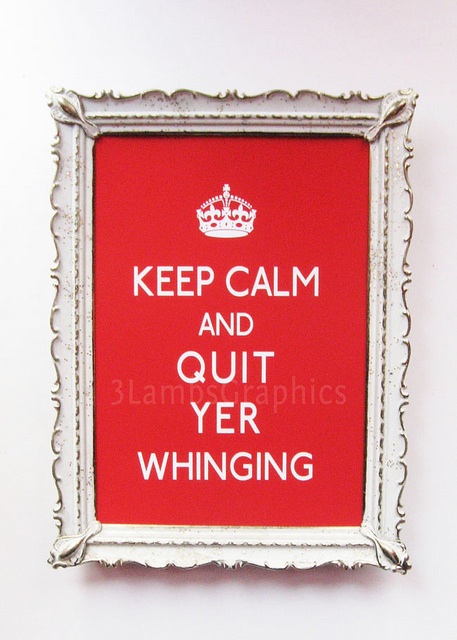



 The Rebuttal