Tag: sign-language

  • Dear all in the NDIA, (Especially Planners and NDIA decision makers)

    Hello, my name is Gary Kerridge. I am a retired disability advocate. I comment regularly on the current situation with the NDIS and how it is impacting on people with a disability. Sometimes I am angry and a little controversial. Today, I am reaching out in the spirit of educating and informing.

    Although I am experienced across the disability spectrum, my specialty is deafness. I have advocated and supported many Deaf and hard of hearing people with their applications to the NDIS, their reviews and even their appeals to tribunals. Some of these have had positive outcomes, some less so. Of late the negative outcomes for people who are Deaf and hard of hearing have become more frequent. This has aligned with the changes that have been rolled out that have the goal of making the NDIS sustainable.

    In the last week, although I am retired, a few people have reached out to me.They are not all participants. Some of them are actually service providers. There seems to be a clear pattern where the NDIA is targeting Auslan interpreting to reduce expenditure in this area.

    Allow me to explain and provide you with some recent examples.

    Example A:

    I have been supporting a participant with their application to the NDIS. They received a plan whereby only $300 was provided for 12 months of Auslan interpreting. Around $4000 or so was provided for assessments for things like hearing aids and technology.

    Of course, the Auslan interpreting budget was totally inadequate. The participant is an Auslan user. They are very active in both the hearing and Deaf community. Auslan interpreting was crucial for their community participation. Their needs include private medical appointments, attending hearing functions such as parties/weddings/funerals and to allow the participant to participate in small community based learning like arts and crafts. They also wish to participate in amateur theatre, which is a great passion of theirs.

    The plan was reviewed. Extra interpreting funding was provided. But it was still totally inadequate and was only an extra $1300. Around 80 hours of interpreting was requested. This is not excessive. In fact in my time working in the NDIS sector, a standard 72 hours per year was usually provided unless the participant could demonstrate a greater need.

    The participant was very disillusioned by this time. After review the only course for them to take was an AAT appeal. They declined, feeling that the stress and time needed to gather all the evidence that would be required was too great. Indeed, by this time they were extremely distressed as they had already submitted comprehensive evidence of their need.

    Fast forward a few months. The participant has progressed assessments and quotes to obtain new hearing aids. This week they received a call from the NDIA to inform them that the hearing aids were approved. This is good news, but what is interesting is what the NDIA planner divulged to the participant.

    The planner phoned, even though notes on system say to email. Luckily the participant was able to answer and use captions on their phone to communicate with the Planner. The Planner had this to say, “We have prioritised hearing aid funding in lieu of interpreting as it is a lower cost alternative to providing access.” In the interest of fairness, it should be mentioned that the participant commented that the Planner was extremely helpful and empathetic of their needs. This is fantastic to hear.

    Naturally, the participant was shocked at what the Planner divulged. What it showed was that the NDIA decision maker for the participants plan did not have a good grasp of the limits that many deaf people have in regard to aided hearing. This is despite provision of a comprehensive report where evidence was presented of speech perception tests and how this would impact in various communication settings that the participant was likely to experience.

    The Planner went on to suggest that the evidence provided was insufficient. This suggests that NDIA personnel involved had either not read the report in detail or possibly that they had not understood it’s contents.

    This leads to Example B.

    Example B

    This week I was contacted by a person that provides Auslan interpreting. The person wanted to know if I had any documentation as to why there is a two hour minimum booking for interpreters. I was able to provide them with a link to an article that explains why there is the two hour minimum. The basis of this minimum is that most interpreters are freelance. They have to travel between jobs. They need to catch public transport to various areas, pay for parking and so on.

    What this means is that when they are travelling or seeking/paying for parking etc they are not earning an income. So, for example, if they had a job that was thirty minutes and charged only the thirty minutes for the job, then traveled an hour to the next job they are disadvantaged because travel between jobs is a big part of interpreting. When traveling interpreters are not earning.

    To cut a long story short, without the two hour minimum, many interpreters would not be able to make a livable income and would not be able to stay in the industry. If this was the case, the Deaf community would be severely disadvantaged. Already there is a shortage of interpreters. Without the two hour minimum charge this would be even worse because many interpreters would not be able to make a living in the industry.

    You can read more about the need for the two hour minimum by clicking this LINK

    The person who contacted me was asking me this because they were trying to explain to the NDIA, with evidence, why there is a two hour minimum. They explained to me that Deaf participants are being told to rely more on their hearing aids and just use interpreters sporadically and for as short a time as possible.

    The reality is that for nearly every booking, the minimum charged will be 2 hours. The consequence of the advice being provided by some NDIA delegates is that Deaf participants are increasingly being denied access to the community, its service and activities. Such access is a major goal of the NDIS. We should not forget the real distress that such drastic cuts to interpreting budgets is causing.

    Further, the person that contacted me stated that there has been a massive drop in work since the NDIA has started to cut plans. This has meant that some interpreters have had to drop out of the industry and seek other work. The income that they are getting does not allow them to meet the cost of living. This is a real concern as there is already an enormous shortage of Auslan interpreters.

    These examples show, again, that many Planners and NDIA decision makers are not knowledgeable about the needs of Deaf participants. It shows that they do not understand the real challenges that Deaf participants face in accessing interpreters. Nor do they understand reasons for the two hour minimum booking. Indeed many Planners and NDIA decision makers would appear to not even understand that this condition exists.

    Example C:

    Recently a friend who works as an allied health professional made an observation about how they were feeling in the NDIS space. They had this to say:

    ” ..It’s so bad atm – I’m not enjoying working as an Deaf OT in the NDIS space for our Deaf Community as there’s just so many funding cuts and knock backs despite the evidence provided. Working so so hard with not much reward.

    I have spoken to quite a few allied health professionals over the last few months and this is a common theme. Namely that they are providing comprehensive reports and evidence, but a lot of it is rejected or ignored. They feel that their experience and expertise is being dismissed to the participants detriment.

    What does this mean? Well, many of professionals are considering dropping out of the industry. Indeed, if you look at example two, where my interpreter colleague has mentioned that interpreters are seeking other employment because NDIS cuts have meant that they are not getting enough work, this could be suggesting a trend.

    This might be indicate that a large pool of experienced service providers are leaving or considering leaving the NDIS space. This is potentially catastrophic as there are already huge waiting lists and struggles to meet demands for support. For the Deaf community to lose interpreters in an area that is already struggling to meet demand across a range of needs, it is very scary.

    Although my focus has been on participants who are Deaf and hard of hearing many of the themes that have been raised in this piece are possibly relevant across the NDIS space. For example:

    1. The cuts to plans are causing great distress to participants. Some times unfairly.
    2. The changes to the NDIS that have been suggested have the intent of sustainability of the scheme. While this is commendable, it would seem many of the changes are occurring before alternate supports, such as Foundation supports are ready.
    3. It is impossible for Planners and NDIS delegates to have an in-depth knowledge of every disability. Some of the Decisions in the Deaf and hard of hearing space suggest Planners and NDIA decision makers are showing an unrealistic expectation of what aided hearing can achieve for many Deaf and hard of hearing participants. The lack of knowledge of specific disabilities is also likely impacting on their decision making across the disability spectrum.
    4. The poor decision making, while aiming to cut costs, is actually costing more. It is leading to higher administrative demands and ultimately to appeals which are drawn out and have high legal costs. It also comes at great personal cost and distress to participants that the decisions are impacting.

    I am under no illusions that for the NDIS to remain sustainable, changes need to be made. I am also aware that sometimes the suggested cuts to plans are justifiable. I believe that the examples I have provided are common across the NDIS space. I believe that the cuts to plans that are being made are often based on flawed reasoning, while at the same time ignoring expert advice and evidence that has been provided at great cost.

    I fear that if we do not address some of the issues that I have raised, there will be a crisis. I fear that skilled providers will leave the NDIS space meaning that demand for supports, already difficult to meet, will not be met. I fear that the constant reviews and appeals will continue to siphon funds away from where they are better spent, and that is to provide much needed support to participants.

    Many, many people have worked to try and find solutions to the problems of the NDIS. I do not pretend to know all the answers. What I do know is that in my time working in the NDIS space there was a pool of subject matter experts.

    As a Planner I often consulted with them. I did this because I knew my limitations. For example, if home modifications were needed I would contact the subject matter expert within the NDIA who was knowledgeable about they types of modifications that could benefit a specific disability. I could contact them about specifications and legal requirements for the construction of ramps. I would ask for lay persons explanations of technical aspects of prosthetic fittings. I would use this information in my decision making process. It was just good practice.

    It seems to me that this important part of the decision making process is now less common. How else can we explain that decisions to cut Auslan interpreting are being made because hearing aids are seen as a cheaper alternative, despite the provision of comprehensive reports and evidence?

    I firmly believe that he NDIA needs to look closely at how decisions are being made and utilise the expertise it has within, and I know that there is a lot. Cutting costs is important for the sustainability of the NDIS, but it cannot happen on the basis of poor knowledge and process. It is this that will make the scheme unsustainable, far more than any monetary expense.

    With respect, thank you for reading.
  • My Xmas Wish

    This Christmas will be the first Christmas where I am retired. After Xmas, I will be going to England and Scotland with Marnie. We are spoiling ourselves this year. We are even staying at a castle near Ben Nevis. I’m at loss as to what to put on my Xmas list. Maybe there are a couple of things that I would like to see. Not material things; just things that I think would be nice to see happen.

    Us oldies will remember the time when Deaf Societies were the hub of the Deaf community. When the Australian Deaf Games were on for example, participants would meet at the Deaf Society and finalise their registrations. At night time the Deaf Club would be humming.

    I remember rocking up at Newmarket Deaf Club in 1988 and finding out the Games were on. I registered on the spot and got roped into playing in goal for Victoria Deaf Soccer Team (I was living in SA at the time.) Rego was 80 bucks or something and you could play whatever sport you wanted. It included the closing dinner as well. There is no question; each State Deaf Society and the Deaf Club were the hub of the Deaf community. Those days are long gone.

    This leads me to number 1 on my Xmas list; that the Deaf community can once again experience the joy of a Deaf club of their own. A hub that is theirs and an institution that they can be proud of. Wishful thinking perhaps, but this is a wish list after all.

    Recently I was at the Old Bluestone building in St Kilda. This historical old building housed the original Victorian School for Deaf Children. A Deaf man, FJ Rose, founded the school in 1860 and was the first Headmaster of the school. He set the school up after reading in the Argus newspaper of a mother who had a Deaf daughter and did not want to have to send her daughter to England for her education. Such a fantastic history.

    I was privileged to have worked there. What I loved most about working at this grand old building was the relationship we had with the Victorian College of the Deaf next door. VSCD Inc. provided services to deaf kids and families, many from the school. At lunch I would mingle in the school staff room with the teachers. I would play soccer on the oval with the kids. I loved it. (VSDC Inc. was the then branding for what is now known as Deaf Children Australia).

    The kids would bring the old Bluestone Building to life. They had home economics classes there and a recreation room with table tennis tables upstairs. I would chat with the kids in the hallway and wave hello to them in the yard in the morning. It was one of the happiest times I can remember in my career.

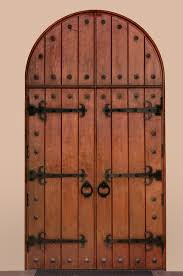
    So there I stood in front of the old Bluestone Building. Its huge doors were closed. It was very foreboding. There is a sign on the door saying “By appointment only.” Another sign instructs delivery people not to leave packages at the door but to call a phone number so that someone can come and get the packages. It looked sad and forlorn. There was not a deaf child to be seen. I reflected on my joyous time working there and wondered how it had come to this.

    I commented on this once before a couple of years ago. I described how unwelcoming the big doors closed were and took a photo. I compared this to the vibrancy and atmosphere of the Tradeblock cafe run by the Victorian College of the Deaf. I posted my thoughts on Facebook.

    It didn’t go down well. In fact, the CEO of Deaf Children Australia actually contacted my boss to complain. Well, I am retired now and don’t have a boss so if he wants to complain about this article I guess he will have to come to me. Failing that, I hope he has a stiff drink at hand or at least someone that can give him a cuddle.

    But I jest. I realise that there are many reasons the doors are closed and children are no longer free to roam. Fears for their safety and strict rules about who can interact with the children are part of the reason. But still I yearn for the days of yonder when everything was so friendly and interactive.

    This brings me to number two on my Xmas list. I would love to see that old community spirit that I experienced restored at the hallowed grounds of the Bluestone Building. It would be great to restore the camaraderie and community spirit where the kids could be exposed to Deaf adults and mentors. A spirit that FJ Rose would be proud of.

    In retirement, I have had time to reflect on my long career. I worked at Deaf Societies across Australia in South Australia, NSW and Victoria. I was also fortunate to work for both Expression Australia and Deaf Connect. Both are wonderful organisations in their own right.

    When I began my career, there was an Association of Deaf Societies. Deaf Societies across Australia would work on and support important issues like the National Relay Service. Every couple of years they would plan the Deafness Conference hosted by a different state. People may not agree with me, but I think back then the spirit of cooperation was high.

    I guess what the NDIS has done is that it has led to an environment where our Deaf organisations aggressively market themselves to survive, as they must. It has led to our Deaf organisations becoming extremely territorial and defensive of their domain. That old spirit of cooperation that I witnessed all those years ago seems to have been replaced by mistrust and a fierce protective response to territory and markets. I think that is very sad.

    Which brings me to my final Xmas wish. This wish is that our Deaf organisations can find it in themselves to rediscover that strong spirit of cooperation that they had in the past. Where they can find common ground rather than differences. Where they can work together on important issues that are relevant to the Deaf community. Is that too much to wish for?

    Yeah, maybe I am just old and it’s just as well that I have retired. That said, I sincerely hope that our Deaf organisations can once again find that spirit of cooperation and trust again. Most of all I hope that Community Hub, those Deaf clubs and that brilliant community spirit that I was fortunate to experience, can be restored to its former glory.

    Merry Xmas everyone. And if you don’t celebrate Xmas, have a fantastic break!

    *** With respect for the challenges that our Deaf organisations must confront today. I am under no illusions as to how difficult that it is to survive.

  • Looking Back


    While at a Deaf soccer presentation last week a person came up to me and said something along the lines of, ” It’s you??? I love The Rebuttal, I read your articles all the time. I feel like I know you personally.” A little bit later this same person came up to me and asked if I would still keep writing The Rebuttal as I head into retirement. Said she, ” ….. I read them while I am on the toilet.” I thanked her for this endearing and lasting vision.


    Getting comments like that never gets old. It really gives me a buzz. Four of us came up with The Rebuttal concept in 2006. We basically thought that the grassroots Deaf community were being largely ignored. There were a group of “Elites” that were controlling the agenda. We saw The Rebuttal as a way of challenging these Elites and, hopefully, as a way to give a bigger voice to the grassroots Deaf community.


    That was 627 articles ago. Consider this, our very first article was bemoaning the lack of Deaf/HoH people in management positions. We pointed out that Deaf Society’s needed to use Affirmative Action to provide management opportunities to Deaf people. I remember arguing at the time that one of the current hearing CEOs got the job at 28 years of age with only a qualification in Youth Work.


    It was time, we said, to promote Deaf/HoH into these roles because expecting them to win just on merit was unfair given the advantages and privileges that hearing people have. Well, with both our major Deaf organisations having Deaf CEOs now, and many Deaf people in management roles, we can all be well pleased with the current status quo.


    Over the years The Rebuttal evolved. It was not just Deaf focused but commented on disability issues in general. At The Rebuttal’s heart Deaf/HoH issues were still the main focus. I guess we just became a little bit more worldly. That said, The Rebuttal was, and is, still mostly about Deaf/HoH issues. We are proud of that.


    My favourite articles of The Rebuttal are the ones with characters portraying the Deaf/HoH experience. My favourite will always be Carrie, the little Deaf girl and the story of how she was often isolated within her hearing family. The idea was not to be critical of hearing people, rather just to show that Deafness is not just about the ears. The article also highlighted just how much of the responsibilities that mothers often bear. If you want to read this article, click here CARRIE


    I guess the articles that people will remember most are the articles that challenged and raised issues. The Rebuttal was extremely outspoken about the loss of the South Australian Deaf community home at 262. When the partnership with Townsend House was first suggested around 2008, members of the Deaf community sent us copies of the suggested business agreement.


    We warned then that the control of 262 was basically with Townsend House and that they could basically do what they liked with 262. Including selling it, which they did five years later. We received a lot of abuse from certain high-ranking people for stating the obvious. We were fearmongering they said. Well look what happened!


    I still think the way the South Australia Deaf community were treated during this whole sorry saga was a disgrace. They ripped the guts out of this proud community and sold 262. An asset that was largely built by the Deaf community members through fundraising and hard labour. In 2021 Townsend House did eventually apologise for the way that they treated the Deaf community, but by then the damage was done.


    We also sometimes challenged our advocacy organisations, much to their disgust. Deafness Forum actually blocked us from posting anything at their Facebook page. A certain someone also accused us of being solely responsible for the demise of Deaf Australia. (Who are still going strong, by the way, with a wonderful and vibrant young CEO)


    Did we get it right all the time? No! sometimes we even publicly apologised if we got our facts wrong. It’s fair to say some noses were put out of joint. We make no apologies, challenge and debate are healthy. We copped abuse too. My wife was actually publicly told to “SHUT UP” for speaking out about Craptiview. My favourite was when a CEO sent Marnie an email asking her to tell me to back off. Why they couldn’t email me directly, I am not sure. It’s fair to say there was a bit of rough and tumble along the way.


    I like to think we tried to be diverse as well. The Rebuttal was not just about politics and advocacy. We had a series where we highlighted quiet achievers in the Deaf/HoH sector such as the late Michael Lockrey and the brilliant Nancy Gibb. We wrote about the experience that Deaf people had during Covid in Pete’s Day. We picked up on new issues like the impact of Artificial Intelligence in The Rise and Rise of Artificial Intelligence. And we even wrote about Being Turned On, Sex and the Deaf, With Hearing People. We certainly were not a one trick pony.


    But mostly, I like to think The Rebuttal and all of its contributors showed that they had a Deaf heart. Through all of it all the aim was to bring attention to the issues, needs and even the quirkiness of Deaf/HoH community. It was a great privilege to do this. I have loved every moment of it, particularly the responses of the readers. The responses made it all the more worthwhile.


    So, to the question of our toilet reading admirer – Will I keep writing The Rebuttal in my retirement? I won’t say never, but I fully intend to switch off for a while. I fully intend to not let the cock up that is the current NDIS and other issues get me wound up. It’s time to just relax and enjoy some the finer things in life. BUT- The Rebuttal remains open to anyone that wants to contribute. We are more than happy, as we have in the past, to print the contributions of others, so feel free to use the platform if it will help.


    Thanks all. It’s been a blast. Now it is time for me to recharge. Who knows what the future holds!

    As a footnote, all articles focusing on and critical of the NDIS and Government programs can be solely attributed to me, Gary Kerridge. No other person has been involved or offered advise or information. Any names mentioned within or within the translation, are no longer involved in producing the Rebuttal, apart from Marnie who offers her translation skills from time to time. 😊