Tag: education

  • F**K

    I was 13 years old. I asked my 13 year old friend Karl why my 14 year old friend Claire was avoiding me. I liked Claire. She was the only girl I knew who could play keepy up better than the boys. She could juggle the ball on her feet and knees over 500 times. She made it look easy. Suddenly she was avoiding me and my mate said it was because – “She thinks you wanna f**k her”

    I literally had no idea what he was talking about. I had been profoundly deaf since I was eight or nine years old. I certainly knew the word “F**K”, it was a swear word. You could f**k off. You couldn’t be f**ked. It was f**king awesome and so on. To me it was just a bad word like bloody, and bugger and shit. But I quite honestly had no idea that it could be used as a verb meaning to copulate, hide the sausage and just have plain old SEX!

    You know what this means? It means that I am one of the millions of young deaf people the world over that has been a victim of language deprivation. Yes me! Me, the university graduate. Yes, me the writer of The Rebuttal. Yes, me the well known and experienced disability advocate. I am a victim of language deprivation!

    Now most definitions of language deprivation focus on the deaf child’s early language acquisition years. This is between the ages of 1 and 5. It is said that language deprivation is the result of the lack of language stimuli in these crucial language acquisition years. So a deaf child who is unable to hear misses out on language access, which can lead to them becoming language deprived.

    However, my own personal definition is that language acquisition is ongoing. You learn it through overhearing. Through overhearing you learn new vocabulary and new sophisticated ways to use language. This happens through hearing others in completely random and natural discussions. Language acquisition occurs through interaction, overhearing conversations, access to information on the radio and TV and so on. This huge communication cycle contributes to us developing language continuously.

    In my case I had access to language in the early critical years. I acquired the basics of grammar and developed a quite extensive vocabulary. Then at age 8 this access suddenly stopped and was hindered. This meant my ongoing sophisticated language and conceptual development was impacted. Hence my lack of knowledge of the word F**K and its nuances.

    Let’s imagine a group of young people chatting in a group at lunch time. Perhaps Betty caught her big brother in the act last night. The kids are discussing this and using all sorts of language and words to describe what Betty saw. I don’t need to share the words here, it would range from biological to completely lewd.

    Then Tony shares a story of what he heard when his sister brought her boyfriend home and snuck into her bedroom. Sally describes what she heard on the radio about sexually transmitted diseases – just because its relevant. Everyone is sharing. learning and developing new vocabulary from the discussions in the group. They are also being exposed to new concepts and experiences.

    Of course these discussions are not limited to sex but our teenage years are generally when we begin to explore sex and intimate relationships in more detail. These “group” discussions also will explore what was taught in the classroom and students further their learning through each other. They would discuss world events and ideologies. Through our peers we explore complex issues and concepts. This contributes to our development and maturity.

    But not me, as a teenager I missed most of this peer learning. I was at a mainstream school. I was part of peer groups but not really participating because I could not hear what was going on. The consequence of this? Not being exposed to new vocabulary. Not hearing discussions about sexual intercourse and the the words associated with it. It is not just dirty talk that I missed, it was also exposure to age appropriate talk about relationships and more mature concepts such as political ideologies.

    I was certainly part of the group. I sat with the group with my football waiting for someone to come play on the oval. These group chats were boring simply because I had no access to them. I would rather play football.

    I suspect that hearing kids tolerated me and thought of me as a bit of a drag. If I did speak it was probably about sport and something completely unrelated to what the group were talking about.

    In my teenage years I simply lacked the language, conceptual and social development that comes with everyday interaction and communication. The consequence of this was that I was unable to develop those age-appropriate social relationships and closer intimate relationships that teenagers do. Looking back, puberty was a lonely and confusing time.

    What I am describing here is the impact of language deprivation in later years. The more academic among us will say that I had language and I was later able to fill in the missing pieces. They will say that what I am describing does not really fit the proper definition of language deprivation. I accept that this is true, but the impact of lack of access to more sophisticated language and concepts in my later childhood years had a profound impact on my maturity.

    The isolation that I experienced, the lack of age appropriate social experiences, the confusion and the anxiety that resulted were very real. All of it related to a lack access to communication and and age appropriate language development. It meant that through adolescence I struggled socially and my self esteem was shot.

    I don’t write this to garner sympathy, I write it to show that language deprivation and any barrier to continuous language development can have profound consequences. We have a society today that focuses on “hearing” and providing the tools to hear. In doing so we create an environment that is impeding the education and social development of many young deaf people.

    How many times have we heard about deaf kids that “They are doing well ..“. But really, just how well are these deaf kids doing? How much better could they do with more focus on their inclusion, more access to environmental chatter, more access to social interaction? – And I mean proper access, not just bits and pieces.

    Oliver Sacks in his book, Seeing Voices, said this, “A human being is not mindless or mentally deficient without language, but he is severely restricted in the range of his thoughts, confined, in effect, to an immediate, small world.” I know that I was. I know that even kids with cochlear implants experience at school and home what I experienced every day. Our education system and support systems need to acknowledge this.

    Doing well...” Is not enough. Deaf kids need to thrive. They need tools to access the rich discussions and information that are around them throughout the day. It’s through this access that they thrive, achieve and become functioning human beings. For this reason we need to properly look at what INCLUSION really means for deaf kids. It is not just BEING THERE! I hope from this article the reader can see that it is infinitely more complex than that.

    What’s the result of language deprivation in a deaf persons later years? Well according to Wyatte C.Hall, in his paper published in the Maternal and Child Health Journal in 2017, the resuts are “… cognitive delays, mental health difficulties, lower quality of life, higher trauma, and limited health literacy.”

    Well F**K! Perhaps it’s long past time that we did something about it!

  • Image shows an out stretched hand balancing a gold dollar symbol. In the background is a stylised line that represents a graph showing increased profit.

    I retired. Everyone laughed at me and said I didn’t know how to retire. So I decided to conform to the sceptics and unretire. But only for two days a week, so I am still sort of semi-retired. I potter about the garage and make garden furniture on the days that I don’t work.

    And you know what? These two days a week are among the most rewarding that I have had in my career. I have come full circle and gone back to working one on one with people and influencing the local areas, community development we call it. So I meet with Deaf and HoH people and help them navigate the complex systems that we have in NDIS, Centrelink, Employment or simply assisting parents to understand how they can use their NDIS better. I work with the community to find ways to make services more accessible for people who are Deaf and HoH.

    It is almost instant gratification. You help someone, and a result happens. This could be restoring a Centrelink payment. It could be helping with an NDIS review so that they get a better plan. It might be working with the local community group to provide information sessions. Or with the Health authorities to help them understand the needs of Deaf and HoH people so that they can improve services. It is important work and great fun. I am in my element.

    And I don’t have to worry about making a profit. I don’t have to worry about endless paperwork for Government bureaucracy to show we are meeting guidelines. I dont have to worry about preparing for endless audits. I don’t have to worry about budgets and balancing them. Managing staff and dealing with HR are thing of the past. It’s just facilitating support for the Deaf and HoH community so that they can navigate an infinitely complex system that is not designed for them. I love it!

    It really is just good old fashioned case management. Case management is a very underrated skill. It’s a skill that I developed when I started my career. This was a time when you just went out and did what was necessary. It was a time that you didn’t make decisions based on billables and if it was going to make a profit. Dare I say it, but it was people before profit.

    In a past life I worked at was then VSDC, now Deaf Children Australia. They had an Auslan for families program. I would meet families that wanted to develop Auslan for their deaf kids. I didn’t need to check their NDIS plan to make sure they had enough money. I just arranged things based on their needs. There was a pool of tutors employed casually to work with these families.

    I would encourage families to invite extended family members who regularly interacted with the deaf child to sessions. Wherever possible I would encourage these sessions in the evening so that both mum and dad could take part. I remember one tutor was shocked when at the first session there were something like 15 family members present. Grand parents, aunties, uncles, close family friends etc.

    The logic was that the more people the deaf child could communicate with the less isolated that they would be and the more language exposure that they could get. It didn’t always happen like this, generally it was just the mum and she had the responsibility of being the primary communicator.

    The Auslan for families program was extremely powerful. While it depended on ongoing Government grants, it did not rely on making a profit. It was a program delivered through the old “block” funding model. I wonder if we need to revisit block funding again?

    That word “profit” has changed the fabric of human services. In our world of “capitalist” disability support there is often no support if profit is not forthcoming. I am acutely aware of this because in 2023 I worked for a very large support coordinator agency who would not accept any participants with less than 40 hours of support coordination. It was considered not financially viable to do so. I struggled with this approach.

    My friend Alastair McEwin recently made a Linkedin post where he shared an article by disability inclusion specialist, Elisha Matthews. The article is titled, The Rise of the Capitalist Model of Disability.

    Matthews made a few salient points about the introduction of the NDIS and how it impacted on service delivery. I have copied these below.

    ✔️ Shifting power from block-funded orgs to open-market competition

    ✔️ Monetising support: every need = billable service

    ✔️ Encouraging private investment

    ✔️ Making disability support a profitable industry

    Matthews makes the point that when the NDIS was introduced, “There wasn’t a qualified workforce ready, so regulations were loosened and anyone could become a provider. This created a supply-and-demand crisis—and opened the door to a new reality”

    So what is this new reality? Matthews is very critical of some providers. She feels that this drive for profit has led to, in many cases, “Capitalist Extortion.” This is very controversial. Matthews provides an example of this extortion:

    We are seeing providers threaten people with disability:

    “If you don’t sign this petition…”

    “If you don’t write to the Minister…”

    “If you don’t speak out for us…you could lose access to support.

    Matthew’s argues that this extortion, with its thinly veiled threats, is not ethical. Matthews believes when it happens that it should be reported to the NDIS Quality and Safeguards Commission and she is right.

    As Matthews points out,

    We designed this scheme to empower people with disability—not make others rich. We are not responsible for your business profits. If the scheme collapses from unsustainable exploitation, everyone loses.

    She urges people with a disability to; ” ….. take back the narrative. Let’s prioritise people with disability—not profit.”

    And you know its not just the NDIS providers that are guilty of this, arguably the Disability Employment Service is in the same boat. Where support is prioritised to those most likely to generate profit. Like with the NDIS, there are ethical providers and unethical providers. The profit factor, in many cases, dehumanises the support that is needed.

    So what’s the answer? We need the NDIS, absolutely! I am a strong supporter. But we also need supports that can be provided for those who are most vulnerable. Supports that can respond to need in a way that is not reliant on profit. Supports that can be responsive without having to rely on finding an available support worker. We need balance!

    Perhaps this is what is coming with the new Foundational Supports and the new Navigators model. Perhaps these new initiatives have the potential to provide much needed support in areas that the NDIS cannot. Support that is not reliant on a service providers profit but can respond based on need and good old dose of compassion!

    In the meantime I am getting back to work in a role I absolutely love. As for the rest of it? All I can say is – Watch this space!

    *** The thoughts and opinions expressed in this article are those of the authors alone.

  • My Xmas Wish

    This Christmas will be the first Christmas where I am retired. After Xmas, I will be going to England and Scotland with Marnie. We are spoiling ourselves this year. We are even staying at a castle near Ben Nevis. I’m at loss as to what to put on my Xmas list. Maybe there are a couple of things that I would like to see. Not material things; just things that I think would be nice to see happen.

    Us oldies will remember the time when Deaf Societies were the hub of the Deaf community. When the Australian Deaf Games were on for example, participants would meet at the Deaf Society and finalise their registrations. At night time the Deaf Club would be humming.

    I remember rocking up at Newmarket Deaf Club in 1988 and finding out the Games were on. I registered on the spot and got roped into playing in goal for Victoria Deaf Soccer Team (I was living in SA at the time.) Rego was 80 bucks or something and you could play whatever sport you wanted. It included the closing dinner as well. There is no question; each State Deaf Society and the Deaf Club were the hub of the Deaf community. Those days are long gone.

    This leads me to number 1 on my Xmas list; that the Deaf community can once again experience the joy of a Deaf club of their own. A hub that is theirs and an institution that they can be proud of. Wishful thinking perhaps, but this is a wish list after all.

    Recently I was at the Old Bluestone building in St Kilda. This historical old building housed the original Victorian School for Deaf Children. A Deaf man, FJ Rose, founded the school in 1860 and was the first Headmaster of the school. He set the school up after reading in the Argus newspaper of a mother who had a Deaf daughter and did not want to have to send her daughter to England for her education. Such a fantastic history.

    I was privileged to have worked there. What I loved most about working at this grand old building was the relationship we had with the Victorian College of the Deaf next door. VSCD Inc. provided services to deaf kids and families, many from the school. At lunch I would mingle in the school staff room with the teachers. I would play soccer on the oval with the kids. I loved it. (VSDC Inc. was the then branding for what is now known as Deaf Children Australia).

    The kids would bring the old Bluestone Building to life. They had home economics classes there and a recreation room with table tennis tables upstairs. I would chat with the kids in the hallway and wave hello to them in the yard in the morning. It was one of the happiest times I can remember in my career.

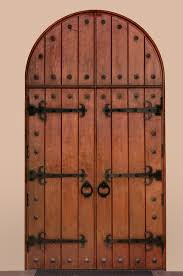
    So there I stood in front of the old Bluestone Building. Its huge doors were closed. It was very foreboding. There is a sign on the door saying “By appointment only.” Another sign instructs delivery people not to leave packages at the door but to call a phone number so that someone can come and get the packages. It looked sad and forlorn. There was not a deaf child to be seen. I reflected on my joyous time working there and wondered how it had come to this.

    I commented on this once before a couple of years ago. I described how unwelcoming the big doors closed were and took a photo. I compared this to the vibrancy and atmosphere of the Tradeblock cafe run by the Victorian College of the Deaf. I posted my thoughts on Facebook.

    It didn’t go down well. In fact, the CEO of Deaf Children Australia actually contacted my boss to complain. Well, I am retired now and don’t have a boss so if he wants to complain about this article I guess he will have to come to me. Failing that, I hope he has a stiff drink at hand or at least someone that can give him a cuddle.

    But I jest. I realise that there are many reasons the doors are closed and children are no longer free to roam. Fears for their safety and strict rules about who can interact with the children are part of the reason. But still I yearn for the days of yonder when everything was so friendly and interactive.

    This brings me to number two on my Xmas list. I would love to see that old community spirit that I experienced restored at the hallowed grounds of the Bluestone Building. It would be great to restore the camaraderie and community spirit where the kids could be exposed to Deaf adults and mentors. A spirit that FJ Rose would be proud of.

    In retirement, I have had time to reflect on my long career. I worked at Deaf Societies across Australia in South Australia, NSW and Victoria. I was also fortunate to work for both Expression Australia and Deaf Connect. Both are wonderful organisations in their own right.

    When I began my career, there was an Association of Deaf Societies. Deaf Societies across Australia would work on and support important issues like the National Relay Service. Every couple of years they would plan the Deafness Conference hosted by a different state. People may not agree with me, but I think back then the spirit of cooperation was high.

    I guess what the NDIS has done is that it has led to an environment where our Deaf organisations aggressively market themselves to survive, as they must. It has led to our Deaf organisations becoming extremely territorial and defensive of their domain. That old spirit of cooperation that I witnessed all those years ago seems to have been replaced by mistrust and a fierce protective response to territory and markets. I think that is very sad.

    Which brings me to my final Xmas wish. This wish is that our Deaf organisations can find it in themselves to rediscover that strong spirit of cooperation that they had in the past. Where they can find common ground rather than differences. Where they can work together on important issues that are relevant to the Deaf community. Is that too much to wish for?

    Yeah, maybe I am just old and it’s just as well that I have retired. That said, I sincerely hope that our Deaf organisations can once again find that spirit of cooperation and trust again. Most of all I hope that Community Hub, those Deaf clubs and that brilliant community spirit that I was fortunate to experience, can be restored to its former glory.

    Merry Xmas everyone. And if you don’t celebrate Xmas, have a fantastic break!

    *** With respect for the challenges that our Deaf organisations must confront today. I am under no illusions as to how difficult that it is to survive.