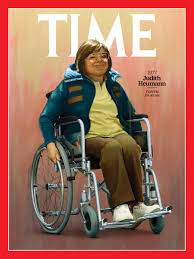
“Change never happens at the pace we think it should. It happens over years of people joining together, strategizing, sharing, and pulling all the levers they possibly can. Gradually, excruciatingly slowly, things start to happen, and then suddenly, seemingly out of the blue, something will tip.”
Judith Huemann is a disability legend. She is considered the mother of the disability rights movement. She was a major force behind the development of the Americans with Disability Act and the Convention for the Rights of Persons with Disability. There are giants of our time, and she is one of them. She died in March 2023. If you want to know more about her, watch the brilliant documentary, CRIP CAMP
I was struck by the above quote and how it reflects the current situation in Australia. Things certainly happen very slowly in Australia. Gains are hard fought and when they are won, fiercely protected.
One of the things that many NDIS participants are fighting to retain is their hard fought right to choice and control. Just this weekend the headline in the Weekend Australian was, $2 Billion NDIS Payment Top Ups for just 25 000 Participants (If you can get behind the paywall, you can read it here) Supposedly NDIS participants are overspending their budgets and having them topped up. Allegedly, this is the fault of participants, Support Coordinators, Plan managers and other service providers who are trying to rort the system. Top ups are apparently being used to purchase things such as phones, movie tickets and, wait for it, even birdseed.
This is really just sensationalist journalism and shows the writers lack of understanding of the NDIS environment. Yes, there are some rorters, but plans are topped up for many reasons. Sometimes it is because the plans were inadequate in the first place, leading to the funding being used up quickly. Sometimes informal supports get sick meaning there is a need for extra support. Sometimes degenerative disabilities get worse requiring extra support. Circumstances change for a multitude of reasons.
But if you are to believe the Australian Newspaper, it’s all because of unscrupulous service providers and dodgy participants misusing their funds. This is far from the truth. Sensationalist journalism such as this is just unprofessional and irresponsible.
Misinformation such as this is part of the reason why there is such a strong push to want to register all service providers. Many NDIS participants who self-manage, source their own supports. They approach people that they know and trust. Not all of the supports that they employ are registered providers. NDIS participants make their budget go further by negotiating packages of support. In doing so they cut out the middle people and the fees that they have to pay them, this means more money goes to their actual support. They employ people that they trust, and they are in CONTROL!
People with a disability understand and support the objective of registered providers but those who are self-managed have been doing so successfully for many years. Through self-management they have supports that meet their needs and that also give them peace of mind. Irresponsible representation of circumstances, such as the recent Australian Newspaper article, is just victim blaming at its worst.
Another area where change has been painfully slow has been the provision of captioning by the now ‘NOT SO NEW’ digital channels on free to air TV. People like my friend Gaye fought for years to get more captioning on TV. It’s great on the old standard channels. Not so great on the now ‘NOT SO NEW’ digital channels that are now over 10 years old. As Heumann said, “Change never happens at the pace we think it should.” In this case it is not happening at all.
With digital TV came heaps of new free to air channels. When the new digital TV commenced the Government was advised that these channels would need to provide captioning and audio description etc., as per requirements of other TV channels. At that time, I think the requirement was around 75%. Meaning that 75% of all shows had to be captioned. The Government, via the Human Rights Commission, gave the new digital channels a five-year exemption to this requirement. Basically, the new channels didn’t have to provide any access at all,
When five years was up, they gave them another five years. Don’t ask me why. So here we are in 2024, the channels have been around for over a decade. Still, they don’t have to provide captioning. In fact, in my lunch break on the 22 May, I checked 24 Channels of which 18 were not providing captions and only 6 were. I also very much doubt audio description is anywhere to be heard, let alone seen.
Huemann wasn’t kidding was she. “. Gradually, excruciatingly slowly, things start to happen, and then suddenly, seemingly out of the blue, something will tip.” It certainly isn’t ‘TIPPING’ in terms of access to the ‘NOT SO NEW’ digital TV channels. Let’s not get started on cinema captioning, oh dear!
This is Australia today. Where people with a disability have to fight tooth and nail to get access and then fight tooth and nail to retain their hard-earned gains. All we ask is that the government listens and involves us in Co-Design of supports that are designed for us. Be it the NDIS, employment or access to media like captioning – Please listen to us, involve us and take us seriously.
Here is hoping for something out of the blue!
 The Rebuttal
Leave a comment