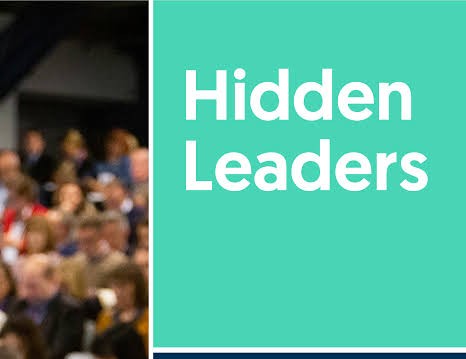
The very first Rebuttal released bemoaned the lack of Deaf CEOs at our Deaf Societies. We argued that Deaf people had lived experience and the skills to be able to lead our Deaf Societies from top to bottom. It was argued that expecting Deaf people to compete on merit for upper management positions, such as the CEO, was not realistic because in doing so they had to compete with hearing people who had many years of experience and less barriers to opportunities. We argued that because of this we needed to proactively seek and appoint Deaf people to upper management roles, like the CEO.
This was then, and largely still is, the situation for Deaf people and indeed all people with a disability. Namely, that our society is designed in such a way that it limits the career opportunities for people who are Deaf and people who have disabilities.
Times have changed a little now. Back then we had a Deaf Society in every state. Now we have only two and they are not called the Deaf Society any more. They have flash business names and compete against each other for territory and the almighty NDIS dollar. More tellingly, these two organisations are led by two Deaf CEOs and many of their upper management are also Deaf. It is brilliant. We have come a long way.
I think in today’s world we have come to expect that in the Deaf and disability sector we should follow the mantra of, “Nothing about us, without us.” Put simply, programs for Deaf people or people with a disability should never operate without input and design from the people that they are targeted at – US!
So, it was with interest recently the peak body for one of Australia’s biggest disability programs had a leadership forum. They invited leaders of the program from all over Australia to come together and plan for the future of the program. On social media they proudly published photos of the big gig. What I noticed was that none of the people in the photos were obviously disabled.
Now, I am not so naive as to expect that a photo tells the full story. Some of those people in the photos may have a disability. They could have Autism. Perhaps they have severe mental health issues or even medical conditions. Or they may have been vision impaired or Blind. The photos would not necessarily tell us this story.
I am very aware of this. However, I felt that if we were going to discuss and plan for the future of one of Australia’s biggest disability programs we would want a wide range of people with a disability attending. What is more, I would expect that we would proudly advertise this fact. On the social media post none of this was obvious nor stated.
I left a comment that simple said, “One would hope that a significant number of those leaders attending have a disability.” I was fully aware that the comment might cause a bit of a stir. Nevertheless, I made the comment for two reasons. Firstly, I wanted confirmation that one of Australia’s biggest disability programs was properly including people with a disability in its planning for the future. Secondly, I wanted to know if there were actually people with a disability at this big planning thing.
Sadly, I didn’t get that sort of response. Instead my comment was removed and the CEO contacted me through a personal message in an attempt to explain why. Apparently, my views on the program are well known and not positive. Apparently, my comment inferred that there were no people with a disability at the forum and this might be deemed as offensive by some who attended and did have a disability. The CEO did offer a private chat but I have not been able to take them up on the offer as yet due to work commitments.
I replied to the CEO. I basically said that all they had to do was answer yes or no. They could just state that there were a number of people there with a disability or simply acknowledge that moving forward that they would endeavour to ensure better representation of people with a disability. I told them, bluntly, that removing the comment was just being deceptive and avoiding having to confront this very important issue. They, naturally, didn’t agree.
As John Cage of Ally McBeal fame would say, “I am troubled!” Or more likely, “Unacceptable.” It is 2023 and co-design is the new buzzword. When we design, amend, improve or commence any program for a specific group, the group should inform and lead such a program. Be it women, LGBTQIA+, ethnic, First Nations or disability – the people the programs are funded and designed for must be at the forefront of the design, implementation and leadership of the program – “Nothing about us, without us”
In the real worked I see most of these groups that I mentioned leading the programs that are funded and designed for them. Disability does too, but not to the same level. Still disability seems to have its share of savers, well meaning non-disabled who think that they know what is best for people with a disability. Well meaning non-disabled people who claim to want to empower. But by the very use of that word EMPOWER, they imply that they have all the power and it is theirs to give!
But you see, people who are Deaf or have disabilities already have power. The problem is that they are denied opportunities to exercise it. There lies the subtle difference, we don’t need empowering what we need is the opportunity to exercise the power that we already have. Making sure that we are at the forefront of programs funded and designed for us will allow this to happen.
Simply by making us the key people at leadership and planning forums for programs funded for us is where this starts. Don’t hide us away and deny us this opportunity. Yup, Count us in!
With respect.
 The Rebuttal
Leave a comment